Delhi’s Pink Force and Operation Shishtachar: The new push to make women safer
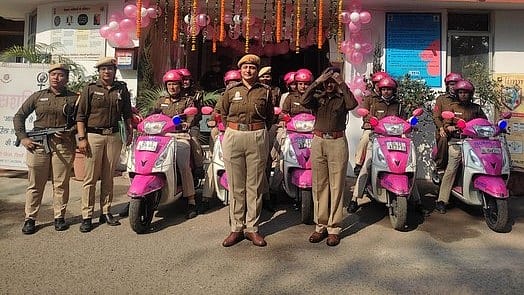
What if the next big change in Delhi’s approach to women’s safety is not another helpline, CCTV camera or safety audit, but a visible police officer on the street? That is the idea behind Delhi’s proposed “Pink Force”: a dedicated unit of trained women police personnel who would patrol places such as schools, colleges, metro stations and other vulnerable locations across the capital.
The plan comes amid renewed concern over the safety of women and children following a series of sexual assault cases involving minors. And the latest updates suggest the proposed force is only one part of a wider push to increase policing and surveillance across Delhi.
What is Delhi’s Pink Force and where will it patrol?
Delhi Lieutenant Governor Taranjit Singh Sandhu has asked the Delhi Police to create a dedicated women-centric patrol unit modelled on Goa Police’s Pink Force. The proposed unit will reportedly focus on high-visibility patrolling and rapid response, particularly during vulnerable hours. Schools, colleges, metro stations and other identified hotspots are expected to be among its key areas of deployment.

Losing Memory
16 Oct 2026 - Vol 05 | Issue 42
The making of a medical and social emergency
The force is still at the planning stage. Its final strength, launch date, district-wise deployment and exact patrol timings have not yet been announced.
Why is Delhi planning the Pink Force now?
The immediate backdrop is a cluster of cases involving minor girls. Four cases involving girls aged between six and 17 were reported over a 14-day period. The incidents occurred in very different settings, including a shop, a public locality, an open area and a park.
One of the cases involved a 16-year-old girl in Swaroop Nagar who was allegedly gang-raped and murdered. Police arrested a 19-year-old man and apprehended three juveniles in connection with the case.
Then came the alleged gang rape of a 17-year-old girl at Aastha Kunj Park near Kalkaji. Police said three men allegedly approached the teenager and her male friend while posing as policemen before taking the girl to a secluded area. All three accused were reportedly arrested.
The incidents have put renewed attention on prevention, visibility and surveillance, rather than policing only after a crime has occurred.
What is the latest safety measure after the Kalkaji case?
The Pink Force proposal has been followed by another major directive. On Wednesday, Sandhu ordered a comprehensive safety audit of all parks in Delhi, with a report to be submitted within a week. The audit will examine issues including lighting, security and patrolling. The Delhi Police was also directed to strengthen beat patrols and deploy Pink Police personnel around park premises.
That creates a wider safety strategy: identify vulnerable spaces, improve their physical security and put more police personnel visibly on the ground.
Where did the Pink Force idea come from?
Delhi is borrowing the concept from Goa. Goa Police launched its Pink Force in December 2021 as a dedicated response unit for crimes involving women and children. The force initially had 250 personnel, operated round the clock and was deployed through 11 police stations before being expanded.
The Goa model was designed primarily around prevention and rapid response rather than investigation. Its personnel were given specialised training, including counselling, and the force was equipped to respond quickly to calls involving women and children.
Delhi's proposed unit is being planned along similar lines, although its eventual structure and responsibilities have yet to be announced.
Is Pink Force the only policing change Delhi is making?
No. Sandhu has also directed Delhi Police to increase foot and motorcycle patrols in crime-prone and high-footfall areas, particularly around schools, colleges, markets and transport hubs.
According to the reported directions, each police district will also nominate a nodal officer and prepare a quarterly calendar for school sessions covering the POCSO Act, child safety, cybercrime, substance abuse and road safety. The administration has also asked police to continue focused action against eve-teasing and harassment in public spaces under Operation Shishtachar.
So the Pink Force is being positioned not as a standalone response, but as one piece of a broader prevention-and-patrol strategy.
Will more women police officers automatically make Delhi safer?
Hopefully! The logic behind the initiative is straightforward: a visible, trained women-led police presence could improve deterrence, provide quicker responses in vulnerable locations and potentially make it easier for women and children to approach police.
But the effectiveness of the force will ultimately depend on details that are still being worked out: how many personnel are deployed, where they are stationed, how quickly they respond and how well they coordinate with existing police units.
For Delhi, therefore, the real test will begin when “Pink Force” moves from a plan on paper to officers actually patrolling the capital's streets. When the question is whether a school route, metro station or neighbourhood park feels safe, the measure that matters most is not the name of the force. It is whether people can see help arriving when they need it.
(With inputs from agencies)