Delhi protest: Supreme Court reviews internet shutdown and metro curbs
Can authorities restrict public movement and mobile internet to prevent a protest from turning disruptive if the Supreme Court has already directed that essential services should not be shut down? That question is at the heart of the contempt proceedings involving Delhi’s October 10 protests.
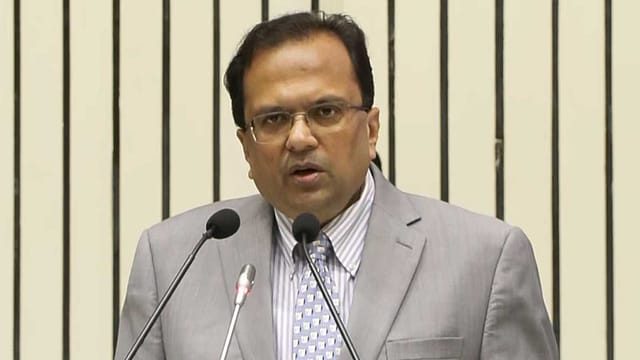
Union Home Secretary Govind Mohan has tendered an unconditional apology to the Supreme Court, saying there was no deliberate or wilful disobedience of its earlier directions. However, he has also defended the government’s decision to suspend cellular internet services, arguing that the measure was necessary to maintain public order. The matter is scheduled for a further hearing on October 15, 2026.
Why has Home Secretary Govind Mohan apologised to the Supreme Court?
According to ANI, Mohan filed an affidavit responding to the contempt notice issued by the Supreme Court on October 11. He apologised unconditionally and maintained that the restrictions were imposed to prevent a potential disturbance during the planned protest. The contempt proceedings concern allegations that authorities failed to comply with the court’s October 9 directions on public transport and movement in Delhi ahead of a demonstration organised by the Cockroach Janta Party (CJP) and other groups.

Zeroing In on ECI
09 Oct 2026 - Vol 05 | Issue 41
Constitutional legitimacy versus political opportunism
Mohan has asked the court to discharge the contempt notice, arguing that the government did not deliberately violate its orders. The apology is part of his response; it does not, by itself, mean the court has closed the proceedings or accepted the government’s explanation.
What did the Supreme Court order before the October 10 protests?
The Supreme Court’s October 9 directions came amid preparations for a protest at Jantar Mantar demanding the resignation of Chief Election Commissioner Gyanesh Kumar. The agitation was linked to allegations of irregularities in the revision of electoral rolls. The court had reportedly directed authorities not to impose a blanket shutdown of Delhi Metro and other train services and had called for traffic advisories to minimise inconvenience to the public.
On October 11, the court issued contempt notices to Mohan, Delhi Police Commissioner Anurag Kumar and Delhi Metro Rail Corporation (DMRC) chairperson D Thara. India Today reported that the bench also stressed that peaceful protesters should not be illegally detained and that internet access, public transport and access to justice should not be unnecessarily obstructed.
The court was responding to allegations of mass preventive detentions, metro restrictions and disruptions around the planned demonstration.
Why did the government suspend mobile internet in Delhi?
In his affidavit, Mohan said cellular internet services were suspended for 24 hours, from 10 pm on October 9 to 10 pm on October 10, within a four-kilometre radius of Raisina Hills. The government described the suspension as a proportionate measure to prevent public disorder. Mohan also clarified that the restriction applied to cellular internet and did not extend to Wi-Fi or broadband services.
The government has asked the Supreme Court to modify its October 11 directions to clarify that temporary internet suspensions may be permitted in exceptional circumstances, provided they comply with the law and applicable safeguards.
Why are Delhi Police and DMRC also involved?
The controversy extends beyond the internet shutdown. Delhi Police and DMRC have also submitted affidavits responding to the contempt proceedings. DMRC reportedly said entry and exit restrictions were imposed at 45 of Delhi Metro’s 303 stations on October 10, following police instructions. It maintained that train services continued and offered an unconditional apology while arguing that there was no blanket shutdown.
Delhi Police, meanwhile, has defended its preventive measures, citing security concerns and previous protest-related disruptions. These are the authorities’ submissions, not final findings by the court.
Is the Supreme Court contempt case over?
No final outcome had been reported in the sources available before the October 15 hearing. The court will have to consider the affidavits, the original directions and the circumstances in which the restrictions were imposed.
The case matters because it tests how authorities balance public order with judicial directions, freedom of movement and peaceful assembly. The central issue is whether the measures taken were legally justified and consistent with the Supreme Court’s orders—not simply whether the government has apologised.
(With inputs from agencies)