Delhi Police file FIRs over Connaught Place protests: What happened during the Tiranga rally?
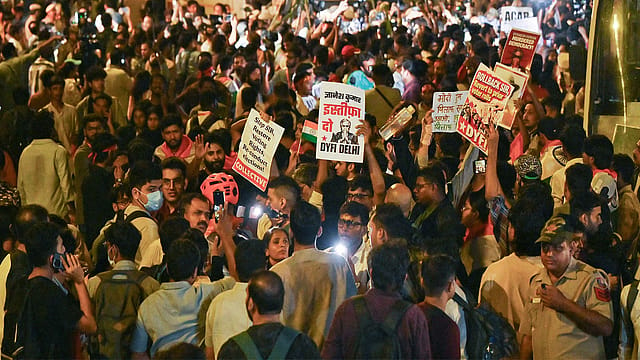
A planned rally to wave the national flag in central Delhi ended with detentions, a heavy security deployment and multiple police cases. Delhi Police on Saturday, October 17, registered several FIRs over alleged violations of prohibitory orders in Connaught Place and other parts of New Delhi, warning that repeat offenders could face further action.
According to The Times of India, police said crowds gathered despite repeated announcements asking people not to assemble. The cases concern alleged violations of Section 163 of the Bharatiya Nagarik Suraksha Sanhita (BNSS), under which authorities can issue orders to prevent potential disturbances to public order. An FIR records allegations; it does not establish guilt.

Zeroing In on ECI
09 Oct 2026 - Vol 05 | Issue 41
Constitutional legitimacy versus political opportunism
Why did Delhi Police detain Abhijeet Dipke before the Tiranga rally?
The action followed the ‘Lehra Do Tiranga’ rally called by Abhijeet Dipke, founder of the Cockroach Janta Party (CJP), at Central Park in Connaught Place on Friday, October 16. The proposed gathering was intended to bring people together to wave the national flag and protest against the Election Commission over alleged irregularities in the electoral process.
India Today reported that police placed Dipke under preventive detention shortly before the planned rally. Officers had served him a notice prohibiting the gathering at Central Park, citing restrictions in force in the area. Dipke questioned the grounds for his detention, saying he was alone as he set out. Police said preventive action was being taken under the prevailing orders. Around 150 people were reportedly detained across central Delhi during the demonstrations.
The Delhi High Court had declined on October 15 to stop the proposed protest, while recording the police’s assurance that it would take measures to regulate the gathering. The court’s decision did not remove the restrictions imposed by the authorities.
What is the latest update on Dipke and Neha Bora?
The developments continued into Saturday. Delhi Police said Dipke was arrested after action was initiated under Sections 126 and 170 of the BNSS, which deal with preventive measures to maintain peace and preventive arrest. He was scheduled to appear before a Special Executive Magistrate.
Neha Bora, president of the All India Students’ Association (AISA), was also detained during a separate demonstration near Mandi House. Police released Bora early on Saturday after completing formalities under Section 65 of the Delhi Police Act. After her release, Bora criticised the police action and alleged that detainees were treated unfairly. She also questioned the time taken for her legal team to reach her. These are allegations made by Bora; the police account cited in reports said her release followed the required procedures.
CJP representative Ratna Singh separately claimed on X that Dipke’s whereabouts had remained unclear and that lawyers had not been able to meet him following his detention. The police said he would be produced before the magistrate.
What sparked the protests against Chief Election Commissioner Gyanesh Kumar?
The demonstrations are part of a wider campaign by CJP, Opposition parties and student organisations demanding the resignation of Chief Election Commissioner Gyanesh Kumar. Protesters have raised allegations concerning the Election Commission’s Special Intensive Revision (SIR) of electoral rolls.
The Election Commission has rejected allegations of bias, while the BJP has criticised the protests. The dispute has prompted demonstrations in Delhi and other cities in recent days.
YouTuber Dhruv Rathee also announced on X that he had reached London and urged people to join a protest at Parliament Square on Saturday over the electoral controversy.
For now, Delhi Police say their latest cases concern compliance with prohibitory orders and the maintenance of public order. The legal proceedings involving Dipke and the FIRs will determine the next steps, while the wider disagreement over electoral-roll revision remains unresolved.
(With inputs from ANI)