Delhi AQI Eases to 307 After Diwali, Air Still ‘Very Poor’
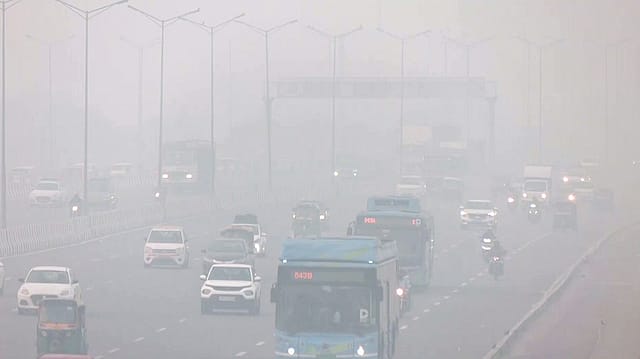
Delhi’s citywide Air Quality Index (AQI) fell to 307 at 7 am on Tuesday, November 10, offering some relief a day after several monitoring stations recorded ‘severe’ pollution. The reading remained in the ‘very poor’ category, according to the Central Pollution Control Board (CPCB).
Delhi’s air quality deteriorated after Sunday’s Diwali celebrations. On Monday morning, several monitoring stations crossed 400 and thick haze reduced visibility in parts of the capital. The Delhi government has deployed water sprinklers across the city to suppress dust and limit the amount of particulate matter in the air.
Chandni Chowk Nears the ‘Severe’ Mark
Chandni Chowk recorded an AQI of 395, the highest among the Tuesday morning readings reported by ANI. Safdarjung followed at 371, with Punjabi Bagh at 355, Aya Nagar at 354 and RK Puram at 328. All five readings were in the ‘very poor’ range.
Several other locations were in the ‘poor’ category. Anand Vihar recorded 290, Ashok Vihar 278 and Narela 272. The reading around India Gate and Kartavya Path was 258. In neighbouring Haryana, Ambala recorded an overall AQI of 250, also classified as ‘poor’.

The Era of Forever Wars
30 Oct 2026 - Vol 05 | Issue 44
Coping with an explosive Middle East
The CPCB classifies readings of 201 to 300 as ‘poor’, 301 to 400 as ‘very poor’ and 401 to 500 as ‘severe’. Chandni Chowk was six points below the start of the severe band on Tuesday, even as the citywide reading moved closer to the lower end of the ‘very poor’ range.
Moderate Fog Forecast for Five Days
The India Meteorological Department recorded a morning temperature of 17°C in Delhi, with moderate fog. It forecast moderate fog to persist over the next five days.
Poor visibility was also reported early on Monday, when several stations were in the ‘severe’ pollution band. Tuesday’s lower citywide AQI and the five-day fog forecast describe separate conditions. The forecast covers visibility, while the CPCB index tracks air pollution.
With inputs from ANI