Cauvery Water Row Escalates: Tamil Nadu Moves Supreme Court as Political Heat Intensifies
The decades-old Cauvery water dispute has entered another flashpoint, with the Tamil Nadu government moving the Supreme Court against Karnataka for allegedly failing to release the state's due share of river water despite clear directions from the Cauvery Water Management Authority (CWMA) and the Cauvery Water Regulation Committee (CWRC).
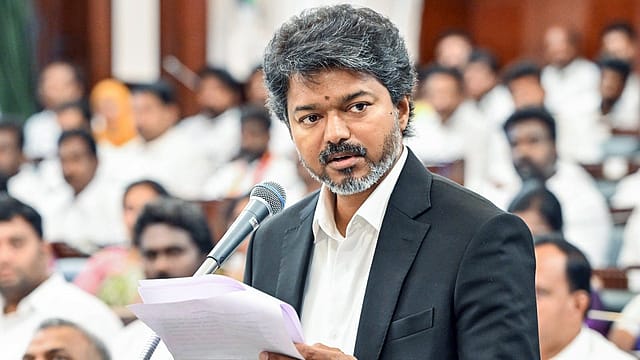
According to the Tamil Nadu government, Chief Minister C. Joseph Vijay directed officials to approach the apex court after Karnataka allegedly ignored repeated orders to release water.
At its meeting on July 28, the CWRC directed Karnataka to release 3,500 cusecs of water every day between July 29 and August 12 from the Krishna Raja Sagar (KRS) and Kabini reservoirs. The directive was later endorsed by the CWMA.

Zeroing In on ECI
09 Oct 2026 - Vol 05 | Issue 41
Constitutional legitimacy versus political opportunism
Tamil Nadu, however, claimed Karnataka released only 158 to 550 cusecs during the period from July 29 to August 2, far below the quantity ordered by the authorities.
The state has also argued that Karnataka currently has sufficient water storage to meet its obligations. According to Tamil Nadu, the KRS, Kabini, Harangi and Hemavathi reservoirs together hold 77.537 TMC of water, including 67.517 TMC of usable storage, leaving no justification for withholding Tamil Nadu's allocated share.
The government further contended that higher rainfall in Karnataka's catchment areas entitled Tamil Nadu to receive 26.954 TMC of water on a proportionate basis, significantly more than the 4.536 TMC directed by the CWMA.
On the advice of senior legal counsel, the state has now petitioned the Supreme Court, seeking directions to ensure Karnataka complies with the Cauvery water-sharing mechanism and releases Tamil Nadu's rightful share within the stipulated timeframe.
Political battle intensifies
Even as the legal battle moves to the Supreme Court, the Cauvery issue has triggered a fresh political confrontation in Tamil Nadu.
Former Chief Minister and DMK president M.K. Stalin accused the state government of failing to defend farmers' interests, saying the Cauvery waters that were expected to reach Tamil Nadu by June 12 have still not arrived.
In a post on X, Stalin warned that protests by farmers would intensify if their demands remained unmet, describing the situation as one where "the anguish of Delta farmers is rising instead of the waters of the Cauvery."
He also questioned Chief Minister C. Joseph Vijay's silence on Karnataka's alleged refusal to release water and criticised the government for not convening an all-party meeting on the Mekedatu reservoir project, similar to the one recently held in Karnataka.
The DMK also demanded a complete waiver of agricultural crop loans, a special relief package for Delta farmers and the declaration of drought-affected districts, saying protests would continue until farmers' concerns are addressed.
The Cauvery river dispute remains one of India's longest-running interstate water-sharing conflicts, with Karnataka and Tamil Nadu frequently locking horns over river flows during years of deficient rainfall. The proposed Mekedatu balancing reservoir in Karnataka has emerged as another major point of contention, with Tamil Nadu maintaining that it could affect downstream water availability.
(With inputs from ANI)