Calls grow to bring Ayodhya Ram Temple Trust under RTI
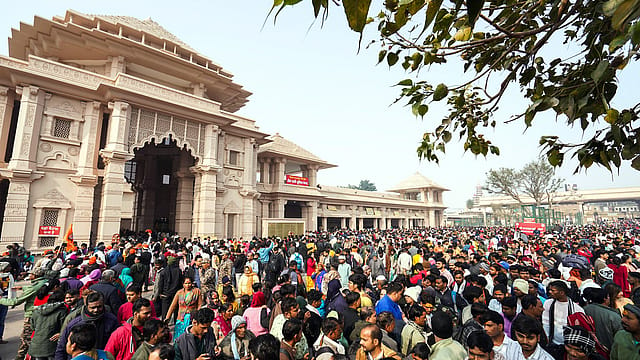
Amidst louder calls for bringing the guilty to justice in the alleged theft of donation funds and valuables with the likely connivance of at least a few former members of the Shri Ram Janmabhoomi Teerth Kshetra Trust in Ayodhya, with apparent leaks from those probing the plot to steal such funds revealing inventive ways and the impunity with which some of them carried out the loot, locals in Ayodhya are crestfallen, pilgrims demoralised and politicians of all hues are expressing shock and calling for stricter monitoring to check any such nefarious activities.

With some of the complainants such as Santosh Dubey, former Shiva Sena leader and Ayodhya movement activist who spoke to Open, alleging political support for those reportedly under probe by the Special Investigation Team (SIT), this development has come as a rude shock for the Hindutva forces that rode to political glory on the back of the agitation to build a Ram temple in Ayodhya by demolishing the Babri Masjid. Ayodhya-based Dubey demanded a speedy probe and greater transparency.
Greening the Future
23 Jul 2026 - Vol 05 | Issue 30
Securing a sustainable India
For its part, the Communist Party of India (Marxist), or CPM, says that no probe would be complete without bringing the Trust under the ambit of the Right to Information Act – without which misappropriation of money and valuables donated by devotees from across the world will continue. Currently, the Hindi media is abuzz with news around what they term as chanda chori or chadhava chori (translated as donation theft).
In a letter written to Union Home Minister Amit Shah, lawmaker and CPM leader in the Rajya Sabha, John Brittas, says that the trust is quite unlike any private organisation that can be kept out of the RTI purview. A three-member SIT constituted by the Uttar Pradesh government is probing the alleged embezzlement of crores of devotees’ donations and key Trust members such as General Secretary Champat Rai and Trustee Anil Mishra have resigned on moral grounds. SIT is scrutinising donation handling, counting procedures, and records at the Ayodhya site and so far, eight individuals, including staff responsible for counting cash offerings, have been sent to judicial custody even as a portion of the stolen funds were recovered.
Brittas says in the letter, which was reviewed by Open, that it is significant that a government-approved scheme provides for continuing institutional representation of both the Central Government and the Government of Uttar Pradesh in the Trust through serving IAS officers nominated by the respective Governments, in addition to the District Magistrate, Ayodhya. “Notably, the present representative of the Central Government is an Additional Secretary in the Ministry of Home Affairs itself. The Government of Uttar Pradesh’s nominee is also a serving IAS officer. Besides, another ex-officio member was once the senior-most officer in the Prime Minister’s Office. The conscious inclusion of serving senior Government functionaries in the Trust’s governing framework demonstrates that the Government itself considered it necessary to maintain an enduring institutional association with the administration of the Trust,” he says.
The letter adds that while these representatives may not enjoy voting rights, their statutory inclusion in the governing framework reflects the public character of the institution and the Government's continuing institutional association with its administration. “Such a constitutionally and statutorily recognised governmental presence cannot be ignored while determining whether the Trust ought to be subjected to standards of transparency under the Right to Information Act. If the Trust is entirely private in character and wholly beyond the sphere of public accountability, why did the Government itself consider it necessary to provide for continuing governmental representation in its governing structure?” Brittas asks.
According to the CPM lawmaker and central committee member, the public character of the Trust also arises from the nature of the functions entrusted to it. “It administers one of the country's most revered religious institutions, manages land acquired under a Parliamentary enactment and vested through Government notification, and receives contributions from millions of devotees across India and abroad. The extraordinary confidence reposed by the public in the trust naturally carries with it an equally compelling expectation of transparency in matters concerning governance, financial administration, contracts, utilisation of donations and institutional decision-making. Transparency in these administrative matters in no manner intrudes upon the religious autonomy of the trust; on the contrary, it enhances public confidence in its functioning.”
The CPM leader notes that equally important is the constitutional principle that institutions of immense public significance, particularly those brought into existence through governmental action and entrusted with functions affecting the wider public, should remain accountable in respect of their administrative affairs. In the letter to Shah sent on July 4. The CPM MP adds, “The experience of major religious institutions established under statutory or governmental frameworks, such as the Shri Mata Vaishno Devi Shrine Board, demonstrates that institutional autonomy and public accountability are not mutually exclusive. Such institutions continue to enjoy complete autonomy in matters of religion while functioning within transparent administrative and financial frameworks. Extending similar standards of transparency to the administration of the Shri Ram Janmbhoomi Teerth Kshetra Trust would neither dilute its religious autonomy nor impinge upon the freedom of religion; rather, it would reinforce public confidence by ensuring accountability in matters such as governance, financial management, utilisation of public donations and award of contracts.”
In February last year, the ministry of home affairs had told the Central Information Commission that all decisions on the Ram Temple in Ayodhya are taken internally by the trust, with the authority resting solely with its permanent trustees. An RTI applicant, Neeraj Sharma, had sought the names of the public information officers for the Ram temple trust from the central government but his appeal was turned down by the ministry of home affairs. He moved Delhi high court in February 2024 after which directions were issued to central information commission to decide whether Ram temple trust was a public authority or an autonomous body after seeking MHA’s response and evaluating it.
However, with allegations surfacing every passing day about the bizarre nature of the alleged loot, which, includes, according to some reports, converting stolen gold into biscuits to ward off suspicion, the CPM leader said in this letter that “I earnestly request that the Ministry may kindly undertake a comprehensive reconsideration of its present stand regarding the applicability of the Right to Information Act, 2005 to the Shri Ram Janmbhoomi Teerth Kshetra Trust and take appropriate legal recourse before the jurisdictional High Court by placing its revised stand on record, thereby enabling the important questions concerning the interpretation of Section 2(h) of the Act in relation to the Shri Ram Janmbhoomi Teerth Kshetra Trust to receive an authoritative judicial determination.”
According to a PTI report, the MHA had kept a government-approved scheme and a related order for setting up the Shri Ram Janmabhoomi Teerth Kshetra Trust in a "confidential file", with the CIC upholding the denial of access to the records under the RTI Act in a 2024 order. During a hearing on June 18, 2024, the MHA argued that the documents should remain confidential. The matter arose from a plea by RTI activist Sharma, who had sought certified copies of the scheme approved by the Centre through Order No. 71011/02/2019-AY dated February 5, 2020.