Bought Cheap, Billed High: Karnataka Flags Up to 52-Fold Markups on Cancer Drugs
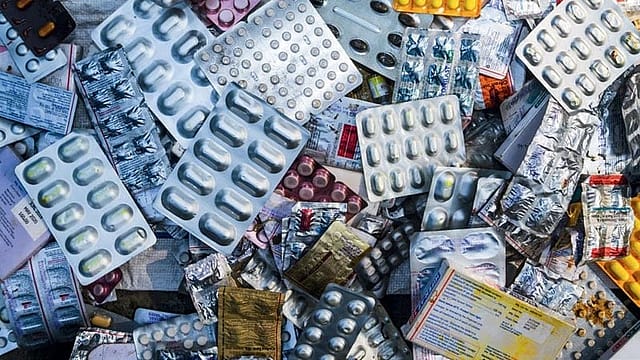
Hospitals are buying high-cost medicines at heavily discounted prices but billing patients at or near the printed Maximum Retail Price, resulting in markups ranging from 10 times to more than 52 times the procurement cost, the Karnataka government has said.
Flagging findings from inspections at hospitals treating cancer, the state has urged the Centre to tighten pricing oversight and require hospitals to disclose both the acquisition cost and MRP on patient bills.
A press note issued by the Office of the Commissioner, Food Safety and Drug Administration on October 1 said investigations had identified extreme pricing disparities in 253 drugs.
The findings put the gap between what hospitals pay and what patients are charged at the centre of Karnataka’s demand for national action.

Losing Memory
16 Oct 2026 - Vol 05 | Issue 42
The making of a medical and social emergency
Institutional Discounts, MRP Bills
According to the state’s Food Safety and Drug Administration, pharmaceutical companies supply medicines to hospitals at discounted institutional rates. Patients, however, are being charged at or close to the manufacturer’s printed MRP.
The government said this practice had created substantial differences between procurement prices and patient bills, particularly for expensive medicines used in cancer treatment.
Karnataka’s Health and Family Welfare Minister wrote to the Union Health Minister on September 23, seeking intervention against what the state described as exorbitant billing.
The pricing gaps cited are markups over procurement costs, rather than a calculation of hospitals’ net profits.
What Karnataka Wants Changed
The state has proposed mandatory disclosure of landing costs alongside MRP on hospital bills, regulation of trade margins on essential high-value medicines and consumables, and wider price-control coverage.
Its recommendations include amendments to the Drugs Price Control Order, 2013, expansion of the National List of Essential Medicines and an audit and enforcement mechanism.
Karnataka has also asked that all forms of back-end consideration be accounted for when determining acquisition costs, so that the recorded cost reflects the full commercial arrangement.
It has sought an inter-ministerial expert group and a national study to establish the extent of the pricing disparities.
The Gap in Discount Pass-Through
The state’s press note pointed to the absence of a specific requirement compelling hospital pharmacies to pass institutional discounts on to patients.
It also highlighted differences in pricing oversight across scheduled medicines, non-scheduled medicines, medical devices and consumables, arguing for stronger controls on margins.
The concern goes beyond whether a bill exceeds the printed MRP. Karnataka’s case is that billing at or near MRP can still impose an unjustified burden when hospitals have acquired the product for a fraction of that price.
Fresh Checks Cover Drugs and Consumables
Following the minister’s directions, drug enforcement officers carried out a special verification drive on September 25 and 26 at wholesalers, hospitals and other establishments in Bengaluru and other districts.
That exercise covered more than 768 consumable items and 189 high-cost drugs. Preliminary observations showed substantial differences between landing costs, printed MRPs and actual selling prices, the department said.
These findings will also be submitted to the Centre.
The verification drive will continue in phases, with the next round focusing on antiretroviral medicines, higher-generation and critical antibiotics, medical devices and hospital consumables that carry significant costs for patients.
The department said it expected hospitals and pharmaceutical establishments to maintain complete billing transparency. It described affordable access to essential and life-saving healthcare as a matter of serious public importance and pledged action within the state’s jurisdiction.
With inputs from ANI