Blasting Through Zojila: India’s High-Altitude Tunnel Nears Breakthrough
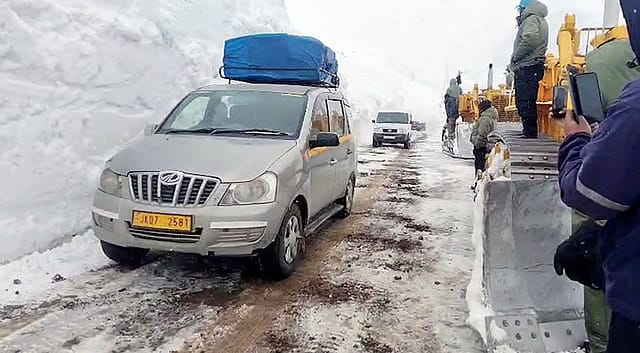
High in the Himalayas, where roads disappear under snow for months, a breakthrough is about to be forced—literally.
On June 9, Union Minister Nitin Gadkari is set to trigger the breakthrough blast at the Zojila Tunnel, marking a critical milestone in one of India’s most ambitious infrastructure projects. The moment signals more than engineering progress; it marks the nearing completion of a passage designed to outlast weather, terrain, and time.
Stretching 13.15 kilometres beneath the Zojila Pass at an altitude of nearly 11,500 feet, the tunnel is being built to do what the mountain road above cannot—stay open through the year. For decades, the Srinagar–Leh highway has been at the mercy of snowfall, cutting off Ladakh from the Kashmir Valley for long stretches each winter. The tunnel aims to end that isolation.

Greening the Future
23 Jul 2026 - Vol 05 | Issue 30
Securing a sustainable India
When completed, it will stand as the world’s longest single-tube, bi-directional road tunnel at this altitude, linking Kashmir to Kargil and Ladakh with uninterrupted, all-weather connectivity. The implications are immediate and far-reaching: faster movement of people and goods, improved access for defence logistics, and a steady flow of economic activity into a region where geography has long dictated limits.
The timing of the breakthrough comes alongside a broader push on infrastructure quality and execution. In recent review meetings held in New Delhi, Gadkari assessed highway projects spanning over 10,000 kilometres in Rajasthan and nearly 2,000 kilometres in Himachal Pradesh. The message was consistent—speed matters, but quality matters more.
Officials from the National Highways Authority of India (NHAI), the Ministry of Road Transport and Highways (MoRTH), and project contractors were directed to tighten standards, adopt advanced construction technologies, and ensure durability across projects. The emphasis extended to monsoon preparedness as well—drainage systems, slope protection, and preventive maintenance to keep highways operational through seasonal stress.
The Zojila Tunnel sits at the intersection of these priorities. It is not just a passage through rock, but a test of execution in extreme conditions—where altitude, weather, and logistics combine to push engineering to its limits.
For the government, the project represents more than connectivity. It is about integration—physically linking regions, economically unlocking potential, and strategically strengthening access to sensitive border areas.
The blast on June 9 will not complete the tunnel.
But it will announce something just as important: that the mountain is finally giving way.
(With inputs from ANI)