Bashir Badr (1935-2026): The Poet of Late-Night WhatsApp Messages
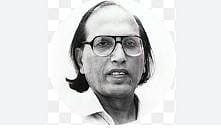
The poet died. The poet has died. The poet had died long ago, his son told a newspaper reporter. He had dementia, the world was already hiding behind fog for him. A few years ago, someone had shot a video of him on mobile phone, in which they made him remember his couplets. He finished them sometimes when the fog lifted, and a smile, sun-like, appeared on his face.
The death of Bashir Badr feels unreal because he had long ago crossed the invisible border between the poet and public memory. He was not read only in closed elite circles, but repeated at railway stations, in political speeches, at tea stalls, and more importantly, in late-night WhatsApp messages. What did Badr mean? He meant intimacy that did not feel synthetic; he meant poetry that felt almost like an ordinary speech.

What Rahul Gandhi Wants
28 Aug 2026 - Vol 05 | Issue 35
He is desperately courting the angry youth. That won't be enough to credibly challenge Modi
When Badr came on stage, he broke the inherited traditions of grandeur of Urdu (Hindustani) poetry, its astronomical metaphors, its aristocratic melancholy. Instead, it brought a breezy epistolary that only felt urgent once it caused a stir in the heart — to which it had an emotional accessibility without simplification.
Badr lived through violence and loss. The communal riots of 1987 in Meerut destroyed more than his house. But he never spoke about it directly as if that would be an insult to poetry itself, to his loss itself. In the first couplet of nazm where he alludes to it, he says: Log toot gate hein ek ghar banane main, tum taras nahi khaate bastiyaan jalaane mein (People break themselves trying to build even a single home, yet you feel no pity in setting entire settlements on fire). One doesn’t need to be a victim of communal violence to relate to it. It is also as if towards the end of this work he is telling himself that one must move on, and telling others to do the same. Doosri koi ladki zindagi mein aayegi, kitni der lagti hai usko bhool jaane mein. In a broader interpretation, one could translate this into: Someone (or something) else will come into your life; tell me, how much time does forgetting truly ask of us?
Or take the haunting melancholy of: Ujaale apni yaadon ke humare saath rehne do, na jaane kis gali mein zindagi ki shaam ho jaaye (Let the light of your memories stay with me, who knows on which street life may find its evening). The couplet contains one of Bashir Badr’s great gifts: the softness of his thought, even when he is speaking of an end, of death, that he almost makes sound like twilight. Or consider the devastating simplicity of Ghar naya, barton naye, kapde naye, in puraane kaagzon ka kya Karun (New house, new utensils, new clothes, what am I to do with these old papers?) The poet, through the tapestry of everyday life tells us that life does not always fit into renewal.
Then there is the unforgettable warning disguised as wisdom: Koi haath bhi na milaayega jo gale miloge tapaak se, yeh naye mizaaj ka shehar hai, zara faasle se mila karo (No one will even shake hands if you embrace too eagerly, this is a city of new temperaments, meet people with some distance). It sounds almost prophetic in the modern, fake lives most of us are now too trained to live.
In later years, illness and dementia dimmed Bashir Badr’s memory, an irony almost too cruel for literature: a poet of remembrance losing access to his own remembered world. Yet perhaps poetry had already completed its journey. Badr no longer needed to remember his couplets because millions had begun remembering them for him.