Assam Floods 2026: As the Dhansiri River Swells, Families Face an Impossible Choice
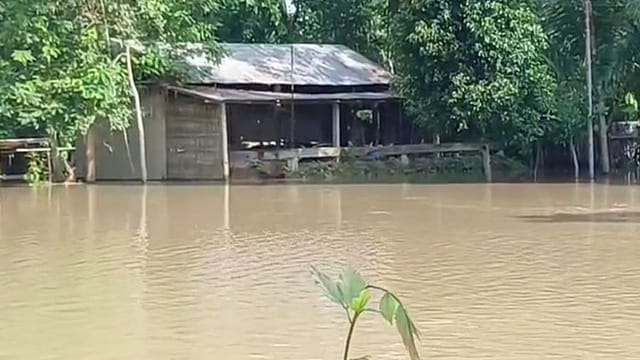
For many families in Assam, the hardest part of a flood isn't the rising water. It's deciding what to leave behind.
As the Dhansiri River continues to overflow in Golaghat district, floodwaters have entered villages, submerged courtyards and cut off roads, forcing thousands to evacuate. But even as relief camps fill up, many residents are choosing to stay back, unwilling to abandon the cattle, homes and belongings that represent a lifetime of savings.
The latest flooding has affected more than 52,000 people from nearly 14,000 families in the Khumtai Assembly constituency alone. The district administration has opened 32 relief camps, sheltering around 1,300 people, while rescue teams continue to move stranded residents to safer locations.

Rise of the Pivotal Power
18 Sep 2026 - Vol 05 | Issue 38
The BRICS declaration is a strategic victory for Modi
Yet, not everyone is leaving.
Across flood-hit villages, families are moving to upper floors or higher ground within their homes, hoping to save furniture, food supplies and livestock. In rural Assam, cattle are more than animals—they are a family's income, financial security and future. Leaving them behind is a risk many are unwilling to take.
"The situation has remained severe for the last four to five days," local MLA Mrinal Saikia said, adding that several villages remain inundated and more than a thousand displaced residents are living in relief camps. Others continue to be stranded in villages such as Kadamguri and Rangdoi, waiting for the water to recede.
Golaghat is the latest flashpoint in Assam's flood crisis
While Golaghat is making headlines, the flooding is part of a much larger emergency unfolding across Assam.
According to the Assam State Disaster Management Authority (ASDMA), around 1.4 lakh people across seven districts have been affected by the latest wave of floods. Water levels have risen across Golaghat, Sivasagar, Charaideo, Nazira, Mangaldoi and other areas, while this year's monsoon has already claimed 100 lives in the state.
Schools, including St. Mary's School in Golaghat, have been affected, roads remain underwater in several areas, and rescue operations continue as rivers flow above danger levels.
Why does Assam flood every year?
Floods have become an annual reality for Assam, but experts say the problem is becoming more severe.
The Dhansiri River, a major tributary of the Brahmaputra, has swollen after days of intense rainfall in its upstream catchments in Nagaland and adjoining regions. The overflowing river has spilled into low-lying villages, adding to the wider flood situation across the Brahmaputra basin.
According to the Assam government's Water Resources Department, nearly 40% of the state's land area is flood-prone—almost four times the national average. Every year, rivers inundate more than 9 lakh hectares of land, damaging crops, roads and homes, while decades of riverbank erosion have displaced thousands of families.
Climate scientists have also warned that extreme rainfall events are becoming more frequent across Northeast India, increasing the intensity of floods and reducing the time communities have to prepare.
A crisis that goes beyond the water
Golaghat borders Kaziranga National Park, making it one of Assam's most ecologically significant districts. While floods are a natural part of Kaziranga's ecosystem, helping replenish grasslands, extreme flooding also forces wildlife onto highways and into nearby villages, creating additional challenges for both forest officials and residents.
For people living in flood-prone villages, however, the immediate concern is far more personal.
Relief camps offer shelter, but they cannot replace crops destroyed overnight, homes filled with silt or livestock lost to rising water. Many families know that once the floods recede, the real work of rebuilding will begin.
Until then, they wait.
Some in relief camps. Others on the upper floors of their homes, watching the Dhansiri River rise, hoping the water stops before everything they have built is washed away.
(With inputs from ANI)