Ashok Dham Stampede Explained: What Triggered the Crush That Killed 7 Devotees in Bihar?
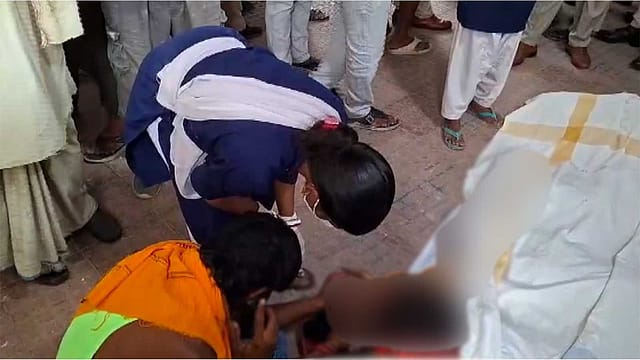
The chaos lasted barely two minutes. Seven people did not make it out alive. Thousands of devotees had converged on Ashok Dham Temple in Bihar’s Lakhisarai district to offer water to Lord Shiva on the third Monday of Shravan. The queue reportedly stretched as far as Ashok Dham Halt railway station.
Then the crowd swelled. A section of barricading gave way. An electrical pole or wire reportedly fell near the route. Someone shouted about electrocution or lightning. People turned, pushed and ran. Devotees fell in the women’s queue, and the pressure behind them kept building. Bihar Chief Minister Samrat Choudhary called the incident “extremely tragic and heart-wrenching” and directed the administration to ensure prompt treatment for the injured. What remains unclear is the exact chain of events. Was it a fallen electrical wire, a rumour, a failed barricade or an unmanageable surge after two trains arrived? Here is what officials and witnesses have said so far.

Losing Memory
16 Oct 2026 - Vol 05 | Issue 42
The making of a medical and social emergency
What happened at Ashok Dham Temple?
The crush occurred at around 6.45 am as devotees moved towards the temple for Jalabhishek on the third Monday of Shravan. Large crowds had gathered along separate queues for men and women. According to witnesses, panic erupted near the route between Ashok Dham Halt and the temple. Several devotees fell as people suddenly changed direction. Others were then pushed or knocked down by the crowd behind them. Seven deaths have been confirmed, while more than a dozen injured devotees were taken to Sadar Hospital and other nearby medical facilities.
What triggered the panic?
There are several preliminary accounts, but no final official conclusion. Some witnesses said an electrical pole or wire fell near the queue, sparking rumours that people had been electrocuted. Others reportedly believed lightning had struck. Lakhisarai District Magistrate Shailendra Kumar offered a broader explanation. He said two trains arrived close together, causing the number of pilgrims near the temple route to rise sharply. A section of barricading then collapsed under the pressure, and people fell over one another. The incident may therefore have resulted from multiple failures occurring within seconds: a sudden crowd surge, a physical obstruction or falling pole, a broken barricade and a rumour that transformed congestion into panic.
Were devotees actually electrocuted?
That has not been confirmed. Lakhisarai Sub-Divisional Police Officer Shivam Kumar said officials had heard that an electrical pole fell and that electrocution may have triggered the panic. He stressed that the precise cause could be established only after verification. Some reports indicated that the power supply was switched off at the time, which raises the possibility that fear of electrocution, rather than an actual electric current, drove the crowd’s reaction. Until investigators examine the pole, electrical line, power supply and medical evidence, the electrocution theory must be treated as unverified.
What role did the two trains play?
Their arrival may have created a sudden and dangerous increase in crowd density. Ashok Dham Halt serves pilgrims travelling to the shrine. A witness said the temple queue had stretched towards the station when two trains stopped nearby, releasing more passengers into an already congested route. A crowd can move safely only while people retain enough space to control their direction and footing. When density rises sharply, individuals lose the ability to move independently. A stumble near a barricade can then produce a pile-up as pressure continues from behind. The trains did not necessarily cause the tragedy by themselves. Their arrival may have added the surge that pushed an already strained crowd-management system beyond its limit.
Did the barricades fail?
The district magistrate said a section of barricading collapsed under pressure from the crowd. Barricades are meant to separate movement, regulate queues and prevent opposing streams of people from colliding. If they give way, devotees can spill into adjoining lines or suddenly lose the support guiding their movement. Witnesses described pressure in the women’s queue, where several devotees reportedly fell over one another. Once people hit the ground in a densely packed crowd, those behind them may not be able to see or stop. Investigators will need to establish whether the barricades were strong enough, properly anchored and designed for the turnout the administration expected.
How large was the crowd?
Some reports estimated that around 50,000 devotees had gathered for the morning prayers, although authorities had not released a final verified count. The district administration said it had prepared for a large turnout but described the number of pilgrims as unprecedented. Shravan Mondays draw particularly heavy crowds to Shiva temples. The third Monday, combined with train arrivals during the morning peak, appears to have concentrated thousands of people within a narrow period. Calling the turnout “unprecedented”, however, does not settle whether planning was adequate. Ashok Dham is known to attract large Shravan crowds, making surge modelling, controlled entry and coordination with railway schedules essential.
Were police and ambulances present?
Yes, according to witnesses and officials. Police personnel, ambulances and other emergency services were reportedly stationed within roughly 200 metres of the site. Rescue teams responded and transported the injured to nearby hospitals. Their proximity may have reduced delays in medical treatment. It could not prevent the crush from developing. The central question is whether enough personnel were positioned at the critical pressure points before the panic began, particularly near the railway halt, barricades and merging queues.
Why is Ashok Dham so crowded during Shravan?
Ashok Dham, formally known as Shri Indradamneshwar Mahadev Temple, is one of Bihar’s prominent Shiva shrines. During Shravan, devotees carry water and perform Jalabhishek, the ritual offering of water to Lord Shiva. Mondays are considered especially auspicious, producing intense morning crowds at Shiva temples across the country. The combination of religious significance, limited time windows for rituals and large groups arriving together can create dangerous surges unless entry is staggered. Ashok Dham has faced crowd trouble before. In August 2019, one devotee died and several others were injured or fainted during a heavy Shravan rush at the same shrine, according to NDTV.
Was this Bihar’s first temple crowd tragedy this year?
No. Eight women were reportedly killed and several people injured in a crowd crush at the Sheetla Mata Temple in Bihar’s Nalanda district on March 31, 2026. Barricades reportedly collapsed as a large number of devotees gathered for worship. That incident also triggered allegations of inadequate queue management and poor preparation. Two fatal temple crushes within months raise questions that extend beyond one shrine: whether crowd capacities are scientifically calculated, whether religious events are coordinated with transport arrivals and whether lessons from earlier tragedies are actually implemented.
Is the Ashok Dham tragedy part of a wider pattern in India?
Yes. Since January 2025, deadly crowd crushes have struck religious gatherings, transport hubs, sporting celebrations and political rallies across India. Official figures put the toll at 30 at the Maha Kumbh in Prayagraj, while 18 people died weeks later at New Delhi Railway Station, many while travelling to the festival. Eleven fans were killed outside Bengaluru’s Chinnaswamy Stadium during Royal Challengers Bengaluru’s IPL victory celebrations, and at least 40 people died at actor-politician Vijay’s rally in Karur. In March 2026, another temple crush reportedly killed eight women in Bihar’s Nalanda district. Reports point to a recurring danger: huge crowds entering constrained spaces faster than organisers can monitor, redirect or safely disperse them. The settings change; the deadly pressure points do not.
What has Chief Minister Samrat Choudhary said?
Choudhary expressed grief and directed officials to provide immediate and appropriate treatment to the injured. “The incident at Ashok Dham in Lakhisarai is extremely tragic and heart-wrenching,” he wrote on X. “The news of the deaths of devotees in the accident has left my heart deeply distressed.” He offered condolences to the victims’ families and prayed for the recovery of those injured. At the time of the initial reports, the government had not publicly detailed any compensation package or announced the composition of an inquiry.
What happens next?
The injured remain under treatment while the district administration investigates the sequence of events. The larger test will come after the immediate grief subsides. Authorities will have to decide whether access to the shrine should be redesigned for future Shravan Mondays, with staggered entry, stronger barricades, live crowd monitoring and better coordination with the Railways. Seven people died in a crush that witnesses say lasted around two minutes. The warning signs, however, had existed for years: huge seasonal crowds, a narrow approach, trainloads of devotees and an earlier fatal incident at the same shrine.
(With inputs from ANI)