Asha Bhosle (1933-2026): The Woman Who Rebelled
Much before the slinky stars of the Seventies to whom Asha Bhosle gave her sinuous voice, there was Asha Parekh in Teesri Manzil trying to seduce a recalcitrant Shammi Kapoor in a field. “O mere sona re sona re sona re/De dungi jaan juda mat hona re” (O my darling, I will give up my life if you desert me). The director was Vijay Anand, master of song scenography, and the producer was Nasir Hussain, the man who gave Parekh her mischievous tomboy image.
The 1966 movie also had Bhosle singing for Helen in the duet ‘O Haseena Zulfon Wali’, where Parekh is seated sedately, watching Shammi Kapoor twisting frantically, playing the saxophone, and swinging on the dance floor. As if that was not enough, it also had Bhosle singing “Aaja aaja main hoon pyaar tera” with Parekh in pink top and black slacks keeping pace with Kapoor whose playback was the silken-voiced Mohammed Rafi.

Zeroing In on ECI
09 Oct 2026 - Vol 05 | Issue 41
Constitutional legitimacy versus political opportunism
Rarely has a voice been able to swing with so much ease between the bad girl and the good girl, but that was the magic of Bhosle, especially when directed by her longtime partner RD Burman.
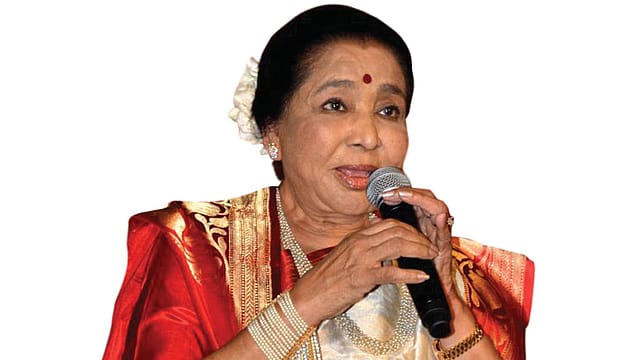
If Lata Mangeshkar, her elder sister, symbolised prim, proper, socialist India, Asha Bhosle was the personification of an India trying to break away from the shackles of the past. Much as she was trying to get away from her own past, of a difficult marriage with an abusive man, her voice sang songs of love, liberty and everything in between. She was a woman who laughed in the face of convention, thinking nothing of marrying a man six years junior to her, who met her first as a fanboy.
She didn't ever endorse Sai Paranjpye's 1997 film, Saaz, but the story captures an essence of her relationship with Mangeshkar in the story of Mansi and Bansi, two singing sisters who, despite their love for each other, seem forever in competition, or as the film called it, a "healthy rivalry".
Bhosle's transformation into the voice of the leading lady began in BR Chopra's 1957 movie, Naya Daur, with another longtime collaborator OP Nayyar. Her duets with Rafi like ‘Maang Ke Saath Tumhara’, ‘Saathi Haath Badhana’ and ‘Uden Jab Jab Zulfein Teri’, penned by Sahir Ludhianvi got her much acclaim. Their work together ensured a distinct voice for her, and it was aided by the songs often being from the woman's perspective. As singer Shreya Ghoshal remarked recently, that is missing from contemporary music, with most ballads being sung by men now, and the woman's voice being slowly and steadily erased.
It was not so in the ’60s and ’70s when Bhosle sang her most iconic numbers, often teasing the hero, seducing him, or even sometimes misleading him. Think ‘Yeh mera dil pyaar ka deewana’ in Don (1978), and Helen cavorting in a white gown and silver sandals as a grumpy and suspicious Amitabh Bachchan looks on, largely unmoved. Or “Yeh ladka hai Allah kaisa hai deewana. Kitna mushkil hai tauba isko samjhana” where Kajal Kiran in a fuchsia pink sharara is trying to beguile director Nasir Hussain's nephew Tariq Khan in the middle of a vast farmland in Hum Kisise Se Kum Nahin (1977).
Whether it was a bad girl trying to take revenge on the hero or a good girl who wanted her hero to be more demonstrative, Bhosle was the voice Hindi cinema turned to. Who else was the alchemist who could turn pain into passion, sorrow into seduction and loss into yearning? The women who stand on stage now belting out songs of love and longing without a whit of inhibition owe a lot to what she endured.
Bhosle may have passed on but her voice will continue to spark a million mutinies for those who come after her.