Article 370 Opened a 'New Chapter' for Jammu & Kashmir: PM Modi
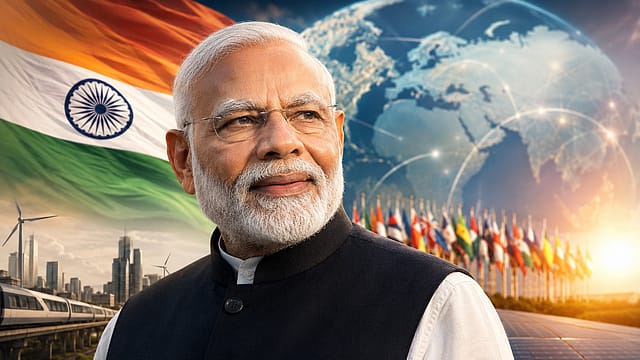
Prime Minister Narendra Modi on Wednesday described the abrogation of Articles 370 and 35A as the beginning of a "new chapter" for Jammu & Kashmir and Ladakh, saying the constitutional changes of August 5, 2019, have expanded opportunities, strengthened infrastructure and empowered communities that had long remained on the margins.
In a post on X marking the seventh anniversary of the Centre's decision to revoke Jammu & Kashmir's special status and reorganise the erstwhile state into the Union Territories of Jammu & Kashmir and Ladakh, Modi said the region had undergone "wide-ranging transformation" over the past seven years.

The Health and Wellness Issue
25 Sep 2026 - Vol 05 | Issue 39
He said sectors ranging from infrastructure and healthcare to education, entrepreneurship and sports had witnessed significant growth since 2019. Modi also said the full application of the Constitution had ensured constitutional rights reached women and marginalised communities that had been deprived of them for decades.
"Since then, the lives of the people of J&K and Ladakh have witnessed wide-ranging transformation. Infrastructure has expanded, opportunities in areas such as education, healthcare, entrepreneurship and sports have grown. Be it the women or the marginalised communities, those who were denied their basic constitutional rights for decades have been empowered thanks to the full application of the Constitution of India," he said.
The Prime Minister noted that this year's anniversary coincides with the 125th birth anniversary of Dr Syama Prasad Mookerjee, saying his vision of national unity found "historic fulfilment" on August 5, 2019.
"His lifelong commitment to national unity continues to inspire generations. What he envisioned decades ago found historic fulfilment on 5th August 2019," Modi said.
Reiterating the Centre's development agenda, the Prime Minister said the government remained committed to ensuring that Jammu & Kashmir and Ladakh continue to progress and that every citizen has the opportunity to contribute to the vision of Viksit Bharat.
"We reaffirm our commitment to the progress of Jammu & Kashmir as well as Ladakh and to ensure that every citizen has the opportunity to dream big, achieve and contribute to the making of a Viksit Bharat," he said.
Highlighting developments in the Union Territory, the Centre said Srinagar has emerged as a global cultural destination after being recognised as both a UNESCO Creative City and a World Craft City, bringing international attention to Kashmir's traditional craftsmanship.
The government also pointed to a rise in spiritual tourism, noting that more than 50 lakh devotees visited the Vaishno Devi shrine, while over 4 lakh pilgrims undertook the Amarnath Yatra this year. It also highlighted new attractions such as the musical fountain shows at Dal Lake as part of efforts to boost tourism and showcase Kashmir's cultural heritage.
Uttar Pradesh Chief Minister Yogi Adityanath also marked the anniversary, calling August 5, 2019, a "golden day" in India's history. In a post on X, he said the abrogation of Article 370 had fulfilled the vision of "One Constitution, One Flag" and transformed Jammu & Kashmir from a region marked by terrorism and separatism into one focused on peace, integration and development.
(With inputs from ANI)