Army Chief Highlights 1,100 Annual India-China Military Interactions at Border
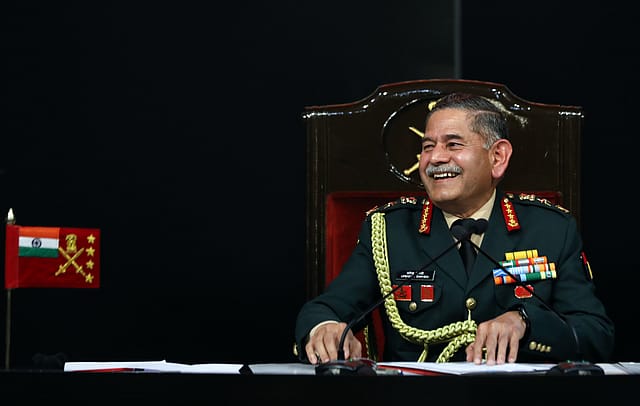
The situation along the Line of Actual Control (LAC) with China remains stable though sensitive, requiring constant vigilance, outgoing Army Chief General Upendra Dwivedi said on Monday. He noted that India and China conduct more than 1,100 ground-level military interactions every year to address routine border management issues and prevent misunderstandings.
Signs of Gradual Normalisation in Bilateral Ties
Speaking to ANI, Gen Dwivedi said disengagement agreements have played a significant role in improving stability along the border and that both sides have become more responsive to each other's concerns.
"The period of 2024-25 also witnessed encouraging developments in the broader bilateral relationship, reflected in the frequency and quality of military and diplomatic engagements," he said.

Greening the Future
23 Jul 2026 - Vol 05 | Issue 30
Securing a sustainable India
The Army Chief pointed to several positive developments indicating a gradual normalisation of ties between the two countries. These include the establishment of an Experts Group on boundary delimitation, a Working Group on border management, the resumption of the Kailash Mansarovar Yatra and direct flights, consensus on reopening border trade through designated passes, and certain visa facilitation measures.
Military Engagements Help Maintain Border Stability
Gen Dwivedi said sustained military engagement has been instrumental in preserving peace and tranquillity along the border.
"At the military level, sustained engagement has played an important role in maintaining peace and tranquillity. More than 1,100 ground-level interactions take place annually between the two sides to address routine border management issues and prevent misunderstandings," he said.
According to him, the overall situation is being managed through established mechanisms. Local issues arising from differing perceptions of the LAC are addressed through military-to-military interactions, hotlines, flag meetings and commander-level engagements.
"The overall situation is being managed through well-established mechanisms. Whenever local issues arise due to differing perceptions of the LAC, they are addressed through military-to-military interactions, hotlines, flag meetings and commander-level engagements. These mechanisms have helped ensure stability and facilitate routine activities, including patrolling and other local interactions in border areas."
‘Peace Through Strength’ Remains India's Approach
Outlining the Indian Army's priorities along the northern borders, Gen Dwivedi said maintaining peace and safeguarding national interests remain paramount.
"First, we must preserve peace and tranquillity along the LAC. Second, we seek to resolve local issues through dialogue and established mechanisms. Third, we remain committed to maintaining a robust and credible deployment posture to deter any potential threat. Simultaneously, we continue to strengthen infrastructure, logistics, surveillance capabilities and overall operational preparedness along the Northern Borders."
He emphasised that while India remains committed to engagement and dialogue, it will continue to maintain a strong military posture.
"However, our approach is based on peace through strength. The Indian Army's posture along the LAC will continue to remain firm, credible, vigilant and fully capable of safeguarding India's territorial integrity and national interests."
(With inputs from ANI)