Across States and Forests: Young Royal Bengal Tiger Walks 800 Km to Enter Similipal Reserve
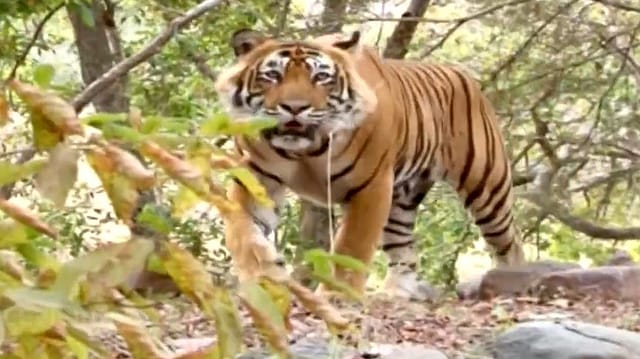
In a remarkable and rare wildlife event, a young male Royal Bengal tiger has walked approximately 800 kilometres through forests and landscapes to enter Odisha's famous Similipal Tiger Reserve.
This long-distance dispersal was described as an "astonishing first" by officials.
The tiger, estimated to be 4-5 years old and a prime adult male, was detected through camera traps installed for the ongoing all-India tiger census.
According to Prakash Chand Gogineni, Field Director of Similipal Tiger Reserve, the animal entered the reserve in December-January after starting its journey from the Chhattisgarh side.
It traversed through Sundargarh district, Banai forests, Deogarh, Dhenkanal, and Kamakhyanagar before finally reaching Similipal.
How Was the 800 Km Tiger Journey to Similipal Tiger Reserve Tracked?
The movement was captured on CCTV and camera traps set up for tiger estimation.
While the exact origin point remains unconfirmed, officials believe it originated from the central Indian tiger landscape.
This is the first documented case of a tiger naturally entering Similipal from outside the state in such a dramatic, long-distance trek.
Gogineni confirmed that the tiger is still residing within the reserve. Fresh camera traps to be deployed in December are expected to provide more updates on its movements and health.

Open Minds 2026
26 Jun 2026 - Vol 05 | Issue 26
The power of ideas and arguments in 50 portraits
He described the arrival of an outsider tiger as a positive sign for biodiversity, as it can help improve genetic diversity in the relatively isolated Similipal population.
Similipal, spread over 2,750 sq km in Odisha's Mayurbhanj district, is known for its unique melanistic (black) tigers and rich ecosystem.
However, its somewhat isolated location has raised concerns about inbreeding in the past. Natural dispersal of tigers from other landscapes, like this 800-km journey, is seen as a healthy ecological process that strengthens the meta-population.
Wildlife experts view such long-distance movements as evidence of improving forest connectivity and the tiger's natural instinct to seek new territories, mates, and prey-rich areas.
This incident adds to recent stories of tiger dispersal in India, where big cats have been recorded covering vast distances in search of suitable habitats.
(With inputs from ANI)