2020 Delhi riots: Supreme Court refuses to relax accused Shadab Ahmad’s bail conditions for law classes
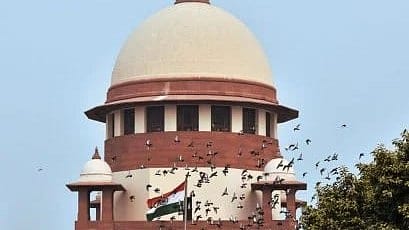
For Shadab Ahmad, pursuing a law degree in Ghaziabad has become a legal hurdle of its own. The Supreme Court on Monday, October 26, declined to modify the bail conditions that restrict his movement outside Delhi, directing him to approach the trial court instead.
Ahmad, an accused in the alleged larger conspiracy behind the February 2020 Delhi riots, had sought permission to travel to Ghaziabad to attend classes for a three-year law course. He also wanted to reduce the frequency of his police attendance from twice a week to once. According to legal news outlet LiveLaw, a bench of Justices Aravind Kumar and Vipul M Pancholi allowed Ahmad to withdraw his application, giving him liberty to approach the trial court.
Why Shadab Ahmad wants to travel to Ghaziabad for law classes
Ahmad’s counsel told the bench that he had secured admission to a law course in Ghaziabad and wanted to continue his education as part of his “reformation”. Classes began in August, and he was falling behind, the lawyer submitted. Ahmad would travel in the morning and return to Delhi by evening, the court was told. However, Justice Kumar questioned why Ahmad had not first approached the trial court. He also questioned his choice of a law college outside Delhi. “Go tell the trial court. This we will not modify... We know why you have joined that law college, leaving out all the law colleges inside Delhi,” the judge remarked, as reported by LiveLaw.

Look Who's Talking Regime Change
23 Oct 2026 - Vol 05 | Issue 43
When Ahmad’s counsel argued that the trial court could not alter the police-attendance condition imposed by the Supreme Court, the bench maintained its position. The lawyer then sought permission to withdraw the application, which the court allowed.
The order does not grant Ahmad permission to travel regularly to Ghaziabad for classes. He will need to pursue the relief through the trial court.
What are the bail conditions imposed on the Delhi riots accused?
The Supreme Court granted bail to Ahmad and four co-accused, namely Gulfisha Fatima, Meeran Haider, Shifa-ur-Rehman and Mohammad Saleem Khan, on January 5, 2026. A Delhi court subsequently ordered their release on January 8, subject to the conditions set by the apex court.
These include a restriction on leaving the National Capital Territory of Delhi without prior permission, appearing before the police twice a week, and restrictions on participating in public gatherings, rallies or meetings. The accused were also barred from circulating posters, banners and other campaign material, including through digital platforms.
Ahmad had previously obtained limited permission to travel to Ghaziabad to complete his admission process. The Times of India reported in August that a Delhi court allowed him to leave Delhi between 10 am and 7 pm from August 4 to 7 for that purpose. That limited permission did not amount to a general relaxation allowing regular travel for classes.
What is the 2020 Delhi riots larger conspiracy case?
The case concerns allegations that a larger conspiracy led to the communal violence that erupted in northeast Delhi in February 2020 amid protests against the Citizenship (Amendment) Act. The riots killed 53 people and injured more than 700. Ahmad and other accused face charges under the Unlawful Activities (Prevention) Act and provisions of the Indian Penal Code in connection with the alleged conspiracy. The allegations remain subject to trial; bail does not amount to a finding of guilt.
For now, Monday’s proceedings leave Ahmad’s request for regular travel unresolved. His next route is the trial court, where he can seek the permissions he says he needs to continue his law studies.
(With inputs from ANI)