Salim Kumar (1969 - 2026): End of an Era in Malayalam Cinema
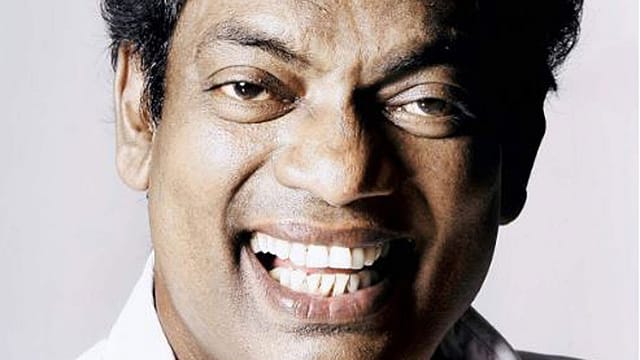
The death of actor Salim Kumar at the age of 56 feels like the closing of an illustrious chapter in Malayalam cinema that extends far beyond the loss of a single actor. It marks the fading of an era when comedians were not merely supporting performers but cultural institutions; when a comic actor could influence the language of a society, shape its everyday conversations and become as beloved as the stars whose names appeared above film titles.
For decades, Kerala possessed a distinctive comic tradition. In most film industries, comedy existed on the margins of storytelling, a diversion between dramatic moments. Malayalam cinema evolved differently. From Adoor Bhasi and Bahadoor to Jagathy Sreekumar and Innocent, comic actors occupied the very centre of popular culture. Their characters entered homes, classrooms, workplaces, tea shops and political discussions. Their dialogues became common expressions. Their faces became repositories of collective memory.
The Modi Years
02 Oct 2026 - Vol 05 | Issue 40
A Nation Rebuilt
Salim Kumar is one of the last great representatives of that tradition.
To understand the magnitude of his contribution, one must look beyond the easy description of him as a comedian. Comedy was his primary medium, but people were his subject. His real talent lay in observing ordinary human beings and translating their contradictions onto the screen. He understood vanity, insecurity, ambition, pretension and vulnerability because he had spent a lifetime watching them. That instinct allowed him to create hilarious characters, not because they were ridiculous but because they were recognisable.
This quality explains why his performances survived long after the films themselves left theatres. Malayalis did not merely remember his characters; they adopted them. Muthuraman in Thenkasipattanam, Bhaskaran in One Man Show, Koshy in Ee Parakkum Thalika, Advocate Mukundanunni in Meesha Madhavan, Pyari in Kalyanaraman, Chamba in Bamboo Boys, Usman in Kilichundan Mampazham, S.I. Gabbar Keshavan in Pattalam, Omanakkuttan in Thilakkam, Leelakrishnan in Soothradharan, Maayandi in Mazhathullikkilukkam, Manavalan in Pulival Kalyanam, Dance Master Vikram in Chathikkatha Chanthu, Umakandan in Pandippada, Rajakkannu in Thommanum Makkalum, and memorable appearances in films such as Mayavi and Chattambinaadu became part of Kerala's cultural vocabulary. Their dialogues were quoted at family gatherings and college hostels. Their mannerisms entered daily life. Their expressions found renewed existence in the digital age as memes and reaction images, long before younger performers mastered that terrain.
What made this achievement remarkable was that Salim Kumar rarely played men of consequence. He was usually the small-time dreamer, the local eccentric, the insecure subordinate, the unlucky romantic, the accidental troublemaker, or the man desperately attempting to appear more important than he really was. Yet these were precisely the people who exist in our social landscape. Through humour, he gave visibility to those lives.
His own life reflected a similar story of social mobility and cultural possibility. Born in North Paravur, he entered cinema without the advantages that often accompany success. His route was through Kerala's mimicry movement. Mimicry was not simply imitation. At its best, it was a study of human behaviour. It demanded acute observation, quick improvisation and an instinctive understanding of social types. The performer had to become a student of speech, gesture and personality. For Salim Kumar, it became an informal but rigorous school of acting.
The result was a comic style unlike any other. Many comedians relied on punchlines. Others relied on physical exaggeration. Salim Kumar relied on character. He could generate laughter through a pause, a look, a moment of hesitation or an awkward silence. He understood that comedy often emerges from the gap between who people are and who they imagine themselves to be. That understanding also explains why he eventually transcended comedy itself.
Indian cinema has historically imposed invisible limits on comic actors. Audiences celebrate them but rarely expect artistic seriousness from them. Their success becomes a trap. The more effectively they make people laugh, the harder it becomes for others to imagine them in dramatic roles. Salim Kumar spent much of his career confronting that prejudice.
The turning point came gradually. Films such as Achanurangatha Veedu revealed dimensions of emotional depth that had remained hidden beneath years of comic success. Yet it was Adaminte Makan Abu that transformed perceptions completely. His portrayal of Abu, an ageing Muslim striving to fulfil his lifelong wish of performing the Hajj pilgrimage, remains one of the defining performances in modern Malayalam cinema.
The film demanded qualities rarely associated with mainstream comic actors: restraint, patience, emotional subtlety and spiritual depth. Salim Kumar delivered all of them with astonishing grace. There were no grand speeches or dramatic outbursts. Instead, he built the character through silence, disappointment, faith and quiet endurance.
The National Film Award for Best Actor that followed was significant not merely because he won it, but because of what the award represented. It challenged a hierarchy that has long existed within Indian cinema. Comedy is often treated as a lesser art, despite requiring extraordinary skill. Salim Kumar's recognition affirmed an essential truth: the finest comic actors are often among the finest actors, period.
Yet awards alone cannot explain why his death has generated such widespread grief across Kerala. The answer lies elsewhere.
Unlike many stars, Salim Kumar never appeared distant from the society that embraced him. He remained recognisably one among its people. He carried neither the polish of cultivated celebrity nor the caution of someone constantly protecting a public image. Whether discussing cinema, politics or social issues, he spoke with a candour that occasionally invited controversy but rarely appeared insincere.
There was a democratic quality to his public presence. He represented a generation of performers who emerged from ordinary backgrounds and achieved extraordinary success without severing their connection to everyday life. In a society increasingly fascinated by celebrity culture, that authenticity became one of his defining strengths.
Perhaps that is why his passing feels deeply personal to so many people. The grief surrounding Salim Kumar is not only about admiration. It is about familiarity. For three decades, he occupied a place in the emotional lives of Malayalis that few actors manage to achieve. His performances accompanied childhoods, friendships, family gatherings and countless evenings before television screens. His characters became part of the shared experience of life in Keralam.
The measure of an artist's legacy is not simply the number of films left behind but the degree to which their work becomes inseparable from the life of a community. By that measure, Salim Kumar's contribution was immense. He altered the emotional vocabulary of Kerala. He demonstrated that humour can be intelligent without being elitist, popular without being superficial, and compassionate without becoming sentimental.
His career also reminds us of a larger truth about art itself. The greatest comedians are rarely people who stand apart from society and laugh at it. They are people who stand within it and understand it. Salim Kumar recognised the absurdities of human existence because he recognised its fragility. He knew that laughter and sorrow are not opposites but companions.
That insight allowed him to accomplish something remarkable. He became a chronicler of ordinary lives while appearing merely to entertain. He gave voice to people who rarely occupied the centre of cinematic narratives and transformed everyday human imperfections into enduring art.
Malayalam cinema has lost a National Award-winning actor. Kerala has lost one of its most beloved sons. But the larger loss may be that of a particular cultural figure: the people's artist who belonged equally to cinema and to society.
The laughter remains. The characters remain. The memories remain.
What is gone is the artist who taught an entire generation how to laugh at itself with affection rather than cruelty, with understanding rather than contempt. And in a world increasingly defined by division and outrage, that may prove to be his most enduring gift.