Nicolas Cage is Hollywood’s Real National Treasure: Castles, Cobras and the Comeback Nobody Saw Coming
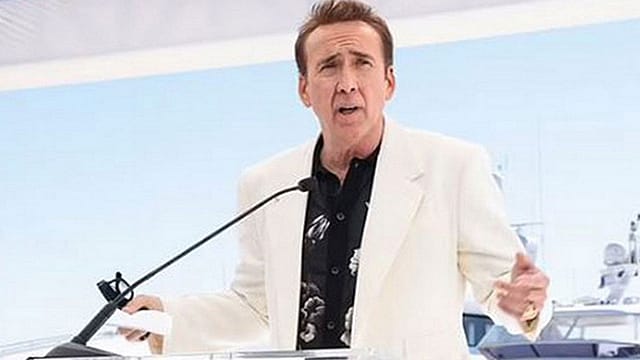
Nicolas Cage has stolen the Declaration of Independence, swapped faces with John Travolta, broken into Alcatraz, set his skull on fire, hunted for a kidnapped pig and played both Charlie Kaufman and Charlie Kaufman’s imaginary twin.
He has eaten a live cockroach on camera. He outbid Leonardo DiCaprio for a dinosaur skull and later discovered that it had been smuggled out of Mongolia. He bought castles, kept snakes and prepared a pyramid-shaped tomb in New Orleans. Hollywood laughed. The internet turned his face into a thousand memes. Creditors arrived. The big studios stopped calling. Cage kept acting.
Now Hollywood wants him to steal history again.
Director Jon Turteltaub has confirmed that National Treasure 3 is in development, nearly two decades after National Treasure: Book of Secrets left Benjamin Gates staring at the still-unexplained Page 47. “It’s happening,” Turteltaub announced during a live recording of the National Treasure Hunt podcast in Philadelphia. He said a script had been written, approved by him and received positively by Disney.

Zeroing In on ECI
09 Oct 2026 - Vol 05 | Issue 41
Constitutional legitimacy versus political opportunism
Then he added the most Hollywood caveat imaginable. If Cage gets hit by a bus, there is no movie. If the director gets hit by one, the movie will probably survive. That is what Turteltaub called “Hollywood real.” The original cast is expected to return as far as possible, although representatives for Cage and Disney had not publicly confirmed the actor’s involvement when TheWrap reported the announcement. Producer Jerry Bruckheimer had already said in 2025 that the project was moving closer and that the intention was to reunite Cage with Turteltaub.
For almost any other actor, returning to a $800-million adventure franchise would qualify as the story. For Nicolas Cage, it is merely another clue.
THE COPPOLA WHO ENTERED THE CAGE
He was born Nicolas Kim Coppola in 1964, inside one of Hollywood’s great dynasties.
His uncle was Francis Ford Coppola, director of The Godfather and Apocalypse Now. His aunt Talia Shire played Connie Corleone and Adrian in Rocky. Sofia Coppola and Jason Schwartzman belong to the same family constellation. But the young Nicolas did not want to spend his career being treated as a Coppola who had wandered onto a set through the family entrance.
During the making of Fast Times at Ridgemont High, other actors teased him about his surname and suggested that he owed his place to his celebrated uncle. Cage later told NPR’s Fresh Air that the experience pushed him to audition for Valley Girl under a new name.
Director Martha Coolidge did not know that Nicolas Cage was Nicolas Coppola. She cast him. That mattered. He had entered the room without the family name and still emerged with the role.
The surname “Cage” combined two of his youthful fixations: Marvel superhero Luke Cage and experimental composer John Cage. One represented comic-book power. The other represented avant-garde disruption. Between them sat almost everything the actor would attempt over the next four decades. In 2025, he finally made the professional identity legal. Cage told Variety, as subsequently reported by Entertainment Weekly, that he preferred to become the patriarch of his own family rather than remain the “clown cousin” on the margins of another.
It was a typical Cage sentence: wounded, funny, theatrical and utterly sincere. He had built the name to escape the Coppolas. Eventually, he became too famous to escape Cage.
THE BOY WHO FOUND SHELTER IN IMAGINATION
Acting did not begin as a career plan. It began as an exit.
Cage’s father, August Coppola, was a literature professor. His mother, Joy Vogelsang, was a dancer and choreographer who experienced serious mental illness and spent periods in psychiatric care. His parents divorced when he was 12.
In a 2007 interview, Cage told The Guardian that acting allowed him to redirect destructive energy into characters. Anger and sadness that might have turned against him could instead be placed on film. James Dean supplied the ignition. Cage watched East of Eden and saw emotion erupt on screen with a force that no piece of music had produced in him. He wanted to do that.
At 15, he reportedly asked his uncle Francis for a screen test and declared that he would demonstrate acting. Francis Ford Coppola had already directed Marlon Brando, Al Pacino, Robert De Niro and Gene Hackman. The car reportedly fell silent.
The nephew would find another route. His father encouraged him to leave school and pursue acting. Cage entered Hollywood young, hungry and determined to make every scene prove that the surname on the credit belonged there.
Subtlety was available. He simply did not regard it as the only destination.
HOW HIGH IS “OVER THE TOP”?
The easiest way to describe Nicolas Cage is to say that he overacts. It is also the laziest.
Cage does not believe that naturalistic acting is inherently more truthful than stylised performance. His aunt Talia Shire gave him an early key when she told him that naturalism itself was merely a style. He remembered the idea.
If realism was one choice among many, then a performer could borrow from German Expressionism, Japanese Kabuki, silent cinema, comic books, opera and dreams. A person could recite the alphabet as if each letter had personally betrayed him. He could point, scream, whisper, convulse and then, in the next film, remove almost everything.
Cage eventually named his approach “Nouveau Shamanic.” He explained to NME that the method involved entering an almost trance-like state and remaining open to sudden impulses that could unlock a scene. Performance, in his conception, was not merely imitation. The actor entered an imaginative condition and brought something back.
This is how one career could contain the tender romantic of Moonstruck, the alcoholic determined to die in Leaving Las Vegas, the cartoon criminality of Raising Arizona, the masculine thunder of Con Air and the barely contained madness of Vampire’s Kiss.
Critics called some of it excessive. Cage turned the criticism into a question: where, precisely, is “the top”?
The answer changes according to the film. In Leaving Las Vegas, the top lay inside a man disintegrating quietly. Cage won the 1996 Academy Award for Best Actor. In Face/Off, the top was the premise itself: two men surgically exchanging identities while John Woo hurled doves, gunfire and operatic emotion around them. Restraint would have looked ridiculous.
Cage understood something before the internet did. Sometimes the performance must be the same size as the movie.
THE COCKROACH WAS A BUSINESS DECISION
In Vampire’s Kiss, Cage played Peter Loew, a literary agent who becomes convinced that he is turning into a vampire.
The screenplay required him to swallow a raw egg. Cage decided that was insufficient. He ate a live cockroach. Twice.
Years later, he described the choice as a “business decision”: audiences would react more powerfully to an insect disappearing into an actor’s mouth. They did. The scene became one of the defining images of his career. Cage eventually reconsidered the bargain. While promoting Renfield in 2023, he told Yahoo Entertainment that he regretted eating the insects and would never repeat it, according to NME.
Yet the incident captures the central paradox of Cage. The act looked unhinged. The thinking behind it was ruthlessly practical. He wanted a reaction. He manufactured one. The same principle shaped his choices in less digestive ways. For Ghost Rider: Spirit of Vengeance, he studied the movements of cobras. He told interviewers that the snakes’ side-to-side motion influenced the way his demonic character prepared to attack.
Most actors observe people. Nicolas Cage has apparently observed reptiles and thought: I can use that.
THE ACTION HERO WHO SHOULD NOT HAVE WORKED
By the mid-1990s, Cage had an Oscar and a reputation for eccentric, risk-taking performances. Hollywood’s next move was unexpected. It turned him into an action star.
The Rock arrived in 1996. Con Air and Face/Off followed in 1997. In barely two years, Cage went from acclaimed character actor to an unlikely competitor in a genre ruled by Arnold Schwarzenegger, Sylvester Stallone and Bruce Willis.
He did not possess their bodies. He brought something stranger. His heroes looked as though they might begin discussing philosophy, burst into tears or dismantle the room. Cage fused sensitivity with volatility. The muscles were in the performance.
Then came Benjamin Franklin Gates. The first National Treasure, released in 2004, asked Cage to play an earnest historian who believes a secret map has been hidden on the reverse of the Declaration of Independence. To protect it, he decides to steal it.
The premise required an actor who could say the impossible with total conviction. Cage could. The film earned approximately $347 million worldwide. National Treasure: Book of Secrets followed in 2007 and collected about $459 million, according to TheWrap. Together they became Cage’s biggest live-action franchise.
Benjamin Gates also showed another side of the actor. Cage could carry a family blockbuster without screaming, combusting or eating anything alive. He played intelligence as adventure and American history as a puzzle box.
The treasure hunter was dependable. The man playing him was about to become famous for spending the treasure.
CASTLES, COBRAS AND A DINOSAUR THAT HAD TO GO HOME
The standard Nicolas Cage inventory reads like somebody lost control of an auction catalogue.
Castles. A private island. Exotic animals. Rare comic books. A pyramid tomb. A reputedly haunted New Orleans mansion. A Tyrannosaurus bataar skull. Some accounts of his spending have swollen through repetition. Cage has disputed the suggestion that pet octopuses or other eccentric acquisitions caused his financial crisis. He has said the true damage came from real estate.
The dinosaur story, however, is real.
In 2007, Cage paid $276,000 for the skull of a Tyrannosaurus bataar, a relative of Tyrannosaurus rex. He reportedly defeated Leonardo DiCaprio in the bidding.
Then the United States government entered the plot. Authorities determined that the fossil had been illegally removed from Mongolia. Cage had received a certificate of authenticity and was not accused of wrongdoing. When informed of the skull’s origins, he voluntarily surrendered it for repatriation, The Guardian reported.
He later said he never recovered the purchase price. Only Nicolas Cage could buy a dinosaur skull, beat Leonardo DiCaprio for it, lose it to the Mongolian government and somehow remain the least suspicious person in the story.
Then there was Action Comics No. 1, the 1938 comic that introduced Superman. Cage bought a rare copy for approximately $150,000. It was stolen from his Los Angeles home in 2000, discovered in a storage locker 11 years later and returned to him. He subsequently sold it for about $2.2 million.
That same copy changed hands for a record $15 million in 2026. The Associated Press reported that dealer Stephen Fishler credited the theft with enhancing the comic’s mythology and value. In other words, the person who robbed Nicolas Cage may inadvertently have improved his investment. It is a story worthy of Benjamin Gates: a stolen American relic, a missing decade, a storage locker and a fortune hidden in plain sight.
WHEN THE TREASURE DISAPPEARED
Cage had earned enormous sums during his blockbuster years. Then the American property market collapsed. He had invested heavily in real estate, including homes and castles. When values crashed, he could not sell quickly enough. Tax liabilities and creditors followed.
In a 60 Minutes interview, Cage said he owed approximately $6 million and rejected bankruptcy. He accepted film after film to repay the debt. “Work was always my guardian angel,” he said, according to a Yahoo report on the interview.
At points, he appeared in three or four movies a year. Many went directly to video or streaming. Some were poorly written. Others vanished almost immediately. To the outside world, the Oscar winner appeared to have stopped choosing.
He had. But the reason was not indifference. Cage needed money. He also needed to support his mother’s care. He told GQ that the financial and family pressures arrived together, while studios appeared to lose interest in him. Yet he has consistently rejected the accusation that he coasted through those films. A production could fail. Cage would still search for something worth playing.
He never filed for bankruptcy. He paid the debt. The films that seemed to document his fall financed his escape.
THE MEME THAT ATE THE ACTOR
By the 2010s, millions of people knew Nicolas Cage through fragments.
His eyes widening in Vampire’s Kiss. His anguished cries in The Wicker Man. His face digitally multiplied across the internet. Compilations promised “Nicolas Cage losing his mind” or “Nicolas Cage acting insane.”
The memes stripped away plot, character and tone. Every performance became evidence in the prosecution of Nicolas Cage. He was not immediately amused.
Cage told The Guardian that he had entered cinema because screen acting moved him more deeply than any other art form. He had not entered it to become a meme. Eventually, he made peace with the phenomenon. Perhaps the clips would send viewers back to the films. Perhaps the joke could become an invitation. But Cage’s frustration was understandable. The internet treated him as unaware of his own extravagance. He was usually the most aware person in the room.
This is an actor who named his own performance system, discussed the relationship between shamanism and cinema, and spent decades consciously moving between minimalism and grand theatrical gesture. The face may look out of control. The choices rarely are.
THE COMEBACK THAT WAS REALLY A REDISCOVERY
Nicolas Cage did not suddenly learn how to act again. Audiences learnt how to watch him.
Mandy arrived in 2018 like a flare fired from another dimension. Cage played a grieving man tearing through a psychedelic nightmare of cultists, bikers and blood. It used everything audiences thought they knew about him and transformed the “Cage rage” into tragedy.
Then came Pig in 2021. The premise suggested parody: Nicolas Cage plays a truffle hunter searching for his stolen pig. The performance moved in the opposite direction. He became quiet, exhausted and wounded. The film refused the revenge thriller audiences expected and asked what grief looks like after anger has burnt itself out.
Cage has called Pig his favourite among his own films.
The Unbearable Weight of Massive Talent then invited him to play “Nick Cage,” a fictionalised actor haunted by his career and tempted by a wealthy superfan. It could have become an extended meme. Cage gave the joke vulnerability.
In Dream Scenario, he played an unremarkable professor who begins appearing in strangers’ dreams and loses control of his public image. The role earned him another Golden Globe nomination.
In Longlegs, he buried himself beneath prosthetics and turned celebrity recognition into horror.
The revival was not built by returning Cage to safety. Younger filmmakers understood that his strangeness was the asset. Oliver Stone once described him as a born actor. Cage told British GQ that he had always believed he possessed a distinctive way of feeling and looking at the world, beyond the family into which he was born.
After four decades, cinema caught up with him.
WHY BENJAMIN GATES STILL FITS
When Cage first played Benjamin Gates, he was near the height of his studio power. If National Treasure 3 reaches production, he will return as a different kind of star.
He has won, spent, lost, borrowed, repaid and rebuilt. He has travelled from prestige cinema to blockbusters, direct-to-video purgatory, cult horror and critical rediscovery. He has played himself and survived the experience.
That history could deepen Benjamin Gates. The first two films were built around inherited obsessions: family legends, unfinished searches and secrets passed between generations. Cage now returns carrying his own archaeology. Page 47 remains unopened. The cast has aged. Audiences who watched the original as children now have children of their own. A franchise about decoding the past has acquired a past worth decoding.
Turteltaub’s announcement remains “Hollywood real.” The script exists. Disney sees a film it may make. Cage is expected back. Until cameras roll, the treasure can still disappear.
But Nicolas Cage has spent his life disappearing and returning. He escaped the Coppola name by entering a Cage. He escaped debt by taking every job available. He escaped the memes by embracing them. He escaped Hollywood’s dismissal by finding filmmakers who recognised that the supposed madness contained method, scholarship and complete commitment. Now Benjamin Gates may return to hunt another national treasure. Hollywood already has one.
(With inputs from ANI)