Imran Khan gets ‘Leave India’ notice: Why Mumbai Police wants Aamir Khan’s nephew to leave by October 28
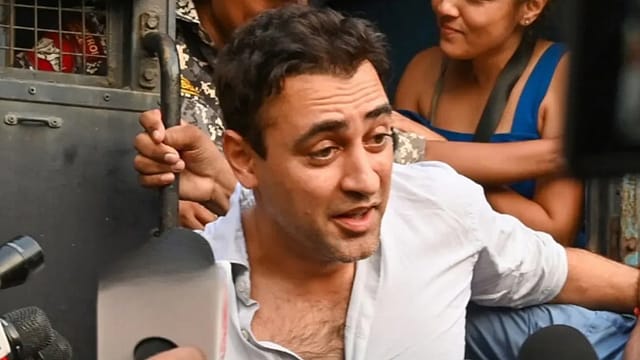
A protest, a police van selfie and now a notice directing him to leave India. Actor Imran Khan, known for films such as Jaane Tu… Ya Jaane Na and I Hate Luv Storys, is facing immigration scrutiny after participating in a demonstration in Mumbai. The actor, nephew of Aamir Khan, was detained during the protest on October 10 and later released. The latest development is a reported “Leave India” notice directing him to leave the country by October 28, 2026.
The case has drawn attention not just because of the actor’s Bollywood connections, but also because it raises questions about the rights of foreign nationals and Overseas Citizens of India (OCI) cardholders participating in political demonstrations.

Zeroing In on ECI
09 Oct 2026 - Vol 05 | Issue 41
Constitutional legitimacy versus political opportunism
Why has Mumbai Police issued Imran Khan a ‘Leave India’ notice?
According to a report by The Economic Times, authorities have directed Imran Khan to leave India by October 28 following his participation in the protest at Mumbai’s August Kranti Maidan. Reports identify him as a US citizen and OCI cardholder. The action follows a complaint by BJP leader Kirit Somaiya, who alleged that Khan’s participation in the demonstration violated rules governing foreign nationals and OCI status. Somaiya sought action against the actor and asked authorities to examine his conduct.
The reported notice is the latest step in the matter. It should not, however, be confused with a court finding that Khan has committed an offence. The legal implications will depend on the grounds cited by the authorities and the applicable immigration rules.
What happened at the August Kranti Maidan protest?
On October 10, Imran Khan was among hundreds of people detained by Mumbai Police during a demonstration supporting the Cockroach Janta Party (CJP), a youth protest movement. Protesters were demanding the resignation of Chief Election Commissioner Gyanesh Kumar amid allegations concerning voter-list revisions.
Police reportedly said permission had not been granted for the gathering at August Kranti Maidan. The protest was also affected by restrictions on demonstrations in Mumbai, with police referring to directions that protests be held at Azad Maidan.
Imran later shared a photograph of himself inside a police van with the caption, “Apparently I’m going for a drive.” Speaking to the media, he said he had come as a resident of Mumbai and was not there to make specific demands. He questioned restrictions on freedom of movement and people’s ability to voice their concerns.
Mumbai Police subsequently registered a case against Khan and other protesters. The FIR at Gamdevi police station apparently invoked provisions of the Bharatiya Nyaya Sanhita relating to disobedience of an order, wrongful restraint and unlawful assembly.
Why did Kirit Somaiya demand Imran Khan’s deportation?
The controversy escalated after Somaiya questioned whether a foreign national could participate in what he described as an unauthorised political agitation. In a letter to Mumbai Police, he sought an inquiry into Khan’s citizenship status and alleged violations of OCI provisions and visa conditions. Somaiya reportedly called for the actor’s deportation and asked authorities to verify his citizenship. Police forwarded his complaint to the Foreigners Regional Registration Office (FRRO), the authority that handles relevant immigration matters.
Somaiya also sought a Look Out Circular (LOC), which can alert authorities to a person’s attempted travel and may be used to restrict departure in appropriate cases. Such a request is not the same as confirmation that an LOC has been issued.
Can an OCI cardholder be deported for joining a protest?
This is the central legal question. An OCI card allows eligible foreign citizens of Indian origin certain privileges, including a multiple-entry visa, but it does not make them Indian citizens. OCI cardholders cannot vote in Indian elections or contest parliamentary and state legislative elections.
In an October 13 explainer, The Indian Express noted that OCI rules do not expressly state that every cardholder must obtain special permission simply to attend a public protest. However, this does not mean all forms of political activity are automatically permitted. Foreign nationals and OCI cardholders remain subject to Indian law and applicable immigration conditions.
The distinction matters: a complaint or allegation does not, by itself, prove that an offence has occurred or that deportation is legally justified. Any action must rest on the applicable provisions and the competent authority’s decision.
What happens next in the Imran Khan case?
The reported October 28 deadline puts the focus on the notice’s legal basis, the immigration authorities’ next steps and whether Khan challenges the direction. The public reporting available so far does not establish a final legal determination against him.
For now, the case sits at the intersection of immigration rules, political protest and the limits of rights available to non-citizens. The key question is not only why the actor was told to leave India, but what specific legal grounds authorities rely on, and how those rules apply to other OCI cardholders in similar circumstances.
(With inputs from ANI)