From Helen to Zeenat Aman: Why Bollywood’s rebellious women so often sounded like Asha Bhosle
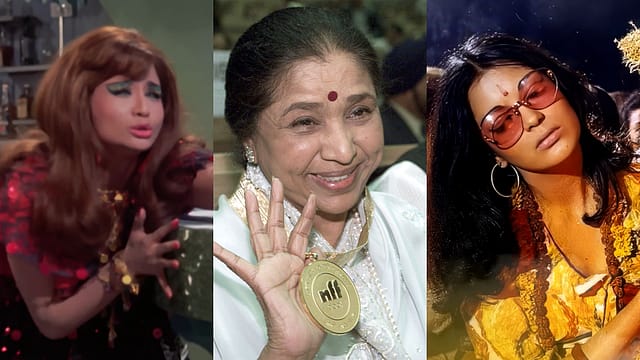
There was a time when Hindi cinema had a fairly neat idea of what a woman was supposed to sound like: soft, sweet, maybe devotional and romantic, of course.
And then Asha Bhosle arrived with a voice that could sound like a wink, or a dare, or a laugh across a crowded nightclub, or a woman who had already made up her mind and wasn't particularly interested in asking permission.
For decades, Bollywood used Bhosle's voice when its women stepped outside the neat boundaries of the heroine: The vamp, the dancer, the courtesan, the free spirit, the woman who wanted something — and wasn't going to whisper about it.
The fascinating part is that Bhosle didn't make these women sound merely “bad”. She made them sound alive.

Zeroing In on ECI
09 Oct 2026 - Vol 05 | Issue 41
Constitutional legitimacy versus political opportunism
As the Indian Express noted in its assessment of her legacy, Bhosle's repertoire took her into the cabaret, flirtatious numbers and rhythm-driven songs that existed outside the conventional image of feminine virtue associated with her sister Lata Mangeshkar. Another analysis argued that her voice helped complicate Bollywood's rigid division between the “good” and “bad” woman.
So, on her birth anniversary, let's look at some of the women who helped make Asha Bhosle the sound of Bollywood's beautifully unruly side.
1. Helen: The woman who could turn a nightclub into her kingdom
If there is one face most closely associated with Asha Bhosle's cabaret era, it is Helen.
And if there is one song that captures the partnership, it is “Piya Tu Ab To Aaja” from Caravan (1971).
Helen's performance is unforgettable. But listen closely to Bhosle.
The breath before the line.
The teasing pauses.
The sudden bursts of energy.
The almost conversational delivery.
This isn't a woman waiting for the hero to arrive and rescue her.
She's calling him.
And she's making him come to her.
“Piya Tu Ab To Aaja” has time and again been described as one of Bhosle's finest cabaret performances, built around breathy vocals and dramatic singing. Her association with Helen went far beyond one song, and the two became one of Hindi cinema's most recognisable actor-singer pairings.
Bhosle herself once spoke warmly about Helen, saying she admired her so much that, had she been a man, she would have eloped with her.
That tells you something about the chemistry.
Helen danced it.
Asha made you hear it.
2. Zeenat Aman: When rebellion stopped hiding in the shadows
Then came Zeenat Aman.
If Helen represented the nightclub rebel, Zeenat represented something newer: the modern woman who didn't seem interested in following the old rules at all.
And few songs captured that shift more dramatically than “Dum Maro Dum” from Hare Rama Hare Krishna (1971).
The song was strange, psychedelic and unmistakably of its time.
And Asha sounded completely at home in it.
The song's rebellious reputation wasn't accidental. Pitchfork, in its retrospective on the track, notes that “Dum Maro Dum” combined psychedelic rock with Indian classical elements and became associated with innovation and rebellion. The song also faced criticism for its perceived promotion of drug use and was banned by Indian radio at the time.
Zeenat's hippie character and Asha's uninhibited delivery met at exactly the right cultural moment.
The heroine wasn't simply waiting for romance anymore.
She could wander off.
She could experiment.
She could smoke.
She could dance.
She could say no.
And Asha could make all of it sound effortless.
3. Bindu: The woman who knew exactly what she wanted
Then there was Bindu.
If Bollywood's heroine was often written around restraint, Bindu's characters were allowed to walk straight through it.
One of the most memorable examples is “Mera Naam Hai Shabnam” from Kati Patang (1971).
The song doesn't ask Shabnam to be coy.
It introduces her.
And she introduces herself on her own terms.
That distinction matters.
Asha's voice here is playful rather than tragic, flirtatious rather than apologetic. The woman isn't asking whether she is allowed to occupy the room.
She already has.
This was part of what made Bhosle's “vamp” songs so important: they gave characters who existed outside the respectable heroine's world a sense of personality rather than reducing them to scenery.
4. Parveen Babi: The woman who made modernity look glamorous
If Helen was nightclub electricity and Zeenat was counterculture, Parveen Babi brought another kind of rebellion into Hindi cinema.
Modern.
Urban.
Confident.
And often gloriously unapologetic.
Bhosle's voice became an ideal fit for that new screen persona.
Think “Jawani Jaan-E-Man” from Namak Haraam (1973).
The song isn't built around the old idea of feminine modesty.
It's about youth, attraction and confidence — delivered with the kind of rhythmic playfulness Bhosle had made her own.
This was one of the reasons her voice worked so well for changing ideas of femininity: she could sound sensual without making the character sound helpless.
That was a crucial difference.
5. Rekha: The rebel didn't always need a nightclub
Here's where the Asha Bhosle story gets more interesting.
Because her most unconventional women weren't always dancing under neon lights.
Sometimes they were sitting in a mehfil.
Sometimes they were carrying centuries of heartbreak.
And sometimes they were courtesans.
Enter Rekha as Umrao Jaan.
For Umrao Jaan (1981), Bhosle's voice moved almost completely away from the breathy, rhythmic energy of her cabaret years.
“Dil Cheez Kya Hai.”
“In Aankhon Ki Masti.”
Suddenly, the rebellion was quieter.
It was in the character's history. Her circumstances. Her refusal to disappear.
Director Muzaffar Ali recently recalled that Bhosle didn't merely sing for Umrao — she effectively surrendered herself to the character.
And that may be one of the best ways to understand her versatility.
Asha could make rebellion loud.
But she could also make it ache.
Asha Bhosle herself: The woman who refused to stay in one box
And then comes the final twist.
Perhaps Bollywood's most rebellious woman sounded like Asha Bhosle because Asha Bhosle herself refused to stay where the industry initially put her.
She began her career in the shadow of her elder sister Lata Mangeshkar.
She took the songs others didn't necessarily want.
She found extraordinary collaborators in composers such as O.P. Nayyar and R.D. Burman.
She moved from cabaret to ghazal, from flirtation to heartbreak, from experimental pop to classical-inflected music.
Her repertoire eventually crossed languages, genres and generations.
So why did Bollywood's rebels sound like Asha?
Maybe because Asha Bhosle never made unconventional women sound like outsiders.
She made them sound like they belonged to themselves.
That is the difference.
The heroine could sing about love.
The vamp could sing about desire.
The courtesan could sing about heartbreak.
The free spirit could sing about freedom.
But with Asha's voice, none of them sounded like they were apologising for any of it.
And that may be why, decades later, the moment a woman on screen needed to sound a little dangerous, a little funny, a little sensual or simply free, Bollywood's musical memory kept reaching for Asha Bhosle.