Dolly Parton Dies at 80: The Woman Who Turned a Coat of Rags into an Empire of Songs
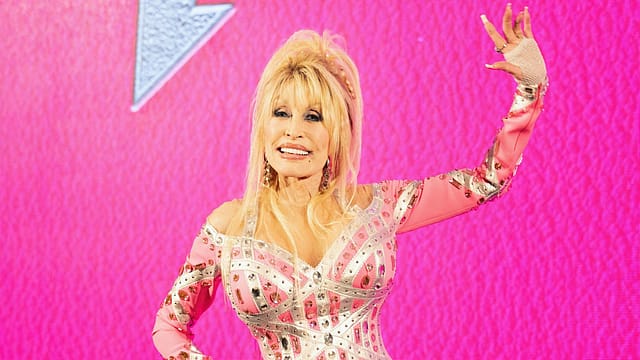
Dolly Parton spent her life warning the world not to mistake rhinestones for shallowness.
The blonde wigs were enormous. The dresses glittered. The jokes about her appearance usually arrived before anyone else could make them. Behind that carefully constructed spectacle stood a songwriter who could compress poverty, jealousy, heartbreak, work and ambition into three unforgettable minutes. There was also a businesswoman shrewd enough to deny Elvis Presley one of her greatest songs, build a theme park near the mountains she came from and turn her father’s inability to read into a worldwide literacy movement.
Parton died in Nashville at the age of 80, her family announced on August 25. No cause of death was immediately disclosed. The announcement came from her nephew Bryan Seaver, who said Parton had asked him years earlier to deliver the news when the time arrived. “Sadness lies with us, not with Dolly,” he said in a video posted on her social-media account, adding that she had opened doors for generations of “singers, songwriters, musicians and dreamers”.

Zeroing In on ECI
09 Oct 2026 - Vol 05 | Issue 41
Constitutional legitimacy versus political opportunism
She had spent the final period of her life battling health problems. A planned Las Vegas residency was first postponed and later cancelled as she underwent medical treatment. Yet four days before her death, Parton was still talking about work.
“I still have so many things I want to achieve,” she told People in what became one of her final interviews.
That sentence feels entirely Parton. She had already written thousands of songs, sold more than 100 million records, won 11 Grammy Awards, crossed from country into pop, conquered Hollywood, built Dollywood and created one of the world’s largest children’s book-gifting programmes. She still had things to do.
A Coat, a Cabin and a Way Out
Dolly Rebecca Parton was born on January 19, 1946, in Locust Ridge, Tennessee, the fourth of 12 children raised by Robert Lee Parton and Avie Lee Owens Parton.
The family lived in a small cabin in the Great Smoky Mountains. Money was scarce, rooms were crowded and survival required ingenuity. Her father worked the land and took whatever jobs he could find. Her mother sang old ballads and told stories. Parton never romanticised that poverty. She remembered its indignities as precisely as its love.
One of those memories became Coat of Many Colors. Her mother stitched a winter coat from scraps of fabric and told her daughter the biblical story of Joseph as she worked. Parton proudly wore it to school, where classmates laughed at her because it was made from rags. She eventually converted that humiliation into one of country music’s most tender songs. The Country Music Hall of Fame describes it as a direct account of that painful childhood experience.
This was the alchemy that defined Parton. She did not erase where she came from. She harvested it. She began singing in church as a child, performed on local radio and television, and made her first recordings while still young. The day after graduating from high school in 1964, she left for Nashville.
On her first day there, she met Carl Dean outside a laundromat. They married in 1966 and remained together for almost six decades, even as he carefully avoided the machinery of celebrity around her. Dean died in March 2025 at 82. Parton later wrote If You Hadn’t Been There for him. Even after losing the man who had kept their private life anchored while her public life expanded across the world, she returned to the tool she trusted most: A song.
She Left Porter Wagoner With a Love Song
Parton’s breakthrough came after she joined The Porter Wagoner Show in 1967. Wagoner gave her national exposure, and their duets made them country stars. But as Parton’s ambitions grew, the partnership tightened around her.
She wanted a solo career. Wagoner did not want her to leave. So Parton wrote him a goodbye.
I Will Always Love You was not originally a romantic declaration. It was her way of ending a professional relationship without denying its importance. The song reached No. 1 on the country chart in 1974 and returned to the top after she re-recorded it in 1982.
Then Elvis Presley wanted it.
Parton was thrilled until his manager, Colonel Tom Parker, demanded half the publishing rights. She refused, even though turning down Elvis left her heartbroken. Years later, Whitney Houston’s recording became one of the biggest-selling singles in history. The decision made Parton millions, but its real significance lay elsewhere. At a time when female performers were routinely separated from the value of their work, she understood that applause faded and copyright endured.
She could dress like everyone’s idea of a country doll and negotiate like the toughest person in the room. The song entered the US National Recording Registry in 2019, according to the Library of Congress.
Jolene performed a different transformation. Parton drew its emotional spark from a bank employee who paid rather too much attention to Dean. The name came from a young fan Parton had met. In most songs about romantic rivalry, the other woman becomes the villain. Parton made her magnificent. The narrator does not attack Jolene. She recognises her beauty, confesses her fear and pleads with her.
That vulnerability allowed the song to travel far beyond country music. It has since been reinterpreted across rock, folk, pop and, most recently, by Beyoncé. Very few songs survive half a century because their emotions never age. Jolene did.
Then came 9 to 5, written for the 1980 film in which Parton starred alongside Jane Fonda and Lily Tomlin. Its bright rhythm concealed a blade. Parton turned office drudgery, unequal pay and male power into a song workers could sing on the way to work.
The track won two Grammys and earned an Academy Award nomination, according to the Recording Academy. Parton later appeared in films including The Best Little Whorehouse in Texas, Steel Magnolias and Straight Talk. She recorded country, pop, gospel, bluegrass and rock. Her catalogue grew to roughly 3,000 songs.
The statistics explain the scale: more than 100 million records sold, 25 songs at No. 1 on Billboard’s country chart, 49 Top 10 country albums and 11 Grammys from 54 nominations, according to the Recording Academy.
Yet numbers never quite captured what made her singular. Parton wrote women who worked, wanted, worried, left and survived. She could be wounded without becoming powerless. She understood that a farewell could contain love and that poverty could coexist with dignity without becoming picturesque. Her songs looked simple because she had done the difficult work before the listener arrived.
Dolly Built More Than a Career
Parton could have left Tennessee, collected her awards and returned only for nostalgic television specials. Instead, she carried success home.
In 1986, she became a co-owner of the theme park that was renamed Dollywood in Pigeon Forge. It grew into a vast tourism business and major regional employer. The enterprise was more than an extension of her brand. It brought jobs and visitors to the part of Tennessee that had given her stories before it could give her money. Her philanthropy followed the same pattern. It was local in origin, practical in design and enormous once it began to work.
Parton’s father was intelligent and hardworking but could neither read nor write. His experience inspired her to start the Imagination Library in 1995 for children in her home county. The programme sends a free, age-appropriate book every month to participating children from birth until the age of five. Families do not undergo an income test. The book arrives addressed to the child, turning reading into a personal event.
That first order covered a little more than 1,700 books. The programme now operates across five countries and mails more than three million books every month, according to Dolly Parton’s Imagination Library.
The girl mocked for wearing a coat made from scraps grew up and placed entire libraries in children’s hands. Her generosity also reached medical research. In 2020, Parton donated $1 million to Vanderbilt University Medical Center to support coronavirus research. The funding helped work connected to the Moderna vaccine. She later received her own dose at Vanderbilt and joked that she was getting “a dose of her own medicine”. She gave another $1 million to paediatric infectious-disease research at the institution in 2022, Vanderbilt University Medical Center said.
After wildfires devastated communities in Tennessee’s Smoky Mountains in 2016, her My People Fund sent direct financial assistance to affected families. Parton rarely allowed these acts to become monuments to herself. She resisted attempts to turn her into a political mascot, retained affection across America’s bitter cultural divides and twice reportedly declined the Presidential Medal of Freedom from the Trump administration.
When nominated for the Rock and Roll Hall of Fame in 2022, she initially tried to withdraw because she did not believe she had earned the honour. The institution kept her on the ballot. She was inducted anyway and responded by making a rock album. Humility, with a punchline and a business plan.
She Owned the Joke
Parton survived an entertainment industry that regularly underestimates women, particularly women who appear too feminine, too cheerful or too willing to laugh at themselves.
She made that underestimation useful. The hair was artificial. The glamour was exaggerated. The persona borrowed from the “town tramp” Parton had admired as a child because she looked beautiful and fearless to a poor mountain girl.
None of it was accidental. Parton told the jokes about her wigs, clothes and cosmetic surgery before interviewers could. By owning the caricature, she denied others control over it. The world could stare at Dolly Parton while Dolly Rebecca Parton Dean quietly retained her songs, built her companies and protected her private marriage.
She understood the difference between being looked at and being seen. That may explain why she travelled so easily across generations. Grandparents knew the Porter Wagoner duets. Their children knew 9 to 5 and Islands in the Stream. Younger listeners found Jolene through covers, memes and television. Millions of children knew her as the woman whose name appeared on the books arriving at their homes.
Her nephew said she had “lived in the light” and was now reunited with Carl, her parents and those who had gone before her. The public will remember the blonde tower of hair, the sequins, the voice and the laughter.
But Dolly Parton’s deepest legacy lies in everything beneath the shine: a songwriter who guarded her words, a poor child who refused to be embarrassed by her coat, a daughter who answered illiteracy with books and a woman who turned every door opened for her into an entrance for somebody else. She once wrote a goodbye so generous that the world mistook it for its greatest love song. Now it belongs to her.
(With inputs from ANI)