Women's Reservation: A Law that Needs a Timer
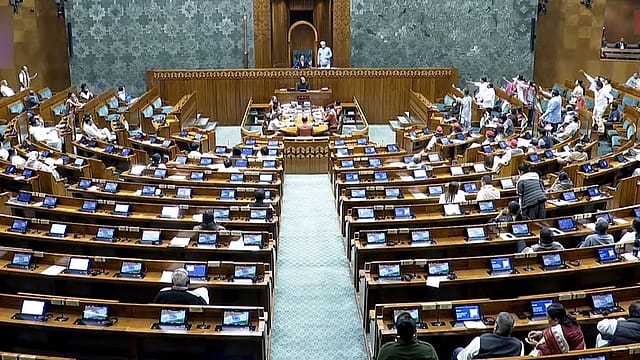
On April 16, the Nari Shakti Vandan Adhiniyam was notified into force. The next day, the constitutional amendment designed to give it operational effect fell short in the Lok Sabha. The Act is on the statute book. Its delivery mechanism is not. For a legislation that Parliament passed almost unanimously in 2023, this is an unusual place to be.
The women’s reservation bill was always going to require a second step. The 2023 Act made its commencement contingent on the first census after the Act and the delimitation that would follow. The constitutional amendment that failed this month was an attempt to bring that operational date forward, so that the 33 per cent reservation could take effect in the 2029 general election rather than some uncertain point after. That attempt has not succeeded. The consequence, in practical terms, it is uncertain if the next Lok Sabha will have the benefit of the reservation the country has already agreed it wants.

The Health and Wellness Issue
25 Sep 2026 - Vol 05 | Issue 39
How that outcome is read will shape the politics of the next two years. It should not be read as a verdict on the principle. It should be read as a disagreement about the instrument, and the instrument alone.
A claim older than the Republic
The debate about women in Indian legislatures did not begin with the 2023 Act, or with the 1996 bill, or even with the constitutional amendments of 1992 and 1993 that reserved one-third seats in Panchayati Raj Institutions and urban local bodies. It began in the Constituent Assembly. Of the 389 members who convened on December 9, 1946, 15 were women. In the first Lok Sabha, elected in 1951-52, only 22 of 489 members were women. The idea that Parliament should look more like the country it governs has been with us for a long time.
For much of that history, the question was whether reservation was the right route. Some of the early women members opposed quotas on principle, preferring what they saw as a more dignified path through “merit" and mass politics. That view has weakened over time, not because the principle was wrong, but because the evidence from the grass roots of Indian democracy has been overwhelming.
What the villages have shown
The 73rd and 74th Constitutional Amendments reserved a third of seats for women in local bodies. More than three decades on, over 1.4 million women serve as elected representatives at the panchayat and municipal levels. In 21 states, the reservation has since been raised to half. This is not a symbolic exercise. It is the single largest democratic induction of women into public office anywhere in the world, and it has produced results that the research community now regards as settled.
Where women preside, village priorities shift. Water supply, sanitation, primary schools, maternal and child health, the local institutions that touch daily life before any other, receive earlier and steadier attention. Gujarat’s Pani Samitis, set up in 2002, are among the clearest illustrations. Village-level committees with mandatory women members took over the planning, implementation and upkeep of drinking water schemes. The model informed the architecture of the Jal Jeevan Mission, which now serves as a national template. What began as a question of who fetches the water became a question of who governs it.
Similar pattern shifts are visible across the wider framework of women-centred programmes developed over the last decade. Whether it is financial inclusion through the MUDRA Yojana, housing ownership through the Awas Yojana, clean fuel through Ujjwala, or nutritional and maternal support through a range of allied schemes, the consistent observation is that outcomes improve when women are placed at the centre of delivery rather than at the periphery. This is not advocacy. It is administrative evidence, gathered across two decades and multiple state governments.
The trajectory at the top
At the highest constitutional offices, the picture has also begun to change. Rashtrapati Bhavan has a woman occupant from a tribal background. A woman has held the Defence portfolio and continues to hold Finance, in both cases for the first time in a full-time capacity. In September 2027, for a brief but historic tenure, the Supreme Court is scheduled to have its first woman Chief Justice. The middle layer of the elected legislature is the one part of the structure where this broader shift has not yet arrived. The Nari Shakti Vandan Adhiniyam was designed to correct that, and the 2023 Parliament, with near unanimity, agreed that it should.
What the amendment actually asked
The bill that failed on April 17 was not a women’s reservation bill in a simple sense. It was a constitutional amendment that carried three linked proposals. It proposed to expand the Lok Sabha from 543 to a maximum of 850 seats. It proposed delimitation for the expanded House be based on the most recently published census rather than a future one. And it proposed, as a consequence, that the 33 per cent reservation for women could be activated in 2029.
The logic of bundling was administrative. The Act’s own trigger is the first census after its commencement, with a reference date of March 2027. Delimitation based on that census is unlikely to be complete before the next general election. Without an alternative route, operational reservation in the 18th Lok Sabha is simply not possible. The amendment offered that alternative route.
There has been a serious disagreement about the other parts of the package, particularly about the regional distribution of seats that a fresh delimitation would produce. That disagreement is legitimate and it deserves to be resolved.
The case for separating the questions
The task now is to separate what was bundled. The reservation has a case that stands independently of the delimitation arithmetic. It was made in 1989, again in 1996, again in 2010, and again in 2023. Each time Parliament has endorsed the principle. Each time implementation has been delayed. The pattern is not a coincidence. It is what happens when a reform that affects every sitting legislator is made conditional on other reforms that affect them in different ways.
A single-purpose amendment, one that activates the quota without attempting to settle the delimitation question in the same breath, would allow every party to vote on what it says it believes. The federalism debate would continue, as it should, on its own track. The women’s quota would move forward on the track the country agreed to in 2023.
The administrative groundwork, meanwhile, is not idle. The national census is under way, with enumeration scheduled to conclude by March 2027. A Delimitation Commission can be constituted once that data is available. If the operational amendment is reintroduced in a narrower form, and if the House is given a chance to vote on the principle alone, the 2029 election remains within reach. Even if it does not, the census-plus-delimitation route in the original Act remains valid. The Act is not hostage to the amendment that failed.
A setback is not a defeat
A constitutional amendment that receives a majority of the votes cast, but not the two-thirds required, is not a defeated idea. It is a procedural outcome in a system that deliberately raises the bar for changes to the basic text. The principle was not tested this month. The instrument was.
There is also work within political parties that no amendment can do. Candidate selection, campaign financing, internal hierarchies and the long apprenticeship that turns a reserved seat into a real leader. These are tasks the quota opens the door to, not tasks it finishes. The experience of the panchayats over three decades is that the first generation of reserved representatives is often dismissed as proxies, and the second generation is the one that governs. That transition takes time and institutional support, and it begins only once the door is open.
The Nari Shakti Vandan Adhiniyam has opened that door in law. What this month’s vote has deferred is the date on which the country walks through it. A law without a clock is not an empty law. But it is a law waiting for the political system to find the right route, and to find it soon. The principle is not in dispute. The work, now, is to honour it.