Hospitality Is Not a Hobby: What Thailand Knows That India Doesn’t
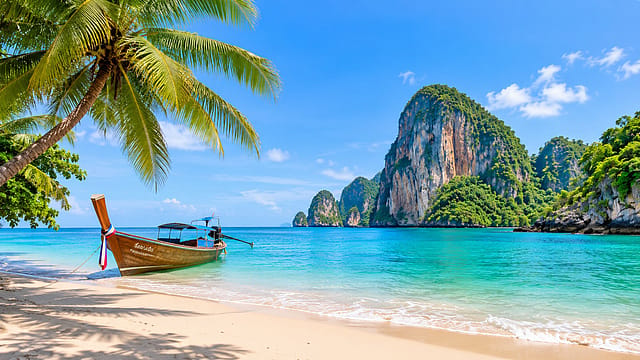
Let me begin with an uncomfortable arithmetic. Thailand, with a fraction of our history and not a single Taj Mahal, welcomes well over 30 million visitors in a good year. India, with the Himalayas, backwaters, Mughal gardens, Chola temples, and a cuisine that could bring a Parisian to tears, struggles to cross 10 million. We have the product. They have the plan.
Lesson one: smile first, sell later. Thailand understood early that tourism is a feeling before it is an itinerary. The wai is not a gesture; it is policy dressed as culture. Landing in Bangkok, you feel wanted. Landing in Delhi, you feel processed. Between the immigration queue and the unlicensed taxi tout, we manage to convert a dream holiday into a negotiation. Welcome, in India, is still a private virtue. It must become a public system.
Lesson two: make it easy, stupid. Thailand’s visa regime has been a masterclass in removing friction: waivers, e-visas, extended stays, even digital-nomad schemes. We treat the visitor like a suspect who happens to carry foreign currency. The Indian e-visa was a fine idea, but it still reads like a form designed by someone who has never travelled. A tourist who sweats over paperwork arrives already irritated.
Lesson three: sell the whole country, not just the postcard. Thailand is not merely Phuket. It is Chiang Mai’s temples, Isaan’s street food, Krabi’s cliffs, Bangkok’s nights and Pattaya’s... well, let us be discreet. Each has an identity, a price point and a tribe. India markets itself as a monolith: the Golden Triangle, Goa, Kerala, repeat. Where is the Northeast, so staggeringly beautiful that it embarrasses the Alps? Where is Odisha, Kutch, Hampi, the Sundarbans? We hide our best rooms and then complain about the occupancy.
Lesson four: protect the experience from the infrastructure. Thai tourism works because the boring things work: clean airports, reliable transport, a hotel at every budget, a street-food stall with a hygiene instinct. We build monuments and forget toilets. A visitor will forgive a missing museum guide; she will never forgive a missing washroom. The most profound brand experience in travel is plumbing.
Lesson five: commerce is not a vulgar word. Thailand lets tourists spend. Markets stay open late, nightlife is organised rather than moralised, and wellness, from massage to medical tourism, is a booming export. In India, we prefer to hold a seminar on the ‘dignity’ of tourism while the visitor searches in vain for a decent cocktail after 11PM. We lecture where we should serve. A country embarrassed by pleasure should not be in the business of hospitality.
Lesson six: safety is the real luxury. No woman travelling alone should have to rehearse her itinerary like a military operation. Thailand is hardly a monastery, but the tourist feels, broadly, left alone and looked after at once. India’s tourism problem is not marketing; it is whether a Dutch backpacker, a Japanese grandmother or a Nigerian student feels safe. Fix that and the advertising writes itself.
Lesson seven: storytelling beats statistics. Thailand sold a mood: the smiling, sensuous, slightly mischievous Land of Smiles. It was branding of the highest order. India has had several slogans and no consistent story. We change tag lines the way we change tourism secretaries. A brand is a promise kept over time.
None of this means India should become Thailand. The charm of India is precisely that it is not manicured, not packaged, not predictable. A chaotic Varanasi dawn will always move a traveller more than a spotless resort. But chaos is a flavour, not a business model. The trick is to keep the soul and fix the service. Thailand didn’t win because it had more to offer. It won because it never forgot who the customer was. We, with all our civilisational swagger, keep forgetting that the guest is god only if someone remembers to open the door.
Time we did. And with a smile, please.