Bharat Ratna: Has Corporate India Been Overlooked?
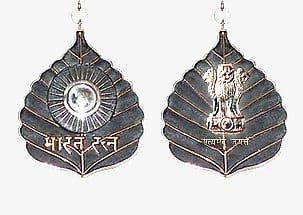
Sometimes, WhatsApp forwards can throw up some interesting story ideas. That’s exactly what happened to me this week. I came across a reel in which a Bengaluru-based gentleman questioned why no industrialists—barring JRD Tata (1992)—have been awarded the Bharat Ratna, India’s highest civilian honour, over the past seven decades.
He raised a valid point, prompting me to dig deeper. Why has the Bharat Ratna largely favoured politicians and social reformers, while overlooking the business fraternity who have played a bigger role in transforming the Indian economy vis a vis job creation, capital formation, and wealth generation?
Industrialists have not only built companies but also entire ecosystems. Townships such as Tatanagar and Modinagar stand as enduring examples. You may call them disruptors or outliers. Unlike some politicians, whose impact may remain regional (Karpoori Thakur or Nanaji Deshmukh), industrialists often create nationwide—sometimes global—impact. Their stakeholders—shareholders, employees, vendors, governments, financial institutions, and customers—benefit immensely.
It is, therefore, unclear whether this omission is by design or sheer oversight.
One possible explanation could be vote-bank politics. Conferring the Bharat Ratna on political leaders—whether posthumously or during their lifetime—can translate into electoral gains. The same cannot be said of industrialists.

Open Minds 2026
26 Jun 2026 - Vol 05 | Issue 26
The power of ideas and arguments in 50 portraits
To my mind, the closest recipient linked to corporate India is Sir M. Visvesvaraya (1955), though he was primarily a civil engineer, administrator, and statesman.
Instituted in January 1954, the Bharat Ratna was initially limited to arts, literature, science, and public service. In 2011, the Government of India expanded its scope to include “any field of human endeavour.” Yet, as of 2024, among the 53 awardees, only JRD Tata represents industry, and Sachin Tendulkar represents sports (and remains the youngest recipient).
Interestingly, the award has also been conferred on a naturalised Indian, Mother Teresa (1980), and two non-Indians—Abdul Ghaffar Khan (1987) and Nelson Mandela (1990).
How is the Bharat Ratna decided? The process is relatively simple. There is no formal selection committee, unlike the Padma awards. Recommendations may be sent to the Prime Minister’s Office—currently, for instance, there is a strong pitch for Biju Patnaik and Ratan Tata—but the final decision rests with the Prime Minister. Once satisfied, the PM recommends names to the President, who grants formal approval. The award is then conferred through a Sanad signed by the President.
Typically, no more than three awards are given in a year, though there are exceptions. In 2024, a record five individuals were honoured: Karpoori Thakur, Lal Krishna Advani, P V Narasimha Rao, Chaudhary Charan Singh, and M S Swaminathan. Four of these were posthumous; Advani was the only living recipient.
As a possible compromise, the Padma Vibhushan—the second-highest civilian award—has been more generous towards the business fraternity. It has been conferred on Ratan Tata (2008), N R Narayana Murthy (2008), Azim Premji (2011) and Dhirubhai Ambani (posthumously, 2016). Arguably, each of them makes the cut for the Bharat Ratna.

What remains surprising is that even after the 2011 expansion to include “any field of human endeavour,” the business community continues to be overlooked.
Given my strong views on this, I have compiled a list of industrialists who, in my opinion, deserve the Bharat Ratna.
My criteria are simple: enduring national impact, legacy, and their role as icons and role models for future generations.
An investment banker once described Dhirubhai Ambani memorably: “He is the scrip that launched thousands of scrips.” Figures like Ambani, Ratan Tata, and Narayana Murthy have inspired generations.
Historically, the phrase “I want to become a Tata-Birla” has symbolised success in India—and Bollywood must be credited for making it part of our everyday lexicon. Over time, that phrase evolved to include another name: Ambani.
No list can be complete without Tata-Birla names. But I have consciously left out Ratan Tata, as JRD Tata was already conferred the Bharat Ratna in 1992.
Walchand Hirachand Doshi: A true pioneer he had many firsts to his credit. He established India’s first shipyard (Hindustan Shipyard), aircraft factory (HAL), and car manufacturing unit (Premier Automobiles). His ventures spanned construction (HCC), sugar (Ravalgaon), engineering, shipping (Scindia), film studio, and insurance. He died in 1953 at the age of 70. He seems to be one of the most deserving candidates. Overall the group is splintered today.
Dr Verghese Kurien: The Father of India’s White Revolution created a cooperative milk model that has been replicated across all Indian states. Amul is a household name, and its model is studied globally as a rare “cooperative outlier.” Dr Kurien truly deserves a Bharat Ratna for making India milk-surplus through Operation Flood.
Dhirubhai Ambani: One-in-a-billion success story. In his case, both terms—outlier and disruptor—fit perfectly. He pioneered the idea of building world-class plants with massive economies of scale, disrupting the polyester yarn industry and petrochemicals sector. He was also ahead of his time in telecom—popularising the idea of mobile services at the cost of a postcard. Scale, speed, and ambition define him. He also created India’s equity cult. Ambani’s rags-to-riches journey continues to inspire millions.
Aditya Vikram Birla: Dr Manmohan Singh described Birla as "among the best and brightest citizens of India." This grandson of GD Birla took charge of the business at a young age and rapidly expanded it across sectors -- textiles, cement, aluminium, petrochemicals and telecommunications. License Raj restrictions saw this visionary industrialist look beyond Indian shores. He set up manufacturing bases in South East Asia. His untimely death in 1995 at the age of 51, saw Birla leave behind a legacy of scale, innovation, and global vision. He is considered the pioneer of India’s outward economic expansion.
Azim Premji. In 1966, on the news of his father's death, the then 21-year-old Azim Premji returned to India to take charge of Wipro. In the 1980s, Premji saw huge opportunities with the forced exit of IBM from India. He entered the high-technology sector by manufacturing minicomputers. He transformed Wipro from a vegetable oil manufacturer into a global IT services powerhouse. Premji is equally renowned for his philanthropy, having pledged and donated over $21 billion towards education and social causes.
N R Narayana Murthy: He co-founded Infosys in 1981 with six colleagues. Infosys introduced Silicon Valley-style transparency and governance to India and pioneered ESOPs. He set a new benchmark in the IT industry. Known for ethics-driven leadership, Infosys remains a must-have stock in your investment portfolios. Murthy is a true business icon. He along with FC Kohli of TCS, Azim Premji of Wipro have put India’s IT sector on the world map.
Dr Prathap C Reddy: The pioneering cardiologist founded Apollo Hospitals in Chennai in 1983 — India’s first corporate hospital chain. From an initial 300 beds, Apollo has grown into one of Asia’s largest healthcare groups with over 74 hospitals, 10,000 beds, 6800 pharmacies, 2500 clinics and 500 plus telemedicine centres. His model sparked the rise of corporate healthcare in India.
Rahul Bajaj: He transformed the Bajaj Group into a global powerhouse while remaining a strong nationalist. In 1965, at the age of 27, he took over Bajaj Auto when it was Rs 7.5 crore, today it is around Rs 52,468 crore. He steered the company through the Licence Raj era and later into liberalisation, making it one of the world’s leading two- and three-wheeler manufacturers. Known for his ethics and speaking his mind, he was twice elected as president of CII and also served as a Rajya Sabha MP.
I rest my case.