Why Did Nifty End Lower Despite Sensex Gains? US-Iran Tensions Hold the Key
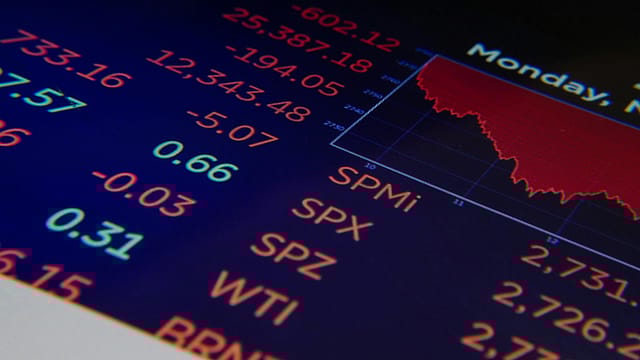
Indian equity markets closed on a mixed note on Wednesday, reflecting investor caution amid renewed geopolitical tensions in the Middle East. While the benchmark BSE Sensex ended marginally higher, the Nifty 50 slipped into negative territory as concerns over fresh hostilities between the United States and Iran weighed on market sentiment.
The Nifty 50 closed at 23,216.45, down 27.15 points or 0.12 per cent, while the BSE Sensex settled at 73,983.18, gaining 64.42 points or 0.09 per cent.
Market participants said that although domestic equities witnessed positive momentum during the first half of the trading session, escalating geopolitical uncertainty prompted investors to turn cautious, resulting in profit booking and subdued risk appetite.

Greening the Future
23 Jul 2026 - Vol 05 | Issue 30
Securing a sustainable India
How Did US-Iran Tensions Impact Investor Sentiment?
According to market experts, the resurgence of tensions between the United States and Iran overshadowed positive domestic factors and kept investors on edge.
Ponmudi R, CEO of Enrich Money, a SEBI-registered online trading and wealth-tech firm, said, "Indian equity markets ended modestly lower as renewed hostilities between the United States and Iran unsettled investor sentiment and revived concerns over the durability of the fragile ceasefire."
He further added, "The Nifty traded positively through much of the first half before surrendering gains later in the session, as geopolitical uncertainty continued to limit risk appetite and cap any meaningful recovery. Sectoral performance was mixed, with banking, financial and FMCG stocks providing support, partially offsetting broader weakness across the market."
The comments highlight how global geopolitical developments continue to influence market behaviour, often prompting investors to reduce exposure to riskier assets.
Which Sectors Faced the Most Selling Pressure?
Sector-wise, the market witnessed broad-based weakness.
Nifty Media emerged as the biggest laggard, falling 2.36 per cent. Nifty PSU Bank declined 1.39 per cent, while Nifty IT lost 0.83 per cent and Nifty Auto slipped 0.74 per cent.
The weakness across these sectors reflected cautious investor positioning amid uncertainty in global markets.
Which Sector Provided Support to the Market?
Despite the overall weakness, the FMCG sector offered some relief.
Nifty FMCG was the only major sectoral index to end in positive territory, gaining more than 1 per cent. Strength in consumer-focused stocks helped cushion losses in the broader market and prevented a steeper decline in benchmark indices.
The resilience of FMCG stocks suggests that investors continued to favour relatively defensive sectors during periods of heightened uncertainty.
What Happened to Crude Oil and Precious Metal Prices?
Commodity markets also remained under pressure.
Brent crude oil traded at USD 91.33 per barrel, down 0.28 per cent at the time of filing the report. The decline came even as geopolitical tensions in the Middle East remained a key focus for global investors.
Precious metals witnessed significant selling pressure. Gold prices fell more than 2 per cent to Rs 1,49,283 per 10 grams for 24-karat gold, while silver prices declined 1.88 per cent to Rs 2,34,053 per kilogram.
The drop in gold and silver prices indicated broader volatility across asset classes as investors reassessed risk amid changing global developments.
How Did Other Asian Markets Perform?
The cautious mood was not limited to India, with most major Asian markets ending lower.
Japan's Nikkei 225 fell 1.91 per cent, Singapore's Straits Times declined 1.28 per cent, and Hong Kong's Hang Seng slipped 0.76 per cent. Taiwan's Weighted Index dropped 3.42 per cent, while South Korea's KOSPI registered the steepest decline among major regional markets, falling 4.74 per cent.
The broad weakness across Asia underscored the impact of global geopolitical concerns on investor sentiment and highlighted the cautious approach adopted by markets across the region.
What Should Investors Watch Next?
Market participants are likely to closely monitor developments in the Middle East, particularly the trajectory of US-Iran relations and their potential impact on global energy markets. Any escalation in geopolitical tensions could continue to influence investor sentiment, commodity prices and equity market movements in the near term.
At the same time, sector-specific trends and the performance of defensive segments such as FMCG could remain key indicators of how investors are positioning themselves amid ongoing uncertainty.
(With inputs from ANI)