Wendy’s ₹59 Burger Bet: Can Chimichurri Beat McDonald's Tikki?
At Wendy’s, it’s the sauce that needs a passport.
On the menu, an aloo patty gets chimichurri in one burger and Korean buldak sauce in another. It also does duty under chipotle slaw. You can spend a fair amount of time abroad on this menu without the potato going anywhere.
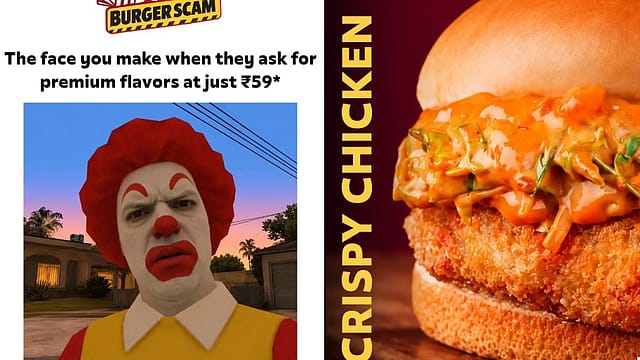
Wendy’s India calls its new campaign “The Great Burger Scam”. Announced on November 4, it puts five flavours on the value menu: Chipotle, Chimichurri, Korean, Teriyaki and Makhani. The brand advertises a ₹59 to ₹99 range across vegetarian and chicken options. As alleged scams go, this one is promising. The company tells you its name before asking for your money.

The Era of Forever Wars
30 Oct 2026 - Vol 05 | Issue 44
Coping with an explosive Middle East
Burger King was already talking up two burgers for ₹79 in February. McDonald’s sells ₹99 meals in parts of India. That’s the company Wendy’s keeps at this end of the menu. The new campaign asks the same budget shopper to spend a little of their lunch money on curiosity. Several of the flavours were already on the menu. The new part is putting them together and selling the whole idea from ₹59.
The potato stays put
The Korean Crispy Veg Burger puts buldak and chipotle on the same aloo patty. The menu has managed to cross another border before you’ve finished reading the ingredients. For someone who already knows what a potato patty tastes like, the sauce is a manageable little adventure. The whole lunch doesn’t have to be an experiment.
I like that bet. Chimichurri is the sort of word you might skip past when you’re hungry and the alternative is something you’ve ordered ten times. It becomes easier to try when it comes on a familiar burger at a price you can live with. And if you’ve already had Wendy’s Korean burger and liked it, there’s an argument for trying the teriyaki next time. A menu can give you a reason to come back without offering you the same thing twice.
Wendy’s has been working on that appetite for a while. In May it used a Bengaluru anime meetup to launch its Teriyaki Jutsu burgers. In earlier reporting for OPEN, Wendy’s India had already taken me through its Korean and chimichurri ranges. These flavours had their own launches and their own audiences. “The Great Burger Scam” gives several of them one job: get someone to consider Wendy’s when they’re shopping the cheap end of the menu.
Mohit Mahajan, AVP, Marketing at Rebel Foods, the chain’s India operator, put the thinking this way at launch: “Consumers today are looking for more than just a good deal. They want variety, exciting flavours and experiences that feel worth trying.” There’s a useful distinction here. A deal gives you a reason to order today. Wendy’s is trying to give you something specific to fancy when you’re hungry again.
Read past the ₹59
A campaign price gets to travel all over India. The price you see on your phone has an address.
On Magicpin’s menu for Wendy’s in Gurugram’s Sector 56, the “Global Flavors Starting At 59” section displayed the vegetarian chimichurri, Korean and makhani burgers at ₹64 each after the listed discounts. The Makhani Burst chicken burger was ₹84. A separate EatSure menu for Wendy’s in Dilshad Garden, Delhi, listed the chimichurri veg burger at ₹109 and the Korean veg burger at ₹89. These are menu snapshots for particular outlets and platforms, before any checkout charges. They tell you why the useful question is what your burger costs where you’re ordering it.
Then there’s the matter of lunch. On that same Gurugram listing, the chimichurri veg burger combo was ₹203 after the displayed discount. That is a separate order from the ₹64 burger. If all you wanted was a burger on the way home, the small number is the one you care about. If you were already planning to add fries and a drink, you’re shopping in a different contest.
The Teriyaki Crispy Veg Burger showed up at ₹58 in the flash sale and at ₹71 in the global flavours section of the same menu. There’s a lesson here for anyone putting a big price on a national poster. The number has to be easy to find where people buy. The shopper should hardly need to spend the savings in time hunting for the right tile.
Westlife Foodworld, which operates McDonald’s in West and South India, has been pushing meals from ₹99. The McAloo Tikki, with its potato-and-peas patty, is an old hand at making an American chain feel familiar to an Indian customer. Familiarity is a reason to order when you have fifteen minutes for lunch and no interest in finding out whether you like buldak. A ₹99 meal can make that decision even easier. It would be poor arithmetic to put that number next to Wendy’s ₹59 and declare the cheaper lunch.
Burger King has its own answer to a hungry customer with a small budget. Its India operator said in October that the two-for-₹79/₹99 deals had moved to the app. The same investor presentation said it had extended its Korean range to Whoppers. That gives Burger King a way to reach someone who has already downloaded the app for a cheap lunch. A new sauce is easy enough for a rival to put on its own bun. A place in somebody’s lunch routine takes longer to earn.
Who gets to sell the interesting burger?
McDonald’s Patakha launch makes the contest more interesting than a straight fight between the old tikki and the new sauce. Westlife put makhani-inspired flavours on paneer and chicken burgers and wrapped them in a festive family pitch. The Patakha range started at ₹199 before tax. Wendy’s has put Makhani alongside chimichurri and teriyaki in a campaign about affordable variety. Both companies have noticed that makhani can do very nicely between two buns. They have different ideas about when you should pay extra for it.
The reason Wendy’s has a shot is that several of these flavours already have a place on its menu. It can move someone from a cheap trial to a more substantial order if the flavour is distinctive enough to remember. Burger King could put more of its Korean range into its app deals. McDonald’s could keep its familiar meal cheap and use a festive or limited range to give people another reason to visit. Either response would make sense without a single public jab at Wendy’s.
The challenge for Wendy’s is especially interesting given how it came back in India. When I spoke to Rebel Foods’ Ankush Grover for an earlier OPEN story, his description of the brand they inherited was blunt: “The brand was on a ventilator.” The rebuilding ran through delivery kitchens as well as restaurants. That makes the app menu particularly consequential. Someone can discover the brand and decide whether they’ll pay for it without ever seeing a Wendy’s sign. They can also compare it with a tikki, a Whopper or a perfectly respectable plate of momos before the burger has left the kitchen.
Even Wendy’s sells value differently at home. In the US, its Biggie Bag has offered a sandwich, nuggets, fries and a drink for one price. You can count what you get. In India, the “Scam” headline advertises what you can try for the price of a single burger. That is an attractive offer for a curious person with a small appetite or a small budget. As soon as they want a meal, the arithmetic starts again.
The scam ends at the bun
The campaign has done the easy part of making the menu sound different. Wendy’s has spent years giving its redhead permission to be a little rude online. Calling its own deal a scam lets the brand aim that joke at itself. I’d like to see it put as much effort into telling buyers exactly which burger costs ₹59 at their outlet. The cheek works better when the bill is boring.
There is a perfectly good flip side. The same patty can make a new flavour feel accessible. It can also make the burgers feel too alike for anyone to remember which one they ordered. The menu can tell us what’s meant to be in them. Whether the difference survives a delivery ride and makes someone choose the same burger next week is a question for the bun that turns up.
I’d give the potato a little credit either way. It has already done a great deal for McDonald’s in India. Now Wendy’s is asking it to carry a sauce from the other side of the world into a value menu. If you come back and ask for the chimichurri by name, the potato can retire its passport. It’s the sauce that’s earned the return trip.