#UNTOLD | Hari Kiran Chereddi, the Boos & the Night the Voice Won
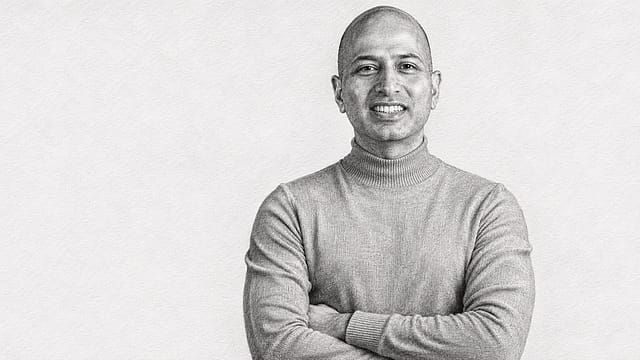
He hears it before he sees it.
A low roar, rolling out of the hall as the Indonesian pair stride in ahead of him. It swells, and swells, and then he ducks through the doorway and the hall explodes around him.
Pangkalpinang. 19 September 2018. It is past mid night, and the place is heaving.
Tier upon tier of faces, packed shoulder to shoulder, close to five thousand of them as he remembers it, and every single one trained on the court. Red-and-white flags. Phones held up. A home crowd that has stayed up this late for one reason: to cheer its boys as they finish off the Indians.
Hot Pursuit
27 Nov 2026 - Vol 01 | Issue 02
The Shah Doctrine of Internal Security
The heat clamps onto him the moment he crosses the threshold. Thick. Wet. His shirt glues itself to his spine before he has hit a single shot. Sweat and floor polish catch at the back of his throat. He squints into the lights. They blaze so white that every face, every flag, every line on the court goes flat. He takes one step. His shoes shriek against the wood.
The match was meant to start in the late afternoon, around half past four. He has been waiting ever since. Earlier he went to the officials' table, leaned down, and asked: "Can we have the match tomorrow? We're sleepy."
They said no.
Now he hovers at the edge of the court, 38 years old, six foot four. Five thousand pairs of eyes drill into him, and he can read the verdict in every one: a tall, tired Indian, too old for this, who looks less like a player than like someone's coach.
In the changing room earlier, he sat among Olympians and some of the best players in the world. He looked at their thighs, their shoulders, their forearms. Then down at his own.
These boys have eaten meat all their lives. We grew up on pani puri and dal. How are we going to smash like them?
In his kit bag, the phone is still buzzing.
Hyderabad. A deal is going through back home, and he has been taking the calls between warm-ups all evening. Back home, too, are his two children.
Beside him, his partner Ajay rolls his shoulders and winces. Earlier this evening he dragged himself through a singles match and lost it over three long games.
Across the net, the tournament's second seeds. Young. Loose. At home.
He crouches and grips the racket until his knuckles go white.
The shuttle cracks off the opponent's racket and soars, a small white thing against the dark roof, turning over at the top of its flight. He tracks it. The whole hall tracks it. Five thousand heads tilt back together.
It screams down like a bullet. He flings his racket at it. Barely.
The roar. Then, underneath it, the booing.
It crashes down from the stands in waves, and inside the waves, words. He doesn't speak the language. He understands every word.
Every point they lose is cheered. Every point they win is jeered, louder.
His shirt sticks to his back. Sweat runs into his eyes and stings. He can hear his own breathing, his heart, his shoes, and over all of it, the hall.
You paid for this. You bought the ticket yourself. You left the company in the middle of a deal. You left your children. You left your wife. For this.
6-21.
They change ends. He presses the towel to his face and it peels away soaked. Through his fingers he can see the stands, and the stands can see him.
9-21.
Eighteen minutes. That's all it takes.
He trudges off without looking up. The eyes burn into his back all the way out. In the changing room he slumps onto the bench and stares at the floor between his shoes. Then he turns to his partner and says the sentence he has spent years wishing he could take back.
"Ajay, I don't think we should play anymore."
We. He says we. Ajay is ten years younger. Ajay has come all this way too. Ajay doesn't get a vote.
Eight years later, on a video call for this #UNTOLD, I ask Hari for the score. He can't quite remember it. "I can look it up," he says, and scrolls for it while I wait. Then he reads it out: round of 32. 21-6, 21-9.
The night he can't forget, and he has to look up the numbers.
How does the founder of a pharmaceutical company end up paying to be booed on an island at night?
To understand that, you have to go back ten years, to a bank, and two hundred people he had to let go.
BY MY HAND
2007. Bank of America, India.
A year earlier, Hari was hiring. The bank wanted about 10,000 people in India in a single year, and he was running business operations, scaling as fast as the paperwork allowed. He was in his late twenties, on his way up.
Then Lehman fell, and the hiring became firing.
Hari let about 200 people go. "By my hand," he says.
Then a question arrives that he can't send away.
Across that table, he is the man who decides. Two hundred lives turn on a sentence he says. So, in his head, he flips the chair round and sits on the other side.
If my job disappeared tomorrow, would this system stop running? Five hundred thousand people in this bank. Would one thing stop?
No. Nothing.
On his side of the table, everything depended on him. On the other side, nothing did.
"It almost felt like you have no soul," he says.
And then, from somewhere older, the argument he has been having with his father since he was a boy. His father, a very sincere police officer, always said the same thing at the dinner table: let us learn to live within our means. And the boy always answered back in his head: why don't we increase our means instead?
You came back to India to build something. Not to climb somebody else's pyramid.
It isn't the first time he has walked out of a life that looked fine from the outside.
Years earlier, doing his MBA in California, he made sandwiches at Subway on shifts that began at four in the morning. Sandwich artist is still the first job on his LinkedIn profile. He would stand at a Starbucks counter ordering a decaf non-fat white latte with a single shot of espresso and whipped cream on top, flavoured milk really, because he thought that was what the cool people drank.
"I was trying to belong with people I thought were cool. But somewhere, it was eating me from the inside."
He called his father and said he wanted to come home. His father's reply still rings in his ears: "I thought you would be a simpler kid to raise."
It is always like this with his father. The officer disapproves, and then he picks up the phone. The man who said sport won't feed him is the same man who once called someone in America to get his son into Lamar University in Texas. And one day he will stand outside a burning factory, ringing old colleagues for fire tankers.
He quits.
The salary stops. The savings start to thin. His father-in-law is a general manager at Andhra Bank: a man who married his daughter off to a banker with a stable future, and now sees that banker hunched up at night, learning AutoCAD from YouTube videos so he can design LED lights.
And his wife? He tells me this almost in passing.
"I never asked my wife this question, what did she think when I came and told her that I want to do business."
Rewind to that evening.
He strides in with the decision already made. His head is full of things she can't see yet: tube lights burning all night in the parking lots of shopping malls, the LED that could replace them, AutoCAD tutorials, a company that doesn't exist.
He blurts it out. I want to do business.
His voice comes out steadier than his hands.
And then there's the moment where the next sentence should come. The one every husband knows he's supposed to ask.
What do you think? Are you scared? Is this okay with us?
It never arrives. He is already gone, three steps ahead, living in a future only he can see.
Twenty years later, he still hasn't asked. He has his story of that evening. Only she knows how it really went.
He was about to find out what she thought, in front of a crowd, in Vietnam. But first, his body would give way.
SOLACE IN TEARS
He designs a light. He calls the company Sun LED. His father laughs: it's named Sun LED because my son is leading it.
He barges into Nichia's Bangalore office, the Japanese LED giant, a nobody, and tells them he's "the young guy who designed something." He marches out with a supply agreement and a thousand free bulbs.
Within a year, a powerful Hyderabad industrialist, a friend of his father's, puts ₹5 crore on the table. Take it. Scale.
Hari says no. He has never taken money from anyone, not even his own father. So the man changes the offer: sell me the company and come run my energy business. Hari sells. He becomes managing director of Sujana Energy, which reportedly signs up with Nichia in May 2010. Solar plants in Florida. Solar plants in Malawi. Airports, hotel rooms, another airport.
His shirts go up a size. Then another.
In the end he is thirty-five kilos heavier than he is today. Six foot four hides it, so nobody says a word. Dinners out. Drinks. Another dinner.
Until his wife does say it. He repeats the words to me exactly as he heard them:"Hari, I think you should get a life. What are you doing? All you're doing is eating out, drinking, because you need to find solace in your own tears."
He hates gyms. He hates weights. There is exactly one thing his body has ever loved.
And with it, a memory crashes back: a boy in Guntur district, playing cricket barefoot until his feet were cut, asking his mother for a cricket kit. Get good marks in Class 10, then I'll talk to your father. The same mother who once walked into his school and asked the principal not to make him head boy, because he won't study. And his father, gently, protectively, closing the door on the dream:
"A sport is not going to feed you, my son."
He had stopped playing at about 18.
In 2010, at 30, he steps onto a badminton court for the first time in twelve years. He picks up a shuttle. Sixteen feathers, a cork head, five grams. He hits it and the sound cracks through the empty hall: thwack.
For an hour, the noise in his head falls silent.
It doesn't last. Four years later, his phone shrills one morning, and the voice on the other end says one word: fire.
SKY ON FIRE
January 2014.
"There seems to be a fire at your factory."
"How bad?"
Nobody can say.
He is in the car, flooring it, before the call ends. Jubilee Hills to the plant: fifty kilometres, an hour and a quarter. Every call he fires off on the way hits the same wall. We don't know. Is it small? Is it bad? Is everyone out?
He sees the smoke before he sees the plant.
It is the pharmaceutical unit he has spent two years learning to run: about six acres, about 200 workers. A methanol tanker had been unloading. Someone, he says, didn't put up the anti-static rod. One invisible spark.
He came to pharma in 2012, when his brother married into a family with deep roots in the industry and his father wanted him closer to home. But the seed was older. As a young software trainee on a client job at Dr Reddy's Laboratories in Hyderabad, he used to sit reading the labels on strips of tablets, wondering what each drug did.
Now his own plant is burning.
By the time he screeches in, it is raging. The heat slaps him from across the road. Black smoke. A chemical stink at the back of the throat.
The firemen take one look and shake their heads. This is a chemical fire. We don't have the capability. We don't have the technology. His father, the retired police officer, is working the phone, ringing old colleagues, the fire services chief. More tankers come.
Then the cylinders start to blow.
Nitrogen cylinders, heated past bursting, shoot into the sky like rockets. Every head in the crowd tilts back to follow the arc. Up. Up. Turning over at the top.
Nobody breathes.
Where will it land? On the road? On the workers? On us?
Another rockets up. Then another. Is everyone out?
Six hours. Seven. Then the headcount lands.
Everyone accounted for. Nobody missing.
The plant is still burning.
Hari stands rooted to the spot as his plant burns for more than 24 hours. By his estimate, ₹25–26 crore goes up in smoke.
This is the story he reaches for when I ask him for the lowest moment of his life. Even then, he hedges: he doesn't tag anything as the lowest. Because that day, terrible as it was, came with an answer. Two hundred people. We found them all.
The court will never give him an answer like that.
In 2014, with the ash barely settled, he strides into his first All-India senior ranking tournament. And every teenager in the hall glances up and thinks the same thing.
UNCLE IN THE DRAW
He must be someone's coach.
He isn't. He's in the draw. Open men's category: anyone from 17 up.
The boys around him wear earphones and ankle braces and tease each other in four languages. He is six foot four, fifteen years older than most of them, with a receding hairline and a pharma company waiting on his phone.
His palms are wet before he has even picked up a racket.
What if you look like a fool? What if they're laughing? Look at this uncle.
So he does the only thing he knows. He talks. To the boy next to him. To the boy after that. To the referee. If he keeps talking, nobody will notice his hands shaking. Soon the referees know his name. The kids say, we like that you have fun.
He grins. Under the grin, a cold trickle of sweat runs down his spine.
But the real fear isn't across the net. When I press him on what actually went through his head, the answer has nothing to do with the opponents.
"What will my wife think if I went there and I did not win and came back?"
Mornings, men decades older lean back in boardroom chairs and size up the young boss across the table, an outsider in an industry he didn't grow up in. Evenings, boys half his age nudge each other and smirk at the uncle on court. I tell him it sounds like a split personality. He doesn't laugh.
"Somewhere, I still kept feeling, am I missing myself in the process? This is the paradox that I still keep having. How is it that you can belong?"
It hasn't gone away, he admits. Every time he reaches a goalpost, he sets a bigger one. Stopping, he says, was always the harder thing.
India rankings were in, he had made it to the top 100 in India. And that was a big milestone. To play for India internationally, he needs a Badminton World Federation ID, signed off by the national set-up. So he seeks out Pullela Gopichand, India's chief coach. Gopichand sizes him up.
"What? Are you planning to play veterans?"
"No, Anna. I'm not 35 yet. I still have two years."
"Who's going to give you sponsorship?"
Nobody. I'll pay.
And he does: twenty-six international tournaments, he says, every ticket, every hotel, every entry fee. Win the whole thing and the purse is maybe $8,000 to $10,000. Thirty percent vanishes in tax. A cut to the federation. Half to your partner. What's left? Somewhere between $500 and $1,000. The hotel alone costs more.
And the kit. He says it in Hindi, and it sounds like a man counting his wounds: "Kitne racket tode, kitne string tode, kitne joote ghisaye." (How many rackets smashed. How many strings snapped. How many shoes worn down to the sole)
His alarm rips him awake at six. He helps send the children off to school. Court from seven to ten, six days a week. Office by ten thirty. Home by seven, an hour with the family, then the gym or a run. "My friends keep cribbing that I don't come out with them," he said, laughing, as reported by Scroll in 2017. "One thing that takes a hit is social life."
The whispers start.
"Sabkuch karega kya?" (Is he going to do everything?)
Bank. Bulbs. Solar. Pharma. A fire. And now badminton. Jack of all trades, they say. No focus.
When he travels, people ask only one thing: work or badminton? Nobody ever asks if it's a holiday. Two answers, both true. And at home, a daughter and a son who could give either one if anyone asked where their father was.
And he can hear it from his children's side too. He imagines their friends asking them, at school, what does your dad do? And he can say exactly how it must sound at his own dinner table:
"Jo bachchon ko karna chahiye, baap kar raha hai." (The father is doing what the children are supposed to be doing)
He keeps going anyway. By 2017 he is playing abroad. And in Vietnam, for once, his wife flies in to see him play.
"RECONSIDER THIS"
She is sitting in the audience. He can find her face from the court.
Across the net: a Thai pair. Olympians, he says. Men who have played the Games.
The rallies are short. The shuttle whips back faster than he can turn. He dives. Misses. Scrambles up. Hunts for her face in the stands. Flinches away.
21-9. Or 21-11. He isn't sure any more. He only remembers that it was fast, and that it was in front of her.
"They plastered us like anything."
He zips the racket into the bag slowly, so he doesn't have to look up. Then she is in front of him.
She says only one thing.
"Hari, I think you should reconsider this. I think they just walked right through you guys."
Reconsider. Not quit. Not stop. She has picked the gentlest word there is.
Years ago, he walked out of a bank and never asked her what she thought. Now he has her answer, without asking. He opens his mouth. For a moment, nothing comes out.
Then he tells her he understands. The better team won. Then he reaches for what he really means. Look how far I've come. Look at this jersey. Look what it took to wear it. She watched one match. He lived every year it took to get there.
That night, in a hotel room in Vietnam, the noise won't stop.
The room is dark. The air conditioner rattles. His knees ache, the deep, dull ache of a 37-year-old body that has spent the evening lunging after boys half its age. The jersey he was so proud of is lying over the back of a chair, still damp.
She is in the room. Asleep, or close to it. He can't tell.
He lies on his back and stares at the ceiling, and the match replays behind his eyes. The serve he should have read. The smash he couldn't reach. Her face in the stands. Then her voice, quiet and sure.
I think you should reconsider this.
He turns it over and over, like a shuttle he can't put down.
You're learning pharma on the job, in front of men who've been in it for decades. Then you fly out to get destroyed by men who've been playing for decades. And the one person whose opinion you actually fear just watched, and told you to stop.
What if she's right?
Can he sleep?
"That is where the whole conversation of 'you have a couple of drinks and go to sleep' comes in. Otherwise, there was no way."
November 2017. Nagpur.
His first Senior Nationals. He is 37.
He and his partner, Ajay Kumar K, 26, win the first game, 21-18. For a few minutes the impossible looks merely difficult. Then their opponents, 21 and 29, take the next two, 15-21 and 16-21, as reported by Scroll. First round. Out.
Asked how long he will keep at it, he laughs. The line rolls out polished, the way it does when a man has heard the joke about himself a hundred times:
"Till I don't get beaten up by kids very badly."
He gets beaten up again. And again. And he keeps buying tickets.
Ten months later, he books a flight to an island in Indonesia.
THE VOICE WINS
Pangkalpinang again. 6-21 on the scoreboard. They're changing ends.
He retreats to the back of the court and buries his face in a towel, and in the dark under the cloth, the real match begins: the one he has been playing his whole life.
These are not lines he spoke that night. They are built from what he told me went through him.
THE VOICE: You lost this on the plane. You landed already beaten. These boys are much, much better than you.
HARI: I'm wearing the Indian jersey. I never thought I'd get this far.
THE VOICE: And where's your head? Here, or on the phone with Hyderabad? There's a deal on. You took the call between warm-ups.
HARI: I can do both. I always do both.
THE VOICE: Always both. Always everything. And what's left for you? Are you missing yourself in all this?
THE VOICE: Then count. What are you doing here?
HARI: Running the company. Playing badminton.
THE VOICE: That's two. Count again.
HARI: …
THE VOICE: The kids are growing older, Hari. Quietly. While you're on islands.
THE VOICE: A marriage isn't getting married and having children and then you carry on doing what you do and she carries on doing what she does. Who is all this for?
He rips the towel off his face. The lights. The boos.
Second game. First rally. An Indonesian racket flicks the shuttle high and deep, into his corner.
The shuttle climbs. Hangs in the white light. Turns over at the top.
Less than a second. That's all he gets.
Back foot planted. Racket up. Elbow high. The smash he has drilled a thousand mornings at seven o'clock.
Hyderabad. The deal.
The shuttle drops through the lights.
Smash or drop. Attack or defend. Company or court.
The kids. Quietly. Eyes on the cork. Wrist cocked.
Who is all this for?
He swings. A dull clack. The frame, not the strings. The shuttle dies in the net. Five thousand people roar.
THE VOICE: Maybe you are not good enough anymore.
Anymore.
At 33, when Gopichand sized him up and asked if he wanted to play veterans, Hari laughed it off. He had two years in hand and his own money in his pocket. Nobody else's doubt had ever stuck.
Tonight, for the first time, the voice telling him he's finished is one he believes.
9-21.
The others want to stay on a couple of days. He doesn't. He catches the first flight home. In Hyderabad, seven in the morning is badminton. Seven o'clock comes. The kit bag stays where it is. Seven o'clock goes. Ten days of it. Maybe twelve. He calls it "trying to re-cook myself."
The loss doesn't haunt him. The thought does.
"I should not have let that feeling come in me."
Then he drags himself back.
He plays six or seven more tournaments after Indonesia, he says, with better results. And something else changes: his wife starts travelling with him. The woman who told him in Vietnam to reconsider now travels with him to see him play. "It also became a little bit of a turn for us," he says.
By his own account, he climbs to No. 33 in the BWF world rankings. He plays until 2019. He never gets injured, and he thanks his stars for that. He starts to say what an injury would have done to him, and doesn't finish the sentence.
"Going from a recreational badminton player to being rated world number 33 at your age," he says, as if to himself, "was no mean feat."
A pause.
"But the sacrifices that went through for it…"
In 2019, he puts the racket down.
The noise doesn't stop. It follows him into the boardroom.
"TUMHARA PLANT KIDHAR HAI?"
The fire taught him one thing, he says: never depend on just one thing.
So the man who watched a factory burn for 24 hours builds a pharma company that owns no factories at all. HRV Pharma, founded in 2016, holds the regulatory filings and the customers, and contracts the manufacturing out to partner plants. It has reportedly crossed ₹400 crore in revenue, with no debt and no investors' money. He says he started it with ₹1 lakh.
It should feel like a victory. Instead it is the same court, in a different hall.
Two years ago. An industry award. His company is on the shortlist.
He strides into the room and clocks them before they clock him: six leaders of pharmaceutical companies, side by side behind a long table. Water glasses. Notepads. The faces of men who have spent careers building plants, running plants, buying plants.
He draws a breath and launches in.
The model. The partners. The filings. The numbers. As he talks, he searches their faces, the way he once tracked a shuttle at the top of its flight, waiting for the moment it turns and drops to him. The nod. The lean forward. The flicker that says ah, I see.
It doesn't come.
He keeps talking. Still nothing.
Come on. Come on. You of all people. You'll get this.
He finishes. Silence.
They glance at each other. Then at him.
"We don't understand."
"My heart literally sank," he says.
Six of you. You run pharma companies. You, of all people. And you don't get it?
Then the questions.
So what are you? A cloud company? A distributor? An Amazon? An Uber?
Each question is a box. He can see them building it in front of him, measuring him for it, and he doesn't fit any of them.
Explain it again. Slower. Simpler. No, they've stopped listening. The moment you said no plant, they stopped listening.
And the one that follows him everywhere:
"Tumhara plant kidhar hai?"
We don't have a single plant.
"Dude, are you serious? Are these numbers even real?"
He acts out a scene to show me how it feels. Two strangers in a lift. One says: I was in a bank, I was on a Forbes list, now I'm doing this. The doors open. The other steps out and mutters:
"Phek ke chala gaya." (He was just bluffing.)
"It's a very dark place to be in," he says. "Every time."
And when the numbers are too good to wave away, there is the other word: lucky.
He has a cricket answer for that. You can get lucky once, he says, like a No. 9 batsman swinging a six to win the match. Twice. Three times, maybe the match is fixed. "But even if the match is fixed, you still have to hit the ball. You have to make sure it goes out of the stadium. Everybody is watching."
He knows what the word is trying to hide: walking into a room with the CEO of a company a hundred times bigger, and sitting down as an equal. "It is not possible," he says, unless you push through the fear. Indonesia taught him that. If a court could tell him you can't play with these boys, a boardroom could tell him you can't deal with these men.
Then it follows him home. His son sees the company surge and asks him: "What are you doing differently from last year?"
There are two ways to hear that, Hari tells me.
The kind way: he doesn't understand yet. I'll explain.
The other way: how long do I have to keep explaining? To everyone? To my own son?
He knows that question from the other side. As a boy he asked his own father the same thing again and again: why should we live within our means? His father is 76 now. Hari is still asking. Now his son has a question of his own, and Hari is the one who has to keep answering.
And under it, his father's voice from his college years, the day he climbed a pole without a harness, fell, and landed in hospital:
"What did I want you to do? And what is it that you're trying to do?"
Then, flatly: "I am a single point of success. And very well may be the single point of failure."
He has never raised outside money. Every morning, he says, LinkedIn shows him at least ten posts about someone raising money at some valuation, and nobody celebrating the founder who didn't. People tell him to raise debt, to take his money home. He has never even taken a dividend. The one thing that lets him sleep easily: "I know that I don't owe anybody any money."
People ask why he would put a badminton match before a million-dollar deal that might have put $250,000 in his own pocket. He doesn't argue the maths. "But did that change who you are?"
The cost he can count in days: about 200 a year on the road. "Why don't you try it?" he tells people who envy the business-class seat. "Be me for a day, like the one-day CM in the movies."
Now, at 46, he is trying to do the hardest thing of all: let go. Hand things over. Give himself, as he puts it, permission to trust others.
THIRTY-FIVE
This morning. The gym.
"Sixty," says the trainer.
Down. Up. Thirty. His arms shake. Thirty-five.
He can't do thirty-six.
And before his chest has even touched the mat, his head has already left the room.
"I was looking all around the gym to see who is looking at me. Is anybody smiling? Is anybody laughing? Is anybody looking at me weirdly?"
He is 46. And a failed push-up still sends his eyes round the room, looking for someone laughing.
Then the sense arrives: everyone here is fighting their own fight. Nobody's watching you. It always arrives. It just arrives a second after the need to look.
It never falls quiet, and it never stops pushing. He recently finished an executive MBA at Harvard. The day before we spoke, his PhD thesis was approved for pre-submission. Throw seventeen things at him since morning, he says, and he'll score ninety percent on all seventeen.
He asks himself the question out loud: "When do you move from 'I doubt myself' to 'I stopped doubting myself'?" And then, almost to someone who isn't there: "Now it is time for you also to stop doubting me."
He doesn't say who he means.
There is a room in his head where he keeps the things that went wrong. A word he gave, tested by a better deal. Deals that went sour. Things that come back, he says, "at the absolute worst times in your life." He won't name a single one.
"I will not cry victim. I will not tell you, oh, this guy screwed me or that guy screwed me. I will not be that guy."
He calls it an ugly place. He keeps it locked. He leads with a smile.
"I'm often told that I forgive, but I don't forget. I should have done better on that front. I would have been a lighter soul. A calmer soul."
Then he does something few founders do in an interview: he turns the knife on himself. Part of him, he admits, would love this piece to paint him as "the Achilles with the heel that nobody knows", the smartest, greatest guy ever. He tells me so anyway.
His wife has a line for the difference between them. "You are the FOMO soul. I am the JOMO soul." He keeps a tab open on everything; control is how he feels safe. "How does lack of control feel?" he asks. He is only now trying to find out. "I'm 46 now. Maybe I should have learned to say no to a lot more things."
I suggest he has made peace with being misunderstood.
"Absolutely," he says. "Blessed are those who can be understood more than 30% of the time, especially at the top." He admits he made the number up. Then, minutes later, he takes it all back.
"Even now I constantly struggle with not being able to make peace, even when I want to."
What would he tell his 18-year-old self? "I should have taken more shots."
He tells me nobody has heard this version of his story. Not even his YPO forum, who got "a 15-minute presentation", slides and all. "But one and a half hours, sitting like this?" Never.
OVER AND OVER AGAIN
Near the end, he asks a question out loud, the one that has been circling the whole conversation.
Sometimes, he says, he wonders if he should have become a doctor. Or a police officer, like his father.
"Would I be different? Would I be like my father?"
He leaves the question hanging in the air between us.
Would he do it all again? The fire, the boos, the jury, the push-ups?
He doesn't hesitate. "Over and over again."
He tells me he can put his hand on his heart and say that, knowingly or unknowingly, he has not hurt anybody in his life. Somewhere, in some country, someone is thanking him for what he has done. He hopes that blessing finds its way to his children.
So I ask him for one line. Who are you now?
"I am just thinking," he says. "I am just thinking." Then: "If you gave me five lines, I would have already answered it."
I try to help him out. Work in progress?
He turns the phrase over and reaches past it. At 18, he says, he was a work that was raw. Now, a work being polished. "The best is yet to come."
And then the real answer spills out of him, not as a line, but as a picture:
"They will see me light up when the biryani on the table is good. When my daughter comes and tells me something that she's done. Or when his son comes and gives him a hug. Or when my wife says, you have done well."
Not the ranking. Not the revenue. A plate of biryani. A daughter with news. A simple hug from the son. And the woman from the stands in Vietnam, the one who asked him to reconsider, telling him he has done well.
At my end of the call, I smile and lean back in my chair.
He catches it.
"You actually smiled. You went back in your chair, wherever you are sitting. This is the 19th time you've done that."
All this time, I thought I was the one doing the watching.
I must have done it again.
"This is number 20."
A factory on fire. A stadium of boos. A wife's verdict. He beat every one of them.
Except one.
The voice in his head is still keeping count.