#Untold | Burnt, Buried & Breathing: Vivek Varshney & the Cost of Staying Alive
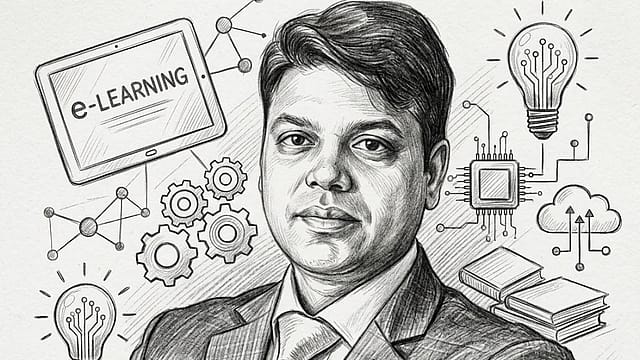
Two months. That’s all he had.
Two months before the money ran out. Two months before the salaries stopped. Two months before a company he had spent seven years building collapsed under its own weight.
In October 2023, Vivek Varshney was burning close to ₹2 crore every month. The product wasn’t sticking. Renewals weren’t coming. A $2-million commitment had vanished. New investors weren’t showing up, and the existing ones had gone cold.
There was no fix waiting. All he had was a clock, ticking like a time bomb.
Inside SpeEdLabs, the cracks were already visible. A team that had once swelled to over 400 had shrunk to 80. Costs were slashed. Conversations were getting shorter, harder, and quieter.
Outside, nothing looked broken.

Losing Memory
16 Oct 2026 - Vol 05 | Issue 42
The making of a medical and social emergency
But inside Varshney’s head, everything was.
Sleep thinned. Thoughts looped. Numbers refused to settle. Every scenario ended the same way—shut down, unpaid dues, disappointed investors, a career that didn’t just stall, but reversed.
He had seen failure before. Fourteen job rejections after IIT. No offers after graduation. He had clawed his way back then.
But this was different.
WHEN FAILURE HITS AT 42
At 21, failure had time. At 42, it had consequences.
There were other pressures now. A family. A life built over a decade. A version of himself that had already ‘made it’—IIT, IIM, investment banking, a salary pushing a crore. Walking away from that life had been a choice.
Now there was nowhere obvious to go back.
And then the body joined the fight. The stress didn’t stay in the mind. It turned physical. Blood sugar levels spiked and there were two unsolicited guests: Diabetes and stress. Moreover, there were numbers he couldn’t ignore anymore.
Meanwhile, the business was slipping. So was he.
There were moments he wanted to talk. To someone. Anyone.
But who? Family wouldn’t get it. Friends couldn’t fix it. Investors would only measure it. And founders—well, founders don’t always admit this part out loud.
So, he stayed quiet and kept going. This wasn’t just about shutting a company. This was about admitting the last seven years had led here. And he wasn’t ready to say that.
Varshney had been here before. Just not like this.
Fourteen rejections after IIT. No job after graduation. It didn’t make sense. He had done everything right. He had cracked one of the toughest exams in the country; made it out of an almost obscure district—Kasganj—in Uttar Pradesh; and sat across the table from companies everyone else wanted to get into.
And still nothing.
Interview after interview, the answer stayed the same: No. It wasn’t ability. He could handle the questions, solve the problems, and keep up. The problem was everything around it—the language, the confidence, and the way he came across.
He had grown up studying in Hindi. Varshney worked at his father’s kirana store. Learnt to hustle early. But none of that showed up in those rooms. What showed up was hesitation, gaps and silence at the wrong time.
And silence, in those rooms, was rejection. It hurt long after the interviews ended, and long after IIT was done.
So, he left and went to Kota, Rajasthan. Varshney picked up a teaching job. ₹40,000 a month was good money for someone just out of college. It was stable and predictable.
It should have been enough. It wasn’t. Why? Because the rejections hadn’t just cost him a job. They had left scars. “I wanted to remove the taint of failure,” he recalls.
So, he went back to work—on himself this time. He spent hours fixing what those interviews had exposed: vocabulary, communication, and writing. He started preparing again, but this time it was not for a job, but a shot at something bigger.
FROM KASGANJ TO GLOBAL FINANCE
He took the CAT and cracked Indian Institute of Management Lucknow in the first attempt.
So, again, another interview room, another table, and another set of questions.
This time, he didn’t dodge the past.
When asked about his journey, he said it straight: fourteen rejections. He didn't polish anything. He didn't spin it. Just the truth. And it made an impact. He walked out with an offer from Morgan Stanley.
From there, things moved fast. Deutsche Bank, private equity, global exposure—New York, London, and then Singapore. It was the kind of career that rewrites expectations—his, and everyone else’s. By the time he quit in 2016, the numbers had caught up with the story. ₹80 lakh. Pushing a crore.
On paper, he had closed the loop. The arc—from Kasganj to global finance—was complete. The young man who couldn’t land a job had built a career most people spend decades chasing. He could have stayed. And why not? Most would have.
But he didn’t. Something still felt unfinished.
Somewhere, the memory of those fourteen rejections hadn’t faded. It had sharpened into a resolve to build something of his own. There was also something also that mattered. No, it wasn’t about money or titles or the next promotion. It was about impact.
“I wanted to reach the students I came from,” he would say later. Small towns. Hindi-medium backgrounds. Students who had the ability but not always the guidance.
So, he quit.
Varshney didn't have a safety net beyond his savings. Just ₹40 lakh of his own money and another ₹40 lakh from friends. It was enough to begin, but not enough to coast.
He started SpeEdLabs in February 2016.
The idea was clear. The execution wasn’t.
Varshney didn’t believe in a fully online future. At a time when BYJU'S and Unacademy were pushing hard into digital-first learning, he saw a gap. Lectures alone weren’t enough. Students needed practice, feedback, and mentorship. And these things that didn’t travel well through a screen.
His bet was simple: a hybrid model. Offline for teaching and online for practice, analytics, and improvement.
It didn’t sound fashionable at the time. Investors weren’t convinced. The market was moving the other way. While pure online was the narrative, scale was the promise.
Varshney, though, stayed with his view.
The early years were slow, almost stubbornly so. He taught at his Powai centre himself. Built piece by piece. From ₹27 lakh in revenue in FY17 to ₹1.6 crore by FY19. Nothing explosive but steady movement.
WHEN CONVICTION TUNRS COSTLY
Then Covid hit.
The world flipped to online overnight. For most edtech companies, it was acceleration. For him, it was a test of conviction.
He didn’t abandon his thesis. “Online was a forced behaviour,” he says. “Not a permanent one.”
As the pandemic eased, the shift he had expected began to show. Students returned to classrooms, coaching centres filled up again, and the hybrid model started making more sense.
The numbers followed.
Revenue moved from ₹2.7 crore in FY21 to ₹5.1 crore in FY22. The run rate for FY23 touched ₹25 crore. Investors came in and he raised close to $4 million. The model, once questioned, now looked validated.
For a moment, it felt like the bet had worked. He had held his ground when it wasn’t popular. And he had been proven right. That belief would matter. Why? Because what came next would test it in ways he hadn’t anticipated.
Being right about the direction didn’t mean the model would work. That realisation didn’t arrive in one moment. It built slowly.
On paper, things were moving. Revenue was growing. Investors were in. The narrative around hybrid had begun to shift in his favour.
But the product wasn’t settling into daily use. Students weren’t engaging deeply enough. Coaching partners weren’t integrating it into their core workflow. The platform existed but it wasn’t indispensable.
And if it wasn’t indispensable, it wouldn’t last.
The signals were there. Usage patterns that didn’t hold. Retention numbers that slipped. Renewal conversations that didn’t close cleanly.
Individually, nothing broke the business. Together, they said the same thing. This wasn’t product-market fit. Not yet.
Varshney could see flashes of it. He spotted moments where the model worked. He showcased classrooms where outcomes improved. He had a battery of teachers who leaned in. And his crowning glory was thousands of students who benefited.
But the growth wasn’t consistent. Not enough to scale.
Still, the entrepreneur pushed on. Why? Call it the founder's curse. It was part conviction. It was part belief that the business would click with time. And it was part something more dangerous—the tendency to wait in the hope that the next few months would fix what the last few couldn’t. “We delay decisions,” he says. “We think things will improve.”
They didn’t.
Money helped extend that delay. During the pandemic years, capital had been easier to access. SpeEdLabs had raised funds. Teams expanded, sales scaled and the company grew to over 400 people.
With that came cost. Salaries, travel, operations and customer acquisition...the numbers ballooned. This kind of spending makes sense when growth is steady and the future looks predictable.
The plan was straightforward: Acquire early, price aggressively and drive adoption. And renewals would fix the economics.
THE YEAR THE RUNWAY DISAPPEARED
They didn’t. Not at the scale required and not with the consistency assumed. And when renewals don’t come, the math doesn’t wait.
The burn started rising. At first, it felt manageable. A phase. Something that could be corrected with a few changes such as a tweak in pricing, a push in sales and a sharper pitch. But the gap between belief and reality kept widening.
And then the market shifted. Investors who had been writing cheques through the pandemic pulled back. Edtech came under scrutiny. Growth was no longer enough.
Sustainability mattered and funding slowed. While some commitments disappeared, others stretched. And just like that, the buffer he thought he had wasn’t there.
The company was still running. But the ground under it wasn’t steady anymore. This time, he could feel it.
By mid-2023, the numbers had stopped negotiating. Revenue wasn’t catching up, renewals were uneven and costs were fixed. The gap sat there, growing every month. Around ₹2 crore was going out every 30 days. But not enough was coming in. The first instinct was to buy time. Cut what you can and stretch what you can’t.
Varshney started trimming. Teams were reduced. Roles collapsed into each other. Travel stopped. Every line item was questioned. Four hundred people became eighty. But cost cuts don’t solve a broken model. They only slow the fall.
The second instinct was to raise. He went back to the existing investors. It triggered new conversations. Decks were reworked, scenarios built and outcomes projected.
The answer, more often than not, was a pause. Some wanted to wait. Some wanted clearer signals. A few stepped back entirely. A $2 million commitment that had once looked certain disappeared.
And when that happens, it’s not just the money that goes. It’s the assumption that someone will step in if things get worse.
Now there was no such assumption left.
The runway began to shrink. Six months. Then four. Then three. Every number started to matter—salaries due, vendor payments pending, statutory obligations that don’t adjust themselves to your situation.
Varshney, meanwhile, kept pushing. He reached out again, reframed the plan and put survival ahead of valuation. “Right now, the question is survival, not valuation,” he told them.
While some conversations moved, most didn’t.
At home, the pressure was different. He had borrowed close to ₹2 crore from friends. “Emotionally, it doesn’t feel like borrowing,” he says. “It feels like you’re asking people to pull you out of a bad situation.”
There’s no spreadsheet for that cost. And then the problem simplified itself. Two months…that was the time left in the bank. At that point, the options narrow quickly. Either shut down or stay in the fight.
He stayed. And went back to the same investors who had already hesitated. This time, there was no story of growth. Just one ask: Keep the company alive.
What followed didn’t look like a funding round. It looked like permission to continue.
The money didn’t come in one shot. It came in pieces.
There was an internal round of roughly a million dollars. But the money was not wired upfront. It was released over time. It was a bridge round but not a comfortable one.
TWENTY DAYS TO BUILD, TEN DAYS TO SURVIVE
Each month had to be earned. The terms were clear: Show progress, show movement, show that something is working and then the next tranche would come. Miss that and the cycle would break. For the next eight months, the company ran on that rhythm.
This is how the schedule looked: twenty days of work. Build, fix, push the product, and close whatever business was possible. Then ten days of convincing. The same investors, the same questions, and the same doubt—just in different forms. “It was like being on life support,” he says. “Every month, someone decides whether to pull the plug,” he rues.
That’s what it felt like. Presentations weren’t events anymore. They were routine. Updates turned into reviews. Reviews turned into decisions. Every month, the question was the same: Do we fund the next one? Every round boiled down to series of approvals. And every approval carried a subtext: Continue or stop.
Meanwhile, inside SpeEdLabs, everything tightened.
The team had already been cut down. And what remained stretched. People carried more than their roles. Costs were controlled aggressively. Nothing moved without scrutiny. There wasn’t room for drift. Discipline became non-negotiable. It meant survival.
Varshney felt the shift too. Every number was examined. Every assumption tested. And optimism had to justify itself. There wasn’t the luxury of believing things would work out. They had to or the next month wouldn’t come.
Over time, the signals began to change. The product started finding clearer use cases. Customers engaged more consistently. The model, reworked and tightened, began to hold.
It wasn’t scale yet. But it was direction. And direction was enough to keep the line open.
Month after month, the company stayed alive. And in that narrow gap between shutting down and stabilising, something else took shape: A different way of building. One that had less room for error and far less tolerance for illusion.
Stability, meanwhile, came in pieces.
First, the bleeding slowed. Costs had already been cut deep. The team was lean. Every function had been tightened. What remained was a version of the company that could survive longer than it could grow.
Then the numbers began to respond. The product wasn’t pushed everywhere anymore. It was placed where it worked. Use cases were clearer. Customers who stayed, stayed for a reason.
THE MADNESS OF BUILDING & THE COST OF STAYING
Revenue, which had dropped, began climbing again. From ₹4.4 crore in FY24 to over ₹14 crore in FY25—a more than threefold jump. SpeEdLabs is estimated to close FY26 with around ₹27 crore in revenue and ₹2.8 crore in EBITDA, nearly 17 times its FY19 revenue of ₹1.6 crore.
But this growth came with a difference.
This time, the structure held. Expenses didn’t rise with revenue. The discipline built during the worst months didn’t slip. For the first time in a long while, the math started making sense. By FY25, the company moved to operational break-even. EBITDA turned positive.
There were other changes too. Experiments reduced, priorities sharpened, and decisions made earlier. There was less room for optimism without evidence. And there was less patience for things that ‘might work.’
Varshney had learnt the cost of waiting. “You need someone objective on finance,” he says. “I didn’t have that.”
He had been running finance himself. That changed. The system tightened. The business had changed. So had he.
Growth was no longer the default goal. ‘Scale first, fix later’ assumption was gone. The company wasn’t out of risk. But it wasn’t drifting anymore. And for now, that was enough.
But the hardest part wasn’t the business. It was everything around it.
At home, the pressure was quieter, but constant. A family that had seen him build a stable life—step by step—now watching it come under strain. Expenses that didn’t pause. Questions that didn’t always have answers.
There wasn’t always a way to explain it.
Outside, the conversations were different. Investors wanted clarity, updates and a line of sight. Their expectations weren’t unreasonable.
But in difficult times, those conversations drain you. And then there was the internal question that doesn’t go away: Was it worth it? “If I look at it purely from a risk-adjusted perspective, a job would have made more sense,” reckons Varshney.
He isn’t guessing. He has lived both lives.
On one side, a predictable arc. Promotions. Compounding wealth. A comfortable net worth by his mid-forties.
On the other, this. Uncertainty. Stress that doesn’t switch off. Outcomes that don’t follow effort in a straight line.
Varshney doesn’t romanticise it. “Don’t do this--entrepreneurship--for wealth,” he says. “It doesn’t make sense.”
There are other lessons he draws. First, be careful who you raise from. Individual investors don’t always follow on. Second, institutional capital behaves differently. That difference matters when things go wrong. Third, if the capital isn’t coming, sometimes it’s better to shut down earlier.
It’s not an easy thing to say. Most founders won’t. Varshney does. He has seen how quickly things can slip. And how expensive delay can be.
WHY FOUNDERS STILL STAY
And yet he stayed. Even in the worst months, when shutting down would have been the cleaner decision, he stayed. Part of it was responsibility. Part of it was what had already gone in—time, money, and trust. Part of it was hoping against hope, a tendency founders often mistake for strength until it turns into survival. And part of it was something harder to explain: The instinct to build. “If I get the chance, I’ll still do it again,” he says. Just not in the same way. More cautious. More deliberate.
He would still choose entrepreneurship. He knows how that sounds. A stable career on one side. And uncertainty on the other. “Normal people won’t choose the latter,” he reckons.
And they probably won’t. The risk is too high. The outcomes too uncertain. It doesn’t add up.
And yet, people still do it. They leave certainty, burn years, stretch relationships, and gamble stability chasing something that may never arrive.
“Entrepreneurship is deeply unsexy,” says Ashwani Singh, Managing Partner at 35North Ventures and one of the early backers of Varshney. “You’re carrying the weight, but you can’t show it. You can’t break,” he adds. Often, you’re surviving in an environment where everyone else has already stopped believing.
That, he says, is the real separator.
The difference between founders whose stories get told and those who fade away is simple: resilience through the downs, not the ups. “That’s what Vivek’s and SpeEdLabs’ journey has been about. Surviving an edtech collapse is not easy,” he reckons.
And then there is the DNA of an entrepreneur, which makes it harder.
In a job, you get paid first. In a startup, you pay everyone else first—taxes, vendors, employees—and only then, maybe, yourself. And you do all this while staring at months when you’re not even sure you can run your house, let alone the company.
“That’s the part rarely spoken about,” says Singh.
Varshney has made it, for now.
Most won’t. A few will change industries. But almost all begin with the same dangerous belief: that they might be the exception.
Maybe that’s what entrepreneurship really is. It is the willingness to keep building even when logic argues otherwise. Because every once in a while, someone unreasonable enough to ignore the odds ends up changing the game for everyone else.
The rest just learn how expensive that belief can be.