SpaceX IPO Debut: Shares Jump 21%, Elon Musk Becomes World's First Trillionaire
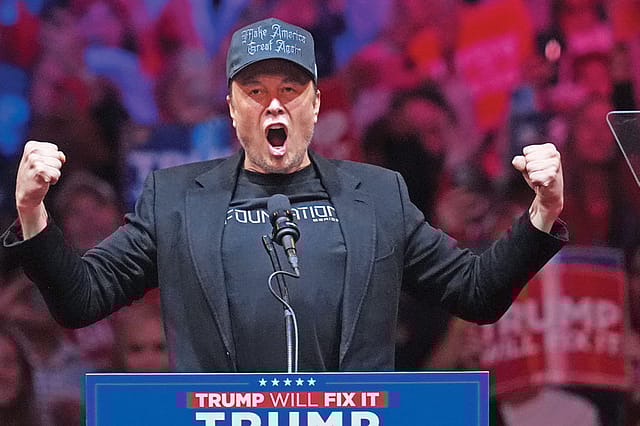
Elon Musk-led SpaceX made a spectacular debut on the Nasdaq on Friday, with shares surging well above their IPO price and briefly pushing the company's valuation past USD 2 trillion. The landmark listing has not only elevated SpaceX into the ranks of the world's most valuable companies but has also intensified investor focus on the intersection of artificial intelligence and space technology.
SpaceX Soars in Historic Market Debut
Shares of SpaceX opened at USD 150, significantly above their IPO price of USD 135, and later climbed to USD 164 during trading. The strong market debut propelled the company to become the sixth-largest publicly traded company in the United States by market capitalisation.
The company raised USD 75 billion through the sale of nearly 556 million shares, valuing SpaceX at USD 1.77 trillion at the time of listing. With the subsequent rise in share price, its market valuation crossed the USD 2 trillion mark, placing it among a select group of trillion-dollar corporations. SpaceX also became the first US company to go public with a valuation exceeding USD 1 trillion.

Greening the Future
23 Jul 2026 - Vol 05 | Issue 30
Securing a sustainable India
SpaceX President Gwynne Shotwell rang the opening bell, while Musk joined the ceremony virtually from Texas. The stock trades on Nasdaq under the ticker symbol SPCX, giving retail investors direct access to the company for the first time.
Musk Bets on AI and a Multiplanetary Future
Founded in 2002, SpaceX has evolved from a high-risk startup into a dominant force in rockets, satellite communications and artificial intelligence. The company is increasingly positioning itself at the convergence of space infrastructure and AI, including plans for orbital data centres.
"SpaceX is about taking fiction out of science fiction," Musk said during the opening bell ceremony.
Highlighting the company's long-term vision, Musk added that other firms were not pursuing technologies capable of making humanity "multiplanetary."
Reflecting on the company's early years, Musk said: "I gave SpaceX less than 10% chance of succeeding at all. To be clear, in fact, I told people this. I said, look, we're probably going to fail, but you know, should give it a try because if we don't, if there's not a new company that enters space, we will never be a truly space-beating civilisation."
The company's prospectus states: "Founded in 2002, SpaceX is the only company building the integrated hardware and software infrastructure of the future across space, connectivity, and AI."
SpaceX's AI ambitions received a major boost after xAI, founded by Musk in 2023, was acquired by the company in early 2026. The combined entity now operates some of the world's largest AI computing clusters, including COLOSSUS and COLOSSUS II.
The company is also pursuing the Terafab initiative, a chip manufacturing project involving Tesla and Intel, aimed at expanding its vertical integration into semiconductor design and production.
Trillionaire Milestone and Implications for Markets
The blockbuster listing has reportedly made Musk the first person in history to achieve trillionaire status, largely driven by his controlling stake and voting power in SpaceX.
Musk also broke with conventional IPO practices by opting for a fixed-price offering instead of a traditional price range. The strategy reflected confidence in investor demand and the loyalty of supporters who previously backed Tesla's rise.
SpaceX is expected to join the Nasdaq-100 Index soon after Nasdaq introduced rules earlier this year to accelerate the inclusion of newly listed mega-cap companies. Its addition will automatically make the stock part of numerous passive index funds, broadening ownership among retail investors.
The public offering has also generated significant wealth for thousands of current and former SpaceX employees whose equity holdings are now freely tradable.
The listing arrives amid an AI-driven rally in global equity markets and is widely seen as a key test of investor appetite for future high-profile technology IPOs, including those expected from Anthropic and OpenAI later this year.
(With inputs from ANI)