Oil Shock Hits Dalal Street: Why Investors Are Worried Again
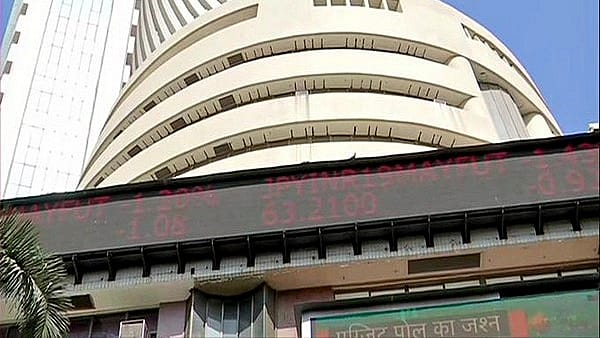
Domestic equity markets ended lower on April 13 as rising crude oil prices and fresh geopolitical tensions in West Asia dampened investor sentiment. The NSE Nifty 50 closed at 23,842.65, down 207.95 points or 0.86 per cent, while the BSE Sensex settled at 76,847.57, declining 702.68 points or 0.91 per cent.
Even though a ceasefire framework offered some hope last week, it failed to fully reassure investors. As Vinod Nair, Head of Research at Geojit Investments, told news agency ANI, “Markets continue to derive limited support from last week's ceasefire framework, which remains intact for now and is encouraging selective buying interest along with a buy-on-dips approach.”
However, that optimism was overshadowed by fresh global developments, keeping overall risk appetite subdued.
How are oil prices and US-Iran tensions impacting markets?
The biggest trigger for the market decline was the spike in crude oil prices, driven by escalating tensions between the United States and Iran. Reports of a breakdown in US-Iran peace talks and a naval blockade in the Strait of Hormuz pushed crude prices above USD 100 per barrel, with Brent crude trading around USD 102, up over 7 per cent.
Nair highlighted the broader economic risks, saying, “Elevated oil prices are raising concerns around inflation, currency stability, and broader macro balances, thereby weighing on overall sentiment.”

Open Minds 2026
26 Jun 2026 - Vol 05 | Issue 26
The power of ideas and arguments in 50 portraits
Investor anxiety deepened after a strong statement from US President Donald Trump, who announced a naval blockade via social media. “Effective immediately, the United States Navy, the Finest in the World, will begin the process of BLOCKADING any and all Ships trying to enter, or leave, the Strait of Hormuz,” Trump stated.
He added that while the ultimate goal remains free passage for ships, the blockade was necessary due to Iranian actions and concerns over maritime mines. This development amplified fears of supply disruptions in a critical global oil route.
Which sectors and global cues added to the pressure?
Selling pressure was broad-based across sectors. Auto stocks led the decline, with the Nifty Auto index falling over 2 per cent. IT, FMCG, Pharma, Private Banks, and Oil & Gas stocks also ended in the red, reflecting widespread caution among investors.
Global cues further weighed on sentiment, with most Asian markets closing lower. Japan’s Nikkei 225 fell 0.75 per cent, Hong Kong’s Hang Seng declined 0.69 per cent, South Korea’s Kospi dropped 0.87 per cent, and Singapore’s Straits Times edged down 0.11 per cent. Taiwan stood out as the only major market to close marginally higher.
Back home, the ongoing Q4 earnings season is driving stock-specific activity, but broader market direction continues to be dictated by global uncertainties, particularly oil prices and geopolitical risks.
(With inputs from ANI)