Inflation Fears Keep Markets Rangebound: What Investors Should Know
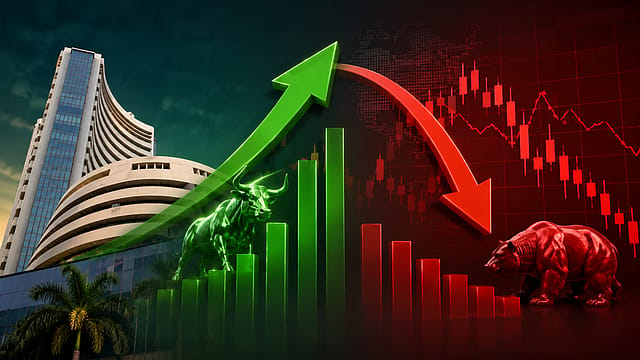
Indian equity benchmarks — the Nifty 50 and BSE Sensex — ended Wednesday’s session almost unchanged, reflecting a cautious undertone among investors. While headline indices barely moved, the broader market told a different story, with mid- and small-cap stocks outperforming due to bargain buying and short covering.
The Nifty 50 closed at 23,412.60, up 0.14 per cent, while the Sensex gained a marginal 0.07 per cent to settle at 74,608.98. The muted movement suggests that investors are waiting for clearer signals before taking aggressive positions.
What is driving investor caution right now?
Market sentiment is being shaped by a mix of global and domestic concerns. Rising commodity prices, persistent inflation worries, and geopolitical tensions — especially in the Middle East — are keeping investors on edge.
Vinod Nair, Head of Research at Geojit Investments, explained the mood succinctly: "Domestic benchmark indices closed flat with a cautious undertone, while broader markets outperformed on dip buying and short covering in mid- and small-cap stocks. A sharp increase in import tariffs on precious metals was sentimentally positive for INR. Metal stocks outperformed due to a supply squeeze. Inflation inched higher domestically but remained below expectations, offering some near-term comfort".
Despite this near-term comfort, the outlook remains uncertain.
How are inflation and global trends influencing markets?
Inflation continues to be a key variable. While domestic inflation is still manageable, global pressures — particularly from the United States — are complicating the picture.

Open Minds 2026
26 Jun 2026 - Vol 05 | Issue 26
The power of ideas and arguments in 50 portraits
Nair warned: "Prolonged tensions in the Middle East and elevated commodity prices could limit the RBI's policy flexibility if inflationary pressures continue."
He added that global monetary conditions are also tightening: "Sticky inflation in the US is also supporting the 'higher-for-longer' interest rate narrative, strengthening the US dollar and weighing on global risk assets."
This means central banks like the Reserve Bank of India may have less room to ease rates if inflation resurges.
Why did metal stocks surge while other sectors lagged?
Sectoral divergence was a key feature of the session. Metal stocks stood out, with the Nifty Metal index surging over 3 per cent, driven by supply constraints and rising global prices.
At the same time, rate-sensitive and export-oriented sectors struggled. IT stocks fell over 1 per cent, while auto, realty, and PSU banking indices also declined.
On the positive side, FMCG and consumer durable stocks saw modest gains, indicating selective buying in defensive and consumption-driven sectors.
What caused the sharp rise in gold and silver prices?
Precious metals witnessed a significant spike after the government raised customs duty on gold and silver imports from 6 per cent to 15 per cent.
Gold prices surged 6 per cent to Rs 1,62,482 per 10 grams, while silver jumped 6.53 per cent to Rs 2,97,192 per kg.
Anindya Banerjee of Kotak Securities clarified that this was not a typical market rally:
"The rise in domestic prices was mainly a mechanical re-pricing to a new import parity and not a fundamental rally, adding that the higher duty has now become a fixed cost embedded in prices."
In simple terms, prices rose because of policy changes, not because of a sudden increase in demand.
What role are global markets and crude oil playing?
Global cues remain mixed. Asian markets showed varied performance, reflecting uncertainty across regions. Meanwhile, Brent crude prices stayed elevated at around USD 108 per barrel, adding to inflationary pressures.
Higher oil prices typically increase input costs across industries, which can squeeze corporate margins and keep inflation high — a negative combination for equities.
What are investors watching next?
Markets are now focused on key global developments, particularly geopolitical events and major economic meetings.
Nair pointed to an important upcoming trigger: "Markets will now closely watch the upcoming US-China summit for further clarity on trade and geopolitical developments."
He also highlighted a structural trend shaping global flows: "AI-driven themes are witnessing strong global inflows due to better earnings visibility and long-term structural growth potential."
This suggests that while short-term volatility persists, long-term investment themes — especially in technology — remain intact.
(With inputs from ANI)