Fuel Costs Surge: How Swiggy and Eternal Could Be Impacted
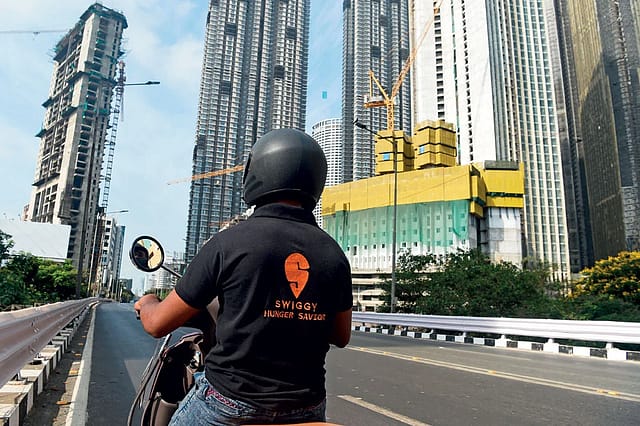
Rising fuel prices may create fresh challenges for India’s food delivery and quick commerce companies, especially as firms continue battling intense competition and thin margins.
According to a report by Elara Capital, the recent increase of around Rs 4 per litre in petrol and diesel prices has raised fuel costs by nearly 4 per cent. The rise comes amid elevated global crude oil prices and ongoing geopolitical tensions.
The brokerage noted that companies such as Eternal and Swiggy could face near-term pressure on delivery economics if gig workers seek higher payouts to offset increasing fuel expenses.
It stated, “Any increase in fuel cost can directly impact delivery economics by lowering delivery partner yields and potentially increasing the risk of payout-related pressure.”
Why Fuel Prices Matter for Food Delivery
Fuel is one of the biggest operating costs for delivery platforms because a large portion of their workforce depends on two-wheelers and cars for last-mile deliveries.
Elara Capital estimated that the average delivery cost for quick commerce platforms stands at around Rs 35-50 per order, while food delivery orders cost approximately Rs 55-60 each.
On a blended basis, the average delivery cost works out to around Rs 45 per order for Eternal and around Rs 55 per order for Swiggy.
The report further estimated that fuel contributes nearly 20 per cent of the delivery cost structure. This means fuel expenses currently account for nearly Rs 9-10 per order on average.

Open Minds 2026
26 Jun 2026 - Vol 05 | Issue 26
The power of ideas and arguments in 50 portraits
Based on the present fuel hike, analysts estimate the negative impact at around Rs 0.44 per order.
Worst-Case Scenario Could Hurt Margins Further
While the immediate impact appears limited, Elara Capital warned that a sharper rise in fuel prices could significantly affect profitability.
The report estimated that if fuel prices climb further to nearly Rs 10 per litre above current levels in the coming months, the additional burden could rise to around Rs 1-1.2 per order.
That scenario could lead to a 4-5 per cent impact on FY27 adjusted EBITDA for Eternal and a much steeper 10-12 per cent impact for Swiggy, assuming companies do not pass on the higher costs to customers.
Why Swiggy May Face Greater Pressure
According to the report, Swiggy may be more vulnerable to rising fuel costs because its quick commerce business is still moving towards contribution break-even.
Eternal, on the other hand, is considered to be in a relatively stronger position due to its larger operational scale, stronger advertising revenue base and greater ability to recover costs from premium and less price-sensitive customers.
Massive Order Volumes Could Amplify Costs
The report highlighted the sheer scale at which both companies operate.
On an annualised FY27 estimate basis, Eternal is expected to process nearly 2.7 billion orders across food delivery and quick commerce businesses, while Swiggy is projected to handle around 1.4 billion orders.
Given these enormous order volumes, even small increases in delivery costs can significantly affect overall profitability.
Consumers May Eventually Bear Part of the Burden
Elara Capital believes the higher fuel burden is unlikely to fall entirely on delivery platforms.
Instead, the impact may be distributed across customers, companies and delivery workers through higher platform charges, lower partner earnings or margin pressure on firms.
According to the report, the additional burden is likely to be shared partly through higher customer charges, partly absorbed by the platforms and partly reflected through pressure on delivery partner economics.
(With inputs from ANI)