Canva Wants to Compete With the Big AI Image Generators
When Canva launched in 2013, its proposition was straightforward: make graphic design accessible to people who did not have the training, software or budgets to produce professional-looking work. A small business owner should be able to create a brochure without hiring a designer. A student should be able to put together a presentation without mastering complicated software. A social media creator should be able to produce a polished post without starting from a blank page.
More than a decade later, the company wants to take that promise a step further. It wants artificial intelligence to do more of the work involved in turning an idea into a finished visual, while giving users enough control to refine the result.
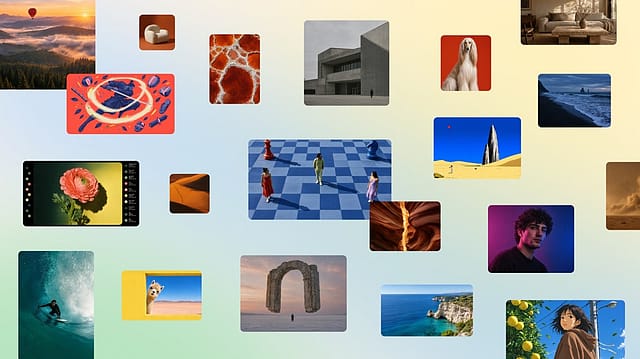
Today, Canva introduced Craft, its first image-generation foundation model developed and trained from scratch by Canva Research, its in-house AI lab. The model generates images at resolutions of up to 2K, supports more than 30 aspect ratios and can produce text in 55 languages, according to the company. It is available globally through Canva’s Dream Lab and to developers through its public API.

Look Who's Talking Regime Change
23 Oct 2026 - Vol 05 | Issue 43
Canva says Craft debuted as the fourth-most-advanced image-generation model on DesignArena, a crowdsourced evaluation platform, and that its research lab ranks second globally for image generation according to the same rankings. Those are company-reported rankings, rather than a universal measure of AI capability.
The launch places Canva in direct competition with image-generation models developed by companies including OpenAI, Google, Meta and ByteDance. But the more interesting question is not whether Canva can produce another convincing image. It is whether a company that built its business on accessible design can use that experience to make AI-generated visuals more useful for everyday commercial work.
For Canva, that distinction could determine whether AI becomes another feature in its product suite or a more fundamental source of competitive advantage.
From a simple design tool to a global business
Founded in Sydney in 2013 by Melanie Perkins, Cliff Obrecht and Cameron Adams, Canva grew out of Perkins and Obrecht’s earlier venture, Fusion Books, which helped students design school yearbooks. Their idea was to make design accessible through templates, drag-and-drop editing and collaboration, without requiring specialised skills.
As businesses and creators demanded more digital content, Canva expanded from posters and social media graphics to presentations, team collaboration and enterprise tools. Acquisitions, including visual AI company Kaleido in 2021 and generative AI platform Leonardo.ai in 2024, strengthened its technology capabilities.
In its 2025 year-end review, Canva reported 260 million monthly users, $3.5 billion in revenue and adoption by 95 per cent of Fortune 500 companies. But generative AI presents both an opportunity and a threat: users can now create images, presentations and other content through general-purpose AI assistants, potentially reducing their dependence on dedicated design platforms. Canva’s response is to integrate AI into its existing workflows while developing proprietary technology. Craft is its latest bet.
Why Canva is building its own AI model
An image generator can produce an impressive picture without necessarily producing a usable design. A business advertisement, for instance, might require a product to appear in a particular position, a headline to remain legible and enough empty space for a call to action. A presentation visual may need to fit a specific layout. A social media campaign may require several versions of the same composition in different dimensions.
General-purpose image models can struggle with these requirements. Text may be distorted, objects may appear in the wrong places, and small changes can alter parts of the image that the user wanted to preserve.
Craft has been designed to address some of these limitations. Unlike a conventional approach that moves directly from a prompt to the rendered image, it separates image planning from image generation.
The first stage interprets the prompt and plans the composition, including the elements to be included, their spatial relationships, relative scale, visual hierarchy and text placement. A second model then renders the image using that plan. Canva says the approach is intended to improve instruction-following, typography and control over the final result.
The model has also been trained on millions of human-created templates from Canva's content library, including posters, presentations, menus, infographics and social media posts. These templates contain information about how typography, spacing, alignment and imagery work together, rather than simply showing the appearance of finished photographs.
This is the central distinction in Canva's pitch. The company is not positioning Craft solely as a tool for producing photorealistic pictures. It wants the model to understand the structure of a design well enough to generate visuals that can be used in practical creative work.
The outputs can also be connected to Magic Layers, Canva's technology for turning generated images into editable elements. This could allow users to modify individual components without having to regenerate the entire image.
For Canva, that capability has a clear commercial rationale. If a user can generate an image, change its text, reposition objects and adapt the layout within the same platform, the need to move between different applications may decline.
The company has also invested in making the model more efficient. It says model distillation has reduced the number of inference steps required, while a custom inference engine has made the planning stage faster. Two additional versions, Craft-fast and Craft-ultrafast, are in development to deliver image generation at lower costs.
Canva has not disclosed detailed per-image costs or enough independent benchmark data to establish whether Craft is cheaper than competing models across different tasks. But cost and speed are likely to become important as image generation moves from occasional experimentation to routine use by businesses and creators.
India's role in Canva's next phase
India is an important market for Canva because its core proposition addresses a widespread need: creating visual content without necessarily having access to a professional designer or a large marketing budget.
The country's expanding creator economy, small-business sector and digital-first communication habits provide a natural audience for the platform. Students use it for presentations, creators for social media content, professionals for decks and reports, and small businesses for promotional material.
Canva has increasingly tailored its marketing to these audiences rather than relying solely on its global brand identity.
Its first major India-specific brand campaign, *Dil Se, Design Tak*, focused on the idea that creativity is not restricted to trained designers. The campaign included an advertisement featuring Ritvik Sahore, Naina Sareen and Tenzin Dalha, built around a farewell celebration. A series called *Hysterical Historical Café* used humorous scenarios involving historical figures to demonstrate how Canva could help people create visual content.
The campaign's message was simple: an idea should not remain unrealised because its creator lacks design skills. Canva followed it with a second edition in 2025, expanding the campaign through new stories, regional-language adaptations and demonstrations of AI-powered tools such as Magic Media and Magic Design.
The company's more recent Indian campaign, launched in September 2026, signals a shift in emphasis. Titled *Aap Aur Canva, Jodi Wah Wah!*, it features Farah Khan, Raghu Ram and Terence Lewis, familiar faces associated with Indian television's reality-show judging formats. Developed with independent creative agency Fundamental, the campaign uses the trio's recognisable personas to dramatise how creators, working professionals and small businesses can turn ideas into finished visual content.
The films showcase features including Magic Video 2.0, AI-powered presentations and Canva Pro Lite, an AI-first, mobile-first subscription designed for the Indian market.
The campaign builds on the earlier message of accessibility but moves the proposition forward. The question is no longer simply whether people can create. It is how quickly they can turn an idea into something ready to share.
That is a useful marketing distinction for a company increasingly selling AI-assisted workflows. A creator does not necessarily want to learn how an image-generation model works. A small-business owner may not care about the architecture behind an AI presentation tool. Both want to produce something usable with minimal friction.
Canva's Indian campaigns have helped communicate this promise through familiar cultural references and accessible storytelling. Craft now gives the company an opportunity to make the underlying product more capable of delivering on it.
India is also a competitive market in which price and ease of use matter. A specialised subscription, local-language support and AI features that work on mobile devices could help Canva reach users who might otherwise rely on free tools or informal design services. The scale of that opportunity, however, will depend on how many users convert from free access to paid products and how frequently they use the new features.
The business case for owning the technology
Canva's move into model development comes at a time when the economics of generative AI are becoming increasingly important. Companies can integrate external models into their products, but doing so may leave them dependent on third-party providers for pricing, availability, performance and future capabilities.
Building an in-house model gives Canva more control over those variables. It can tune the technology for the tasks its users perform most frequently, integrate it with existing tools and decide how quickly to develop new features.
The public API also opens a route beyond Canva's own user base. Developers and product teams can integrate Craft into marketing platforms, e-commerce services, advertising tools and print businesses. Canva plans to support AI assistants and automated workflows through its Model Context Protocol offering, although that integration was listed as coming soon at launch.
This matters because the next stage of AI adoption may involve users delegating entire tasks rather than requesting individual outputs. An AI assistant could be asked to create a product launch graphic, generate a visual for a presentation or prepare social media assets as part of a larger workflow. Canva would like its technology to be available at that point of creation, whether the user is working inside its platform or through an external application.
There is a potential efficiency benefit, too. Canva says more than 250 million people use its platform and create over 400 designs every second. At that scale, improvements in the cost and speed of generating images could have a meaningful impact on how widely the company can offer AI features.
The business challenge is that owning the model is expensive. Training and maintaining advanced AI systems requires specialised talent, computing resources and continuous evaluation. Canva must demonstrate that the benefits of greater control and integration justify that investment.
Its existing distribution provides a considerable advantage. Rather than introducing an unfamiliar product, Canva can make Craft available to people already using Dream Lab and its wider design tools. Yet a large user base does not automatically guarantee adoption, particularly when competing image generators are also improving rapidly.
**The next test for Canva**
Canva's evolution from a template-based design platform into an AI developer reflects a broader change in the creative-software industry. The competitive advantage may increasingly belong to companies that combine capable models with the tools, workflows and distribution needed to make their outputs useful.
For Canva, Craft is an attempt to bring those elements closer together. Its training on design templates, two-stage generation process and integration with Magic Layers are all intended to reduce the distance between having an idea and producing a finished visual.
The opportunity is substantial. Businesses need more content for more channels, creators are under pressure to publish frequently, and small enterprises often lack the resources to commission professional design work for every requirement. AI can help meet that demand, provided it produces material that is reliable, editable and commercially useful.
But the launch also raises a question about Canva's own business. As AI makes design easier for everyone, the same technology could lower the barriers to entry for competitors and reduce the value of some of the basic functions that originally made Canva popular.
The company's task is therefore not simply to make image generation available. It must persuade users that its integrated platform remains the best place to turn those images into finished work.
Craft is an important step in that direction, but the rankings and product claims are only the beginning. The real test will be whether Canva can convert its scale and design expertise into a lasting advantage in a market where the technology is improving almost as quickly as the competition.