Beyond Pizza and Burgers: Can Burma Burma Sell an Unfamiliar Cuisine to Public Investors?
India’s listed restaurant companies have generally offered investors food categories they already understand. Pizza, burgers, Indian-Chinese dishes and buffet dining require little explanation, even when the restaurant format or brand is new.
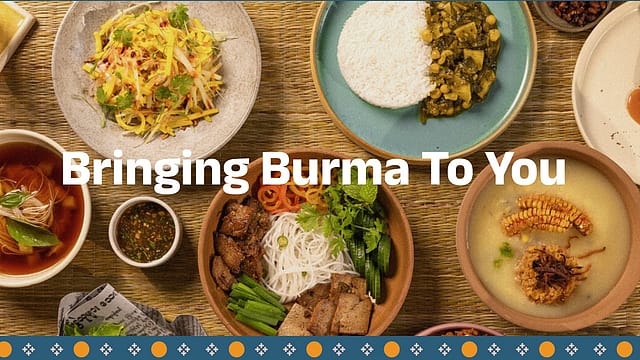
Burma Burma presents a different proposition. Its parent, Hunger Pangs, has filed for an IPO comprising a fresh issue of up to ₹150 crore and an offer for sale of approximately 2.79 crore shares. The business operates a vegetarian, alcohol-free restaurant concept built around Burmese cuisine, tea and cultural discovery.
The distinction matters commercially. Familiarity can make a restaurant easier to try; differentiation can give customers a stronger reason to choose it. Burma Burma’s investment case depends on turning the second advantage into repeat business across a larger network.
Its predecessors suggest that neither a recognisable menu nor a popular brand guarantees shareholder returns.

Zeroing In on ECI
09 Oct 2026 - Vol 05 | Issue 41
Constitutional legitimacy versus political opportunism
A MIXED RECORD AT THE EXCHANGE
The relevant listed universe includes eight prominent operators: Jubilant FoodWorks, Westlife Foodworld, Restaurant Brands Asia, Devyani International, Sapphire Foods, Speciality Restaurants, Barbeque Nation’s operator and Coffee Day Enterprises.
Jubilant, which operates Domino’s, is the clearest long-term success. Its ₹145 IPO price in 2010 equates to ₹14.50 after subsequent bonus and split adjustments. Against an indicative mid-October 2026 price near ₹418, that represents substantial capital appreciation, excluding dividends.
Other outcomes are less straightforward. Burger King’s Indian operator, now Restaurant Brands Asia, debuted around ₹115 against a ₹60 issue price. Devyani opened at ₹141 against ₹90. Their recent indicative prices, around ₹92 and ₹122 respectively, remained above issue prices but below those enthusiastic opening trades. Sapphire’s approximately ₹197 price was below its split-adjusted ₹236 issue price.
The closer dining comparisons are particularly instructive. Speciality Restaurants, whose brands include Mainland China and Oh! Calcutta, was trading around its original ₹150 issue price more than fourteen years after listing. Barbeque Nation’s operator was approximately 39% above its ₹500 issue price over five-and-a-half years. These are price comparisons, excluding dividends, rather than complete measures of investor returns.
Westlife provides another benchmark for operating a recognised international brand. Coffee Day illustrates the limits of brand recognition, although its corporate and financial troubles make it unsuitable as a general verdict on café economics.
The record supports scrutiny, rather than a presumption against another restaurant listing. Investors have rewarded some operators generously and valued others much less enthusiastically.
UNFAMILIARITY CAN CREATE A MARKET
Founded by Ankit Gupta and Chirag Chhajer, Burma Burma opened its first restaurant in Mumbai in 2014. By July 2026, it operated 22 restaurants across nine cities. It has therefore established demand beyond a single experimental location.
Burmese cuisine’s lower recognition should not be confused with an absence of accessible flavours. The business must help customers navigate the menu, while ensuring that the experience becomes familiar enough to repeat.
Its vegetarian format could help households seeking broader choice without uncertainty about meat-based dishes. Conversely, the absence of alcohol removes a revenue category available to many premium restaurants. Whether that improves or constrains returns depends on beverage sales, costs, table utilisation and customer behaviour.
The commercial opportunity is to become the recognised destination for a category with fewer directly comparable chains. The constraint is finding enough locations where that distinction attracts regular demand.
GLOBAL CHAINS SHOW A POSSIBLE ROUTE
Cuisine-led expansion has worked elsewhere. American-listed CAVA has built a Mediterranean restaurant business around chef-curated and customisable bowls and pitas.
It ended 2025 with 439 restaurants, approximately $1.17 billion in CAVA revenue and $63.7 million in group net income. Its restaurant-level profit margin was 24.4%, a measure that excludes several corporate and accounting costs.
CAVA is a fast-casual business, so its economics cannot be transferred to Burma Burma’s full-service format. The useful comparison concerns accessibility: a recognisable ordering structure can help customers explore less familiar ingredients.
It also demonstrates that cuisine-led growth does not remove ordinary restaurant risks. CAVA cut its same-restaurant sales outlook twice during 2025 as demand weakened. Distinctiveness still operates within household dining budgets.
For Burma Burma, the equivalent challenge is to make discovery approachable without flattening the identity that supports its positioning.
EXPANSION IS ALREADY TESTING MARGINS
The financial evidence warrants a balanced reading.
Hunger Pangs’ operating revenue reportedly increased 46.6% to ₹155.5 crore in FY26. EBITDA rose approximately 20.2% to ₹25.7 crore. Calculated from the disclosed figures, EBITDA margin declined from about 20.1% to 16.5%. The company reported a ₹15.37-crore net loss.
Sales growth substantially exceeded earnings growth. That could reflect the cost of developing the network, but the figures alone do not establish the explanation.
Restaurant investors need to distinguish new-opening expenses from pressure at established outlets. Relevant evidence includes comparable-restaurant sales, outlet-level cash generation, capital expenditure and the time required to recover each restaurant’s investment.
The average bill value of ₹2,400 also needs careful interpretation. It is a bill measure, rather than evidence of spending per diner or profitability per table. A premium experience creates value only if customers return often enough to support its property, staffing and operating costs.
THE OFFER PRICE WILL MATTER
The proposed fresh issue would finance restaurant expansion and general corporate purposes. The offer for sale would provide proceeds to selling shareholders. Without an issue price, the monetary size of that secondary sale—and the valuation public investors would pay—cannot yet be established.
That prevents a verdict on whether the IPO is attractively priced.
Plans to develop other cuisines, delivery and packaged products add opportunities, but also broaden execution requirements. Investors should assess those businesses separately from the demonstrated appeal of existing Burma Burma restaurants.
The predecessor list offers no reason to assume the market will reject Burmese cuisine. It offers ample reason to separate a restaurant’s reputation from the price and economics of owning it.
Burma Burma could earn a different reception because its proposition is distinctive. To sustain that reception, it will need to demonstrate that expansion reproduces attractive restaurant returns, rather than simply a recognisable dining experience.
The market need not become familiar with every dish. It will expect to understand how the business earns.