Apple and Intel to Build Chips in US? Trump Confirms Landmark Semiconductor Partnership
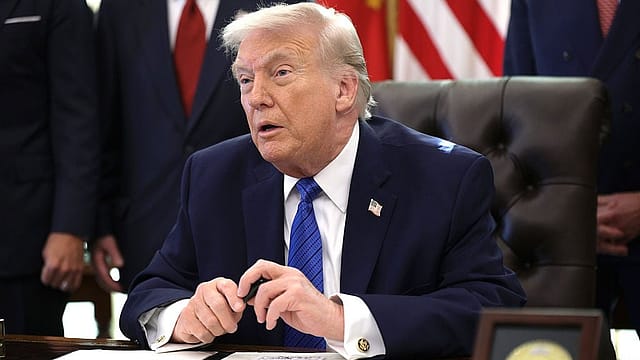
US President Donald Trump has announced that Apple will partner with Intel to design and manufacture chips in the United States, a move that could mark a significant shift in the global semiconductor landscape and support Washington's efforts to rebuild domestic chip manufacturing capacity.
The announcement comes amid growing concerns over supply-chain resilience, geopolitical tensions and increasing competition in advanced technologies such as artificial intelligence.
What Did Trump Announce?
Trump revealed the development through a post on his Truth Social platform, stating that Apple would work with Intel not only to design chips but also to manufacture them within the United States.
The president stressed the importance of local production, arguing that technological leadership requires both innovation and manufacturing capability.

Zeroing In on ECI
09 Oct 2026 - Vol 05 | Issue 41
Constitutional legitimacy versus political opportunism
According to Trump, the partnership forms part of a broader strategy to strengthen America's semiconductor ecosystem and reduce reliance on overseas production.
Trump also highlighted the US government's support for Intel, saying Washington had acquired a 10 per cent equity stake in the chipmaker.
He claimed that Intel's valuation had increased from approximately USD 100 billion to USD 600 billion, resulting in the value of the government's stake rising to more than USD 60 billion within nine months.
Why Is This Significant for Apple?
For years, Apple has relied heavily on the Taiwan-based semiconductor giant Taiwan Semiconductor Manufacturing Company, commonly known as TSMC, to manufacture its most advanced chips.
TSMC is the world's largest contract chip manufacturer and produces processors used in Apple's iPhones, Macs and other devices.
A partnership with Intel would provide Apple with greater diversification in its manufacturing network and potentially reduce dependence on a single overseas supplier.
The move could also help Apple align with US efforts to increase domestic production of strategically important technologies.
According to a Wall Street Journal report published in May, Apple and Intel had already reached a preliminary agreement, although specific details of the arrangement remained unclear.
The Bigger Picture: America's Semiconductor Push
The reported partnership comes as the United States intensifies efforts to secure critical technology supply chains.
Semiconductors are essential for everything from smartphones and cloud computing to artificial intelligence systems, military equipment and advanced industrial applications.
The AI boom has further elevated the strategic importance of chip production, making semiconductor manufacturing a key economic and national security priority.
Trump criticised previous administrations for allowing semiconductor manufacturing to move overseas.
"First, we helped bring in Nvidia, and they agreed to build their first level Chips with Intel," Trump said in the Truth Social post.
He also added that "Elon Musk also agreed to build the TerraFab in America."
The president argued that the United States must reclaim its leadership position in semiconductor manufacturing after decades of offshoring.
How Does Intel Fit Into the Strategy?
Intel has been attempting to transform itself into a major contract manufacturer capable of producing chips for other companies, a business model that directly competes with TSMC and other global foundries.
As part of that effort, Intel is developing advanced manufacturing technologies, including its next-generation Intel 18A-P process node.
The company recently highlighted progress on the technology as it seeks to convince customers that it can compete at the cutting edge of semiconductor manufacturing.
"Our updates and presentations at VLSI signal to Intel Foundry customers and partners that we are fully committed to leading edge process innovation over the long term," said Naga Chandrasekaran, executive vice president and general manager of Intel Foundry.
"This is a journey, and while we have more work ahead, we appreciate the opportunity to share the progress we are making with Intel 18A-P and our longer-range R&D."
The success of Intel's foundry business is considered crucial to broader US ambitions of creating a robust domestic semiconductor ecosystem.
What Could Happen Next?
While Trump has confirmed the partnership, key details regarding production timelines, investment commitments and the specific chips that may be manufactured by Intel have not yet been disclosed.
If implemented, the arrangement could represent one of the most significant collaborations in the semiconductor sector, bringing together one of the world's largest technology companies and America's most prominent chip manufacturer.
Beyond the commercial implications, the partnership would underscore a wider trend toward reshoring critical industries, strengthening supply-chain security and positioning the United States as a major hub for next-generation semiconductor production in the AI era.
(With inputs from ANI)