Whose Strait Is It Anyway?
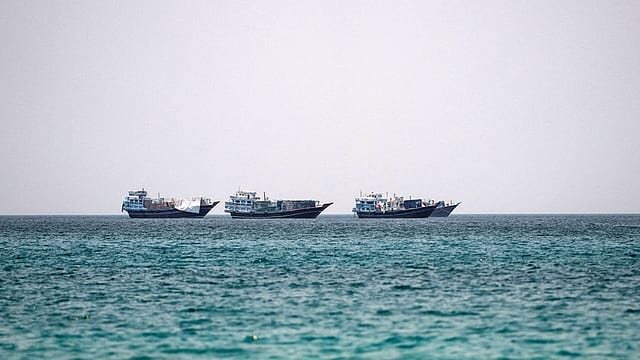
However all parties to the conflict sell the fate of the Strait of Hormuz after the June 17 MoU between Washington and Tehran, the undeniable fact is this: an international waterway carrying a fifth of the world's oil that was the busiest but freest chokepoint on the planet before February 28 looks set to become a tolled sealanesoon, regardlessofhow fiercely the US insists on free passage and Iran circumvents the issue. The MoU, after all, seems to have only postponed the inevitable. Tehran agreed on safe, toll-free movement of commercial vessels but only for 60 days. Its stated objective of holding talks with Oman and other Gulf states over the future administration of the strait must be seen for what it is: securing legal cover for its extraction, which it was doing by force through the war. The Omani proposal of joint administration by Tehran and Muscat may seem akin to the system by which, say, the Malacca Strait is managed but the comparison falls through immediately.
The Southeast Asian waterway has shared responsibility and protection of commercial shipping is guaranteed by all parties, including the US and China. There is no imbalance among theriparianstates. Theproposal for Hormuz, however, would seetworiparianstates, onewith the muscle and the other with diplomatic goodwill, run the strait while the US is reduced to an observer-the same US whose military weight had so long guaranteed freedom of navigation in the strait. The contradiction was visible from the start: Washington projects Muscat as a guarantor of free transit; Muscat insists deals with Iran will not include tolls; Tehran rephrases it as "service fees". US Secretary of State Marco Rubio may dismiss such semantic distinction, but the damage is done: the US reads the no-charge clause of the MoU as barring tolls and other fees; Iran reads the same text as keeping the path open for future negotiations over "maritime services" and other costs. The strategic outcome is an American defeat-a waterway that was free needs negotiations to keep it so, and having demonstrated just how it can extract a toll, Iran is now looking forward to making money from Hormuz legally.
The War for Wikipedia

Larry Sanger cofounded Wikipedia 25 years ago and left it in 2002. Recently, he was indefinitelybannedfromediting the site, supposedly for life. Sanger, a long-time critic of arguably the world’s most popular encyclopaedia’s editorial policies, alleges that “ideologues and shills who co-opted [Wikipedia] for propaganda purposes” ejected him by a “kangaroo court”, without due process and in keeping with their “mob rule anarchy”. The site’s administrators counter Sanger was not banned for conservative opinions but for canvassing support from his 91,000 followers on X on an internal discussion on his WikiProject which promotes “intellectual diversity”. While it seems the Wikimedia Foundation has a case as Sanger’s actions appeared to violate canvassing rules, it’s the longrunning argument about the volunteer-operatedsite’salleged capture by left-leaning editors that makes the matter murky.
Sanger had specifically alleged antisemitic bias after Hamas’ October 7 attack while his WikiProject group aims to bring in marginalised political and religious voices on the right and pro-Israelviewpoints. Thebattle goes right into the heart of American politics and foreign policy, to say nothing of campus and street sentiment. Sanger’s ban is a fact and Wikipedia’s application of its canvassing policyisnotunprecedented. The question of the site’s ideological bias, however, remainsunsettled despite its seriousness.