War on Iran: Regime change was the goal. Regime hardening may be the result
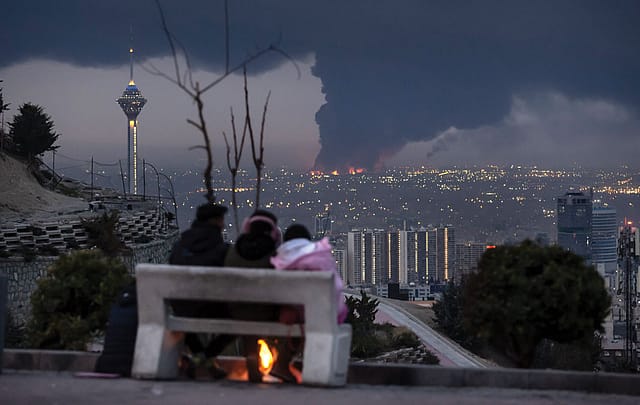
Military interventions in the Middle East have long haunted American presidents. The failed 1980 rescue mission in Iran damaged the presidency of Jimmy Carter. Wars in Iraq and Afghanistan scarred the legacy of George W Bush. The regime-change war in Libya, which turned the country into an enduring failed state, cast a shadow over the foreign policy of Barack Obama, a serial interventionist who won a Nobel Peace Prize early in his presidency.
Yet despite this history, US President Donald Trump launched another Middle Eastern war whose consequences quickly extended far beyond the battlefield. Trump’s action provoked a conflict that expanded to the Persian Gulf sheikhdoms and engulfed energy production, storage and shipping from the region to the rest of the world.
The US war on Iran—initiated jointly with Israel and marked by a decapitation strike against Iran’s Supreme Leader—represented the most consequential geopolitical gamble of Trump’s presidency. What Trump conceived as a short, decisive military assault aimed at regime collapse unleashed instead strategic, political and economic repercussions reverberating globally.
The earlier American wars had produced a “rally-around-the-flag” effect at home. But the Iran war vividly broke that pattern.
Opposition to the war appeared almost immediately in the US. Democrats criticised the strikes as an illegal war launched without Congressional authorisation. Legal scholars questioned its compliance with international law. Article 2(4) of the UN Charter prohibits the use of force against the territorial integrity of any state. Without a UN Security Council (UNSC) mandate or a clear case of “imminent threat” (self-defence under Article 51), the war was widely seen in the US itself as an illegal act of aggression.
More striking was the dissent within Trump’s own political coalition. Many figures within the MAGA movement condemned the conflict as a betrayal of Trump’s promise to end America’s “endless wars”. Some went further, arguing that Washington had been drawn into a conflict driven primarily by Israeli strategic priorities.
Public opinion reflected similar concerns. Polls showed that support in the US for the strikes was remarkably lower than at the outset of most American wars. Americans had grown deeply wary of Middle Eastern interventions after decades of costly conflicts.
The result was a rare moment in US politics: opposition to the war cutting across ideological lines, from constitutional concerns on the left to non-interventionist critiques on the right. Trump had launched the war abroad, but the political battle it triggered unfolded at home.
More broadly, if the Iran war has offered enduring lessons, the most important is that the logic of regime-change wars once again collided with the stubborn realities of history.
At the centre of the Trump-Benjamin Netanyahu war was a joint strategy that might be described as “decapitate and delegate”. The US and Israel began the war by killing Iran’s Supreme Leader Ayatollah Ali Khamenei, along with several of his family members and multiple senior Iranian officials and military commanders. The expectation appeared straightforward: remove the apex of the regime and the system beneath it would fragment.
This belief rested on a recurring but specious assumption in modern warfare—that eliminating a country’s leader would trigger political collapse without the costs of ground invasion or occupation. This simplistic logic has guided many decapitation strategies in recent decades. Bomb command centres, eliminate leadership figures, shock the regime into paralysis and allow internal forces to finish the job.
History, however, has rarely validated such an expectation.
Leadership decapitation more often produced regime consolidation, nationalist mobilisation and elite power reshuffling rather than political collapse. Regimes often adapted. Power shifted to new actors, institutions hardened and nationalist narratives mobilised grassroots support.
In Iran, the decapitation strike produced precisely such an effect. The killing of Khamenei did not dissolve the Islamic Republic’s political structure. Instead, it accelerated the rise of a more uncompromising generation of leadership. Khamenei had opposed the idea of his son succeeding him, mindful that the 1979 Islamic Revolution had overthrown a monarchy partly to end hereditary rule.
Yet, in a move meant to honour the assassinated leader and signal continuity, the Assembly of Experts chose his son, Mojtaba Khamenei. Having lost his father, mother, wife and a son in the US-Israeli strikes, which also wounded him, Mojtaba’s leadership is likely to be shaped by a quest for revenge.
In launching his war on energy-rich Iran, Trump was clearly emboldened by his military success in Venezuela, where he managed to kidnap the country’s sitting president and gain US control over the world’s largest proven reserves of oil. Similar success in installing a pliable new regime in Tehran would leave the US in effective control of almost one-third of the world’s oil resources located beyond its borders.
Today, the US is already the world’s largest oil producer, churning out more oil than Saudi Arabia and Russia combined. It is also the world’s largest exporter of liquified natural gas (LNG). Effective control over Iranian and Venezuelan oil resources would virtually create a US chokehold on global crude supply.
Since returning to office in January 2025, Trump has already launched military strikes in seven countries and two regions (the Caribbean and the eastern Pacific). Given that he has renamed the Department of Defense as the Department of War, is it any surprise that he views American power as legal authority in itself to employ military force against other states?
In Iran, though, Trump and Netanyahu may have achieved the opposite of what they intended—empowering a younger, more hardline Iranian leadership fuelled by a narrative of martyrdom and national survival, while imposing steep economic costs on the world, especially the Global South.
Regime change was the goal. Regime hardening may be the result—with the rest of the world made to pick up the bill for the Trump-Netanyahu war of aggression.
This war has reinforced a much-ignored truth: regimes are not simply individuals. They are networks—security services, religious institutions, political elites and patronage systems. Removing a country’s leader does not dismantle those structures. In moments of external attack, those networks often consolidate rather than fragment.
The Geopolitical Logic
The US-Israeli strategic rationale behind launching the war was never clear from the outset. Official explanations shifted repeatedly. Each of the ostensible motivations for starting a regime-change war strained credulity.
Not only did the rationale for launching the war keep shifting, US Secretary of State Marco Rubio asserted that the US decision to strike Iran was driven primarily by Israel’s plan to attack the country, which would have left American interests vulnerable to retaliation. So, Rubio suggested, the US launched the war pre-emptively.
A day later, after pressure from the powerful Israel lobby in Washington, Rubio walked back that rationale.
In a legally mandated letter to the US Congress, Trump asserted that he ordered the war to advance national interests and eliminate Iran as a global threat, contradicting his own public claims of an imminent threat from Tehran. Trump’s letter simply said the attack aimed to “neutralize Iran’s malign activities.”
Make no mistake: Launching war on Iran had little to do with nuclear or missile proliferation or state-sponsored terrorism. If those were the real concerns, the more obvious US target would have been Pakistan: a declared nuclear-armed state with an estimated 170-plus warheads; a country that US intelligence has assessed is developing intercontinental-range ballistic missile capabilities that could reach the US; and one whose state-backed terror networks have been linked to major transnational terrorist attacks, including in the West. The principal architects of 9/11 were ultimately found in Pakistan, among them Osama bin Laden and Khalid Sheikh Mohammed.
Iran, by contrast, has remained a signatory to the Nuclear Non-Proliferation Treaty (NPT). And, although Iran enriched uranium up to 60 per cent (fairly close to the 90 per cent weapons-grade level), it is still widely assessed to be not yet capable of building a functional nuclear weapon. Trump, in fact, had publicly asserted after bombing Iranian nuclear sites in June 2025 that “Iran’s nuclear facilities have been obliterated.”
Yet Trump chose to launch a military assault on Iran while continuing to mollycoddle Pakistan. The US negotiations with Iran were just a pretext.
The war began shortly after Oman’s foreign minister, Badr Albusaidi—a key mediator in the US-Iran talks—publicly disclosed that Tehran had agreed, during the negotiations, to surrender its enriched uranium stockpiles and forswear the acquisition of nuclear weapons indefinitely. The minister’s disclosure was apparently intended to strip Trump and his team of a nuclear pretext for war.

It is clear that the US and Israel launched the war not because of any imminent threat from Tehran but because Iran was at its weakest moment since the 1979 Islamic Revolution.
Both Washington and Tel Aviv viewed an independent Iran as the principal obstacle to a regional order aligned with US and Israeli strategic interests. So, Trump and Netanyahu set out to cut Iran down to size.
The logic of this war thus was unmistakably geopolitical. It was about reshaping the regional balance of power by replacing a hostile regime with a pliable one, weakening Tehran’s network of regional influence, and overseeing Iran’s energy wealth.
Control over the Strait of Hormuz—through which roughly a fifth of the world’s traded oil passes—and the broader project of rolling back Iran’s strategic reach were also central to the regime-change agenda. Any conflict involving Iran inevitably carried implications for global energy markets and maritime security.
The attempt to militarily reshape that Middle Eastern power balance illustrated the enduring temptation of great powers to reorder regional politics through military force.
Law of Unintended Consequences
US presidents rarely learn from history, so history keeps repeating itself for America.
In Afghanistan, a US regime-change invasion led to America’s longest war ever and ended in humiliating defeat, with the Taliban restored to power. In Iraq, America’s regime-change invasion and occupation proved not only costly for Washington but left the country destabilised. In Libya, the US-led NATO regime-change war produced a fragmented state that continues to haunt regional security.
Consistent with this historical record, Trump’s regime-change war in Iran ultimately will prove similarly costly for the US while fostering greater regional instability.
Such an outcome is also tied to how Trump views peace itself. Peace, in his worldview, is not the product of diplomacy, compromise or political settlements; rather it is the use of overwhelming, unilateral force to achieve narrow political ends—or what his advisers describe as “peace through shock”.
However, no sooner had Trump launched the war than the law of unintended consequences began playing out vividly.
Rather than encouraging a popular uprising that Trump had openly urged Iranians to mount, the war gave Iran’s leadership a powerful narrative of martyrdom and national resistance.
The death of the supreme leader was quickly framed in Shia political culture as <shahadat>—martyrdom. Through religious symbolism rooted in the memory of Karbala and the martyrdom of Imam Hussein, the regime turned grief into mass mobilisation. The language of sacrifice and revenge created a binding political narrative: the blood of the martyr demanded justice.
This dynamic made regime collapse far less likely. External attack often narrows political space inside targeted states. Moderates are sidelined. Security institutions gain greater authority. Nationalism becomes a unifying force.
What had begun as an attempt to unseat the regime only strengthened it.
The war’s economic consequences proved similarly unpredictable. The US use of military bases and facilities in the Persian Gulf sheikhdoms to bomb Iran resulted in Iranian retaliation on those installations, in line with what Tehran had threatened to do before hostilities began.
US and Israeli bombing campaigns, and Iranian reprisals, quickly expanded the conflict beyond its original geographic boundaries, striking energy infrastructure across the Persian Gulf and threatening shipping routes. The resulting disruption drove global energy prices sharply higher, sending inflationary shocks through the world economy.
For many countries, particularly those in the Global South, the war’s consequences arrived not as missiles but as rising energy and food prices.
The limits of air power, meanwhile, only deepened the unintended consequences.
The US and Israel quickly established overwhelming air superiority over Iran, a country with no modern air force. Iranian air defences were severely degraded, and key military facilities were destroyed. Yet such dominance in the skies did not translate into political victory.
Air power has long promised decisive outcomes without the risks of ground war. The US dropped more bombs during the Vietnam War than it had in all of World War II, yet North Vietnam did not capitulate. Strategic bombing campaigns in Kosovo, Iraq and Afghanistan likewise demonstrated that air power can punish and degrade an adversary but rarely compel political collapse on its own. Iran proved no exception.
Despite the destruction inflicted from the air, the regime in Tehran has retained the capacity to retaliate asymmetrically. Through expanded missile and drone attacks, Iran widened the battlefield in a bid to raise the costs of war for the US and its partners. Bombs can destroy infrastructure and eliminate individuals. They cannot engineer political outcomes.
The conflict also illustrated a crucial distinction often overlooked in strategic planning: air superiority does not guarantee escalation dominance.
Furthermore, the war raised troubling questions about the future of international norms and rules.
The targeted assassination of a sitting head of state represented an extraordinary escalation. Such actions challenged longstanding norms of sovereignty and non-intervention that had formed the foundation of the post-1945 international system.
If one state claimed the right to eliminate foreign leaders it regarded as hostile, the precedent would inevitably invite imitation. Other powers might conclude that similar actions were legitimate tools of statecraft.
The danger is not merely theoretical. In a world of growing geopolitical rivalry, the erosion of international norms risks accelerating a broader breakdown of the rules governing inter-country conflict.
In financial terms, however, one of the clearest and earliest beneficiaries of the war was the US itself.
As Middle Eastern energy exports were disrupted, global oil and LNG prices surged. American energy producers reaped windfall profits from the price spike.
The geopolitical irony was difficult to miss. A war that destabilised Middle Eastern energy supplies simultaneously strengthened the global market position of the US, whose energy exports generally do not go through the Strait of Hormuz.
Yet the war’s economic costs were widely distributed. Higher energy prices hit consumers from Europe to Asia, but particularly affecting energy-importing developing economies. Even American consumers were hit because energy supplies in the US domestic market are priced largely on international supply and demand. American refiners pay the price as set by benchmarks like Brent and West Texas Intermediate.
In this sense, the war’s impact on consumers extended globally.
Lessons for India
The US-Israeli war on Iran and the resulting disruption in the Strait of Hormuz exposed structural weaknesses in India’s energy security. What looked like a diversified and resilient system has proven far more fragile under geopolitical stress. Several lessons stand out.
The first is that fragmented governance weakens energy security. Energy security in India is managed by a patchwork of ministries responsible for oil, gas, power, coal, renewables, nuclear energy, water, mining and environmental regulation.
Ten different ministries or departments handle energy-related matters, including the Ministry of Power; Ministry of New and Renewable Energy; Ministry of Petroleum and Natural Gas; Ministry of Coal; Department of Atomic Energy; and Ministry of Water Power (or Jal Shakti). As India pivots toward Pumped Hydro Storage (to balance solar intermittency) and Green Hydrogen (which requires massive amounts of demineralised water), the Jal Shakti ministry has moved from the periphery to the centre of energy planning.
The Ministry of Environment, Forest and Climate Change, for its part, holds the ultimate ‘veto’ power. Its role in carbon markets and environmental clearances for hydel or mining projects can make or break an energy timeline.
This institutional fragmentation creates coordination delays precisely when rapid responses are required.
The government has attempted to bridge these silos through the Prime Minister’s Office (PMO) and policy coordination bodies. But the latest crisis showed that India still lacks a unified energy command structure. Treating energy security as a national-security issue requires tighter institutional integration and faster decision-making.
A second lesson is that diversifying suppliers is not enough. India believed it had diversified its oil imports after turning to Russia, the US, and West Africa.
Yet the crisis revealed a crucial oversight: diversification of suppliers does not necessarily mean diversification of transit routes.
By reducing Russian oil imports in recent months under US pressure, India inadvertently pushed a larger share of its energy supply back through the Strait of Hormuz, the world’s most vulnerable maritime chokepoint. When the war on Iran began, India’s heavy exposure to a single shipping corridor suddenly became a strategic liability.
Energy security must focus as much on routes and logistics as on sources of supply.
A third lesson is that, more than crude oil, LPG (cooking gas) is India’s real vulnerability. The Hormuz shock spawned a ‘kitchen crisis’ in India, hitting especially hotels and restaurants.
India spent years building strategic petroleum reserves to cushion disruptions in crude supply. But it neglected the fuel used daily in Indian homes. The country imports much of its LPG, largely from Persian Gulf producers whose exports must pass through Hormuz.
With no strategic reserves for LPG, a disruption in imports quickly threatened commercial and home kitchens, triggering social pressure. The crisis revealed that energy security must prioritise not just industrial activity but also the fuels that sustain daily life.
Over the past few years, India’s energy strategy relied heavily on opportunistic purchasing, especially discounted Russian crude. While this approach brought financial benefits, it also rested on shifting geopolitical circumstances, while exposing India’s susceptibility to external pressure, especially from the US.
Developments this year have shown that such arrangements can be seriously affected under sanctions pressure or regional conflict. Temporary waivers, like the 30-day US waiver for India to buy Russian oil stranded at sea, and emergency measures are not a substitute for a durable long-term energy strategy.
India must increasingly pursue equity oil (ownership stakes in overseas fields) so that it controls part of its energy supply rather than relying solely on global markets.
Another weakness exposed by the crisis was the limited flexibility of some Indian refineries, many of which are optimised for Middle Eastern or Russian crude. When Persian Gulf supplies are disrupted or imports from Russia are cut, switching to different grades of oil can reduce efficiency or require technical adjustments.
Energy security, therefore, requires refineries capable of processing a wide range of crude types. In an era of geopolitical turbulence, technical adaptability becomes a strategic asset.
Yet another lesson is that energy security is inseparable from food security.
The Hormuz disruption has also affected shipments of ammonia and urea from Persian Gulf producers, highlighting an often overlooked linkage: fertilisers depend heavily on natural gas and global energy flows. This means energy disruptions can cascade into agricultural setbacks and high food prices.
India’s experience underscores the need to integrate energy planning with food security policy.
More fundamentally, the Hormuz shock has demonstrated that, while India’s energy strategy may be evolving in the right direction, it remains structurally vulnerable. New Delhi has begun moving from a mindset of import dependence to import resilience, but the transition is incomplete.
The real lesson of the crisis is that energy security cannot be treated as a narrow sectoral issue. It is a systemic challenge, spanning diplomacy, shipping routes, infrastructure, industrial policy and even household consumption. India needs to operate with fewer silos and more buffers.
Larger Geopolitical Lessons
The war showed how decisions made in a single capital by a single leader can produce cascading global consequences affecting markets, energy supplies and security dynamics worldwide.
There are some enduring lessons to be learned from a military campaign that transformed into a geopolitical shock with global ramifications. Scholars and policymakers are likely to study them for years to come.
The first lesson is that precision warfare does not prevent regional escalation.
The strikes were initially presented as limited operations aimed at missile and military facilities. But the conflict quickly spilled beyond those targets after the decapitation strikes. Iran retaliated with missile and drone attacks on Israel and US bases across the Persian Gulf, including Bahrain, Saudi Arabia, Qatar, and the United Arab Emirates (UAE). The US and Israel sharply escalated their bombing campaigns, portraying the deaths of hundreds of civilians as collateral damage.
Such a pattern has become increasingly common in modern conflicts: limited strikes against a major regional power rarely remain limited. Networks of allies, proxies and forward-deployed forces multiply the pathways to escalation.
Second, the drone-missile age is reshaping the balance of military power. Iran’s retaliation relied heavily on ballistic missiles and mass-produced drones—technologies far cheaper than the sophisticated air-defence systems designed to intercept them.
The implications are profound. Low-cost drones can overwhelm expensive missile defences, allowing technologically weaker states to impose real costs on far more advanced militaries. Saturation attacks, once rare, are becoming a defining feature of contemporary warfare.
A third lesson concerns the erosion of international legal norms. The conflict reflected a broader trend in which major powers increasingly justify military action under expansive interpretations of pre-emption or preventive war. As these practices spread, the authority of the UN-centred security order continues to weaken, with the UN itself sidelined on issues of peace and war.
Trump, for his part, has sought to normalise both political assassination of foreign leaders and unilateral military strikes. This threatens to unravel the legal and normative foundations of the current international order, and destabilise global politics in unpredictable ways.
Fourth, the war underscored the enduring importance of maritime chokepoints and the fragility of the global energy system. The fighting virtually shut the Strait of Hormuz, through which a large share of the world’s oil supply passes. Even the possibility of such disruption was enough to rattle energy markets and global shipping routes.
Despite the ongoing transition to cleaner energy sources, control over strategic maritime chokepoints remains central to global geopolitics and energy security.
Fifth, the conflict illustrated how regional wars now generate immediate global economic consequences.
No sooner had the war started than it began roiling energy markets and heightening geopolitical risks across the global economy. In an interconnected world, conflicts in energy-producing regions reverberate instantly through financial markets and supply chains.
Sixth, a war ostensibly intended to halt nuclear and missile proliferation may ultimately accelerate it. History suggests that attacks on nuclear and armament facilities often produce the opposite effect. States subjected to such strikes frequently conclude that only nuclear weapons and stepped-up militarisation can guarantee regime survival. Rather than eliminating the incentive for nuclear deterrence, preventive attacks can intensify it.
Had Iran gone the North Korean way—exiting the NPT and building functional nuclear arms—it may not have faced two separate US military attacks in a span of about just eight months.
Seventh, the war highlighted both the strengths and vulnerabilities of alliances. The campaign was not a unilateral US action but a joint operation supported by an extensive network of regional bases and partnerships across the Persian Gulf. Yet that same network exposed American bases, and the Gulf States, to retaliation. This showed how alliances amplify military reach while simultaneously expanding the battlefield.
Taken together, these lessons point to a deeper paradox of modern geopolitics. Military power has become extraordinarily effective at destroying infrastructure and eliminating leaders with speed and precision. Yet such capabilities rarely resolve the underlying political conflicts that give rise to wars in the first place.
The US-Israeli war on Iran may therefore be remembered less for the targets it destroyed than for the strategic realities it revealed.