War on Iran: Is a joint venture between MAGA Washington and Islamic Tehran coming next?
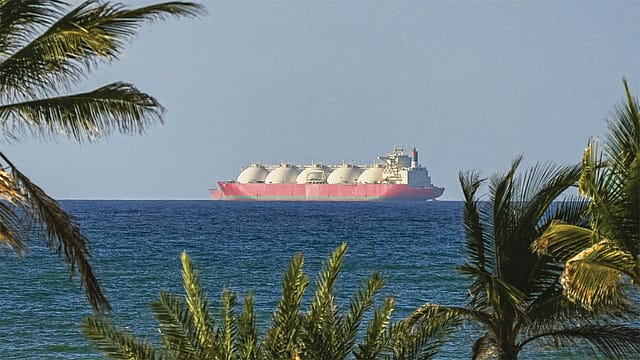
THE FIRST INTERNATIONAL war on the passage of oil over water began with America’s demands and paused with an uncertain ceasefire on Iran’s terms. Oil and water, goes an old truism, do not mix. That may be valid in science, but is rather less tenable in contemporary policy. In the Gulf, collective storehouse of the richest accessible energy and helium reserves on the globe, oil is impotent without water. Energy is useless sans transport. The production of oil is only the first link in the long chain of economic health. Oil must reach its destination at the assured time to feed the machines which churn out products.
From the 1880s, when oil was discovered in the small Masjid-e- Sulemani town of Iran, and the deserts came alive, through the first decade of the 20th century when Germany shifted from coal to oil for its navy, to the discoveries of vast reservoirs of liquid gold in the adjoining Arab deserts, control of the region’s oil has been a primary strategic objective of Western policy, whether in the old days of imperialism or in the modern preference for democratic governance. Oil became essential to war and peace, to military crafts on land, sea and sky, and to the industrial behemoths that owned the empires of goods and services. Till 1973 Western-owned oil companies paid more in domestic taxes out of their profits than they gave as royalty to the kingdoms and dictatorships of the desert. The first disruption came in 1973 when Saudi Arabia led an OPEC revolution against countries supporting Israel in the October war. The oil cartel lifted prices from $3 a barrel to $12. It took economic and political diplomacy nearly a decade to manage that upheaval, with companies passing on the cost rise to consumers and governments ensuring a settlement between Israel and Egypt through the Camp David Accords. However, the great benefits of oil caused a sudden escalation of aspiration and the rise of disobedient despots in countries like Libya and Iraq. It took time but they were eventually crushed through war.
The outlier was Iran, where an ideological revolution in 1979 overthrew the submissive Shah, Mohammad Reza Pahlavi, and America became the Great Satan of the now Islamic Republic, a new model of faith-centric governance sustained by messianic zeal. America’s initial belief was that this immature insurrection would not be sustainable. Washington encouraged Iraq’s Saddam Hussein to seize Iran through war. His invasion began in 1980 when Iran barely had an army, and ended in 1988 with defeat and return to status quo ante.
Between 1990 and 2012, inconvenient despots in Tripoli and Baghdad were uprooted and killed; Iraq and Libya are now effectively partitioned and rudderless, but know where and how to send their oil. Iran remained out of reach, navigating through the region’s perennial wars with some skill as it developed its capabilities. They were finally tested by US President Donald Trump. The consequences are known. In 38 days Iran has been hit across an estimated 13,000 targets, lost half its weaponry and 155 ships, with over thousands killed, including children in hundreds of schools. Iran, however, shocked Israel and America by destroying billion-dollar radar systems, THAAD missile systems, and pinpoint attacks on American assets in the Gulf that wrecked a dozen bases and the CIA headquarters in the Riyadh embassy. Israel was stunned when Iranian missiles penetrated the ‘invincible’ Iron Dome over its cities and hit Dimona, home of Israel’s nuclear reactor and weapons. After 38 days America froze.
The freeze is being negotiated at the time of writing, and cracks appeared within a day of good news proclamations. But certain facts are inconvertible.
There has been no regime change in Tehran. Sanctions on Iranian oil have been lifted; India, for instance, made its first official purchase of Iranian oil since the sanctions began. Iran’s domination over the Strait of Hormuz is still a fact; it now monitors passage through these chokepoint waters from the tiny Larak island. The American security structure over the Gulf has shattered, and no one has yet begun to think of new possibilities. America’s strongest modern alliance, NATO, is on crutches. America’s much-vaunted weapons have lost their credibility. And, just in case anyone wants to know, Iran’s nuclear capability is precisely where it was before the war began, a delicate halfway towards a weapon. The relationship between America and Israel, joined at the hip, has stumbled.
The region is back to hoping for the best and preparing for the worst, with accusations flying that different versions of negotiation terms were placed before different eyes. Israel insists that Lebanon is not included in the ceasefire; Iran claims otherwise. Fudge might take a process forward but it is not a healthy input into a complex mix. Iran’s ten terms will not be easy to comply with. Iran wants a commitment on non-aggression, control of Hormuz, withdrawal of American forces from the region, reparations, the end of all sanctions, and its right to continue its nuclear programme for peaceful purposes. Trump wants to define his version of victory, but is showing signs of flexibility even as he orders the American military to reload and rest for the next battles. Simultaneously, he has said that America could split the Hormuz toll with Iran, making them partners on the water highway. “We’re thinking of doing it as a joint venture,” he told an American news channel. “It’s a way of securing it—also securing it from lots of other people. It’s a beautiful thing.” There’s “big money” in the idea, he added, and big money is always beautiful.
Who are those lots of other people?
A joint venture between MAGA Washington and Islamic Tehran?
Stranger things have happened.