US, Israel expected neat decapitation, clean strike and quick exit: Diplomat
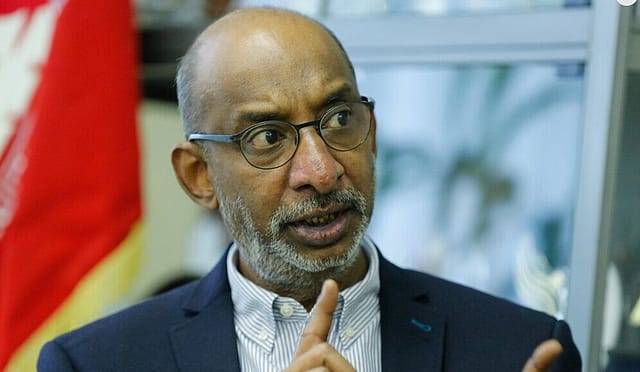
Gaddam Dharmendra, India’s former Ambassador to Iran, has described the Israeli-American war on the Islamic Republic as a “foolish war of choice”, launched at a time when Tehran was no longer a nuclear threat, the Gulf economies were prospering, and many countries, including India, were growing at a healthy pace. The result, he warned, could be a serious reordering of the global order with devastating political and economic consequences that may stall financial progress and undermine prospects for peace.
Dharmendra, who served as Ambassador to Iran from 2019 to 2023 and is a former Dean of the Sushma Swaraj Institute of Foreign Service, said at a discussion held on March 9 at the Foreign Correspondents’ Club of South Asia that the world now stands on the cusp of enormous uncertainty because of this thoughtless war.
“The messaging is this: West Asia west of the Strait of Hormuz was a region of relative calm, a hub for HNIs, tourism and investment. Now the Iranians have rearranged the regional order,” he said. The dark winds of change unleashed by the war, he emphasised, will have global repercussions, particularly because of the disruption and restricted movement of global oil supplies through the Strait of Hormuz, the narrow yet critical shipping lane linking the Persian Gulf with the Gulf of Oman. Nearly four out of every ten barrels of oil traded globally pass through this chokepoint.
The situation, he warned, is likely to slow economic growth worldwide while triggering sharp increases in the prices of oil, gas and fertilisers.

Youth Issue 2026
24 Apr 2026 - Vol 04 | Issue 68
50 Portraits of Icons and Achievers
Dharmendra, currently a non-resident senior fellow at Carnegie India, said the Iranian response to the killing of their Supreme Leader, Ayatollah Ali Khamenei, on February 28, along with several top officials, has been one of “fury and controlled aggression”. Unlike in June last year, when Iran was under attack from joint US-Israeli forces but exercised restraint, this time Tehran appears to have adopted a far more confrontational strategy.
“This time they have decided to torch the region,” he said, suggesting that Iran has effectively signalled to Gulf Cooperation Council (GCC) countries that if Iran goes down because they host American military bases, those countries too will face consequences. “Last June they restricted their attacks to Israel and honoured informal understandings within the region, including with the Saudis, not to attack other countries,” he noted.
This time, however, Iran did not hold back. According to Dharmendra, Tehran launched attacks across the region targeting American military bases and Israel with what he described as a “combination of effective targeting, weaponry and deep intelligence”.
“We are into the second week of this war. I don’t think anyone expected the Iranians to last this long,” he said. “The Americans and the Israelis expected a neat decapitation, a clean strike. The Israelis seemed to have assured the Americans it would be a quick exit, little realising that this is a country that has repeatedly learnt hard lessons and fought an eight-year-long war. Iran has stamina. It has attrition power. And it understands very well the American strategy of bombing and hoping things will work out.”
Such a strategy, he argued, can achieve only limited military objectives. “After that you have to put boots on the ground which no one in the US administration has the appetite for,” explained the career diplomat of the 1990 batch of the Indian Foreign Service.
For now, he said, Iran has demonstrated resilience on the military front. “This is the second war in less than eight months. They survived the war in June last year, the so-called 12-day war. That conflict has not been well understood because of the clampdown on information,” he said.
During the initial phase of that conflict, Iran absorbed intense Israeli strikes for the first 48–72 hours. But after surviving that barrage, Tehran launched several hundred missiles and drones into Israel, saturating Israeli defence systems such as Iron Dome and David’s Sling, something that had never happened before.
Dharmendra also pointed out that both last year’s conflict and the current one erupted in the middle of diplomatic negotiations. “In June last year, the Iranians and the Americans had already held five rounds of talks. A sixth round was scheduled for a Friday when the US suddenly decided to strike three nuclear facilities in Iran: the Esfahan Nuclear Technology Center, Fordow near Qom, and Natanz,” he recalled. “After that, Donald Trump declared that the Iranian nuclear programme had been obliterated.”
However, the events of that conflict revealed something new: Iran’s ability to launch counter-strikes capable of overwhelming Israeli air defence systems.
Soon afterwards, Trump announced a ceasefire. Around the same time, Dharmendra said, Iranian officials realised that their uranium enrichment capability had been severely damaged and that many centrifuges lay buried under the rubble. “At that point, it was widely assumed that the war was over,” he said.
But political developments within Iran soon altered that perception. Dharmendra noted that social protests in January appeared to embolden Trump into making aggressive statements about Iran. Finally, once again in the middle of diplomatic negotiations, the US and Israel decided to launch another attack. “On Thursday, February 26, talks mediated by Oman concluded in Geneva,” Dharmendra said. The Omani foreign minister, who had been mediating between Washington and Tehran, subsequently travelled to the United States to lobby American officials because he believed the Iranians had made substantial concessions. Following the Geneva discussions, both sides had agreed to meet in Vienna the following Monday to finalise technical arrangements allowing the International Atomic Energy Agency (IAEA) access to Iranian nuclear facilities, the former IFS officer said. An IAEA inspection, he said, could have determined whether the roughly 450 kg of uranium enriched to 60 percent purity in Iran was buried under the rubble or stored elsewhere. But because of the war, nothing of the sort happened, he regretted.
Politically, however, he argued, Iran has not collapsed. “They had prepared layers of succession,” he noted. At the same time, Dharmendra cautioned against romanticising Iran’s role in the region. “Iran is not an easy neighbour. It is not an angel,” he said.