US-Iran Talks Set for Switzerland After Landmark Ceasefire Agreement: What We Know
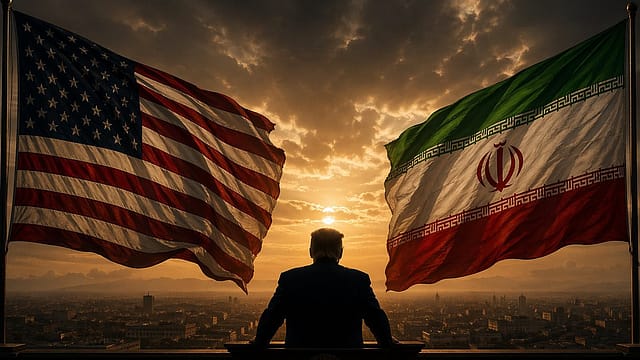
The United States and Iran are set to begin a new round of diplomacy as officials from both countries prepare to meet in Switzerland following the signing of a ceasefire agreement between US President Donald Trump and Iranian President Masoud Pezeshkian.
The talks, scheduled to take place on Friday at the Buergenstock mountaintop resort in Switzerland, will mark the first direct engagement focused on implementing the recently signed framework agreement aimed at ending hostilities and establishing a pathway toward a broader settlement.
Why Are the Talks Taking Place?
According to a Reuters report citing the Swiss government, the discussions will focus on implementing the ceasefire framework signed virtually by Trump and Pezeshkian on Wednesday.
The Swiss Foreign Ministry confirmed ongoing diplomatic efforts involving several stakeholders.
"As things stand, the plan is still for the U.S. and Iran, along with mediators Pakistan and Qatar and other involved countries, to meet tomorrow at Buergenstock for initial negotiations about implementing the agreement," the Foreign Ministry was quoted as saying by Reuters.

The Health and Wellness Issue
25 Sep 2026 - Vol 05 | Issue 39
The ministry added: "No further information is currently available regarding the schedule and details of this meeting."
Switzerland has played a key facilitation role in the diplomatic process. In an official statement, the Swiss Foreign Ministry described peace and security in West Asia as a major foreign policy priority.
"The FDFA (Federal Department of Foreign Affairs) is in close contact with the US, Iran, Pakistan and Qatar to facilitate the possible signing of a Memorandum of Understanding at the Burgenstock in the canton of Nidwalden."
What Is the Ceasefire Agreement?
The agreement represents one of the most significant diplomatic developments between Washington and Tehran in recent years.
According to CNN, Trump and Pezeshkian virtually signed a 14-point Memorandum of Understanding (MoU) designed to halt hostilities, reopen the Strait of Hormuz and establish a 60-day process for negotiating a comprehensive long-term settlement.
A White House official told CNN that Trump signed the document while attending a dinner hosted by French President Emmanuel Macron at the Palace of Versailles, while Pezeshkian signed it separately, allowing the agreement to take immediate effect.
The framework is intended to create a structured roadmap for reducing tensions while addressing several long-standing disputes between the two countries.
Key Provisions of the 14-Point Memorandum
The agreement contains a wide-ranging set of commitments covering security, economic cooperation and nuclear issues.
A senior US administration official described the memorandum as a framework intended to immediately reopen the Strait of Hormuz, address concerns regarding Iran's enriched uranium stockpile and create conditions for phased economic relief linked to Tehran's compliance with agreed terms.
Among its major provisions are an immediate cessation of military operations, including activities linked to Lebanon, and a commitment by both sides to pursue a comprehensive final agreement within 60 days.
The memorandum also envisages the removal of the US naval blockade, guarantees safe passage for commercial shipping through the Strait of Hormuz and outlines phased sanctions relief measures.
In addition, the framework provides for the release of frozen Iranian assets and includes a US-backed economic development programme for Iran valued at a minimum of USD 300 billion.
What About Iran's Nuclear Programme?
The nuclear issue remains central to the agreement.
Under the memorandum, Iran has reaffirmed that it will not develop or acquire nuclear weapons. The framework also proposes future discussions regarding Iran's enriched uranium stockpiles under the supervision of the International Atomic Energy Agency (IAEA).
These provisions are expected to form a major part of the negotiations scheduled in Switzerland, as both sides seek to establish verification mechanisms and compliance standards for a future comprehensive agreement.
What Happens Next?
The Switzerland meeting is expected to serve as the first step in translating the ceasefire framework into actionable commitments.
With Pakistan and Qatar acting as mediators and Switzerland facilitating the process, negotiators will seek to define implementation timelines, monitoring mechanisms and confidence-building measures required to sustain the agreement.
If successful, the talks could pave the way for a broader settlement addressing regional security concerns, maritime trade routes, sanctions, economic cooperation and nuclear oversight, potentially reshaping relations between the United States and Iran after years of confrontation.
(With inputs from ANI)