The Mosquito Continues to Thrive
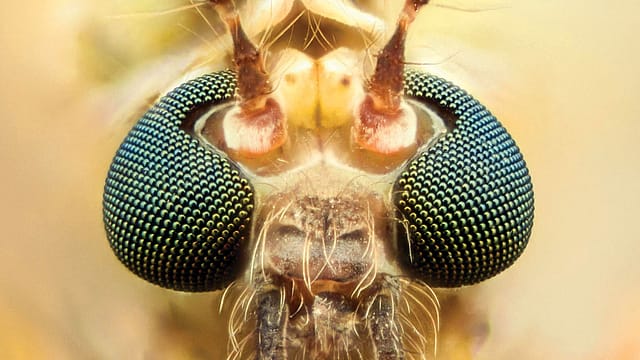
THE MOSQUITO IS OLD AS A RESIDENT OF EARTH. JUST THIS YEAR, A FOSSILISED larva of one was dated to 99 million years ago. That makes it neighbours of dinosaurs long before human beings were even a figment of nature’s imagination. The dinosaurs perished and the meteor strike that made them extinct also took out over 75 per cent of Earth’s species. Not the mosquito. It thrived. But even such a hardy creature had its limits, like those fables in which a boon is given with a caveat. For the mosquito it was: “Thou shalt not live in places of extreme cold.” The icy regions of the good Earth remained denied to it. It was however patient. In October 2025, it finally entered the last country barred to it. An insect collector who had put a trap in Iceland noticed three ‘strange’ flies
that he suspected were mosquitoes. It was a big deal for a small country that had only so far read about these little insects carrying dangerous diseases. The Icelandic Institute of Natural History took the samples and the fears were confirmed. They belonged to a species called Culiseta annulata.
There are many mysteries to the mosquito and how these three illegal immigrants arrived in Iceland is one more on the list. The Institute confirmed that it probably got in through freight but that is not what worried them—it was that they had survived. Two of the three were females, which says something about the probability of procreation. Possibly it was not even these three which were the first to arrive but their ancestors. Three is what was found, there could be many more. The Institute’s statement said: “It is uncertain whether it has settled here permanently, but everything indicates that it can survive in Icelandic conditions. The discovery of the mosquito adds to the growing number of new insect species that have been identified in this country in recent years, partly due to a warming climate and increased transportation.”

The MissOil Strike
03 Apr 2026 - Vol 04 | Issue 65
The War on Energy Security
Note: both factors are tied to human activity. Without ships and planes moving across continents separated by vast oceans, many creatures would have to wait tens of thousands of years to see the world. The present global warming, meanwhile, has been driven by industrialisation and prosperity. Mosquitoes are successful exploiters of these loopholes man has presented to the rest of nature. There are many species of them, but the Culiseta annulata is the hardiest to survive the cold. To the relief of Icelanders, it is not one that requires concern. (It is not considered dangerous to humans as it does not carry any known infections in these areas, stated the Institute.) But it had not earlier had the capacity to remain in a country so cold. That has changed now. In the great game of chess between mosquito and man, one more piece moved towards the other side. The last bastion that the mosquito has not breached on Earth remains only Antarctica.
Fossils of early mosquitoes have a propensity for Lebanon. Preserved in amber, the earliest one found there is of two male mosquitoes. They belong to a period called the Lower Cretaceous. The time when they lived was around 130 million years ago. Mosquitoes in close-up photographs are, let’s just say, not the most pleasant to look at but in the amber, they look as if made of gold, almost a work of art. There was, however, something about these two that caught researchers by surprise. In every school textbook that you might have forgotten, it is written that only female mosquitoes suck the blood of human beings and that is how they also spread diseases. But 130 million years ago these two males had proboscises, the thin hairy tubes that penetrate into the skin, exactly like the females today, which meant that they were also capable of bloodsucking. Males today do not have this and they have to make do with nectar and other plant stuff for food. That is how all mosquitoes were when they first evolved. The theory now is that all of them developed these mandibles because these gave them an advantage for feeding and then mysteriously the males lost them. As the 2023 published paper on it said, “Although only extant females feed on blood, females and males of these species also feed on nectar. The benefit for Cretaceous male mosquitoes to feed on blood could have been to increase their capacity to fly and successfully mate, as is the case in extant females, but a reason for why this behaviour was subsequently lost in males remains unknown.”
At present, humanity’s only concern is the female mosquito because it is the one that brings in dengue, malaria, chikungunya, and other diseases. The mosquito began to suck blood much before humans were anywhere in the picture. Pathogens, like viruses, evolved inside the mosquito to transmit themselves into hosts. When humans came, they found a new target, a process that continues even to this day. The mosquito that in recent times has really had a field day terrorising Indians is the Aedes aegypti. It is through it that two major diseases, dengue and chikungunya, are transmitted. It had its genesis in Africa and at that point it was just Aedes and used to feed on animals. As human beings settled in villages, they stored water in containers so that it would be available all the time. This was convenient for the Aedes to breed its larvae because earlier during the dry season it didn’t have this option. More of them were now coming into being near humans, and evolution and convenience just gave mosquitoes a little push to allow the insect to now drink the blood of humans too. Aedes spread across Africa and then a strain of it managed to leave the continent for the rest of the world. India was also a recipient of this mosquito and all the viruses that now were using it as a vector.
All this is not in a distant past. In the grand scale of history, the havoc of Aedes aegypti is just yesterday. A 2018 paper titled ‘Mosquito-Borne Human Viral Diseases: Why Aedes aegypti?’ in the American Journal of Tropical Medicine and Hygiene says this about chikungunya and this mosquito species: “CHIKV was first isolated in 1952 in Tanzania. A disease recognizable as chikungunya fever is quite clearly described in Asia after 1879, 10 years after the opening of the Suez Canal hypothesized to have allowed Ae. aegypti to enter Asia. Since, CHIKV has spread widely in Asia and more recently in the New World, first detected in 2013. Outside Africa, Ae. aegypti is the major mosquito-vectoring CHIKV, although Aedes albopictus can also cause epidemics. In CHIKV’s native Africa, in addition to Ae. aegypti, seven other native African Aedes have been implicated as vectoring CHIKV among African primates.” Chikungunya was first reported in 1963 in India, in Kolkata. It saw some epidemics and then disappeared for many decades, only to come back in 2005, and since then it has not just remained but also exploded. One recent study estimated as many as five million Indians were at risk annually. Dengue, another virus that hitches on the Aedes aegypti, has seen over 100,000 cases this year, and that is only the ones recorded. Most cases do not even come into the statistics.
The big disease that made the mosquito infamous was not even a virus but a parasite. Malaria has been a mass killer for all of human history and it is because of a mosquito species called Anopheles. Mosquitoes were always annoying to humans because of the discomfort they caused from the bites. But that they also carried deadly pathogens is only a discovery that goes back not even 200 years. The man responsible for finding the malaria link—Ronald Ross—had India to thank for it. He won a Nobel Prize and the website of the committee explains it thus: “Since the parasite was found only in blood, researchers suspected that it was spread by blood-sucking mosquitoes and spent part of its life cycle in them. Ronald Ross had mosquitoes suck blood from malaria-infected people, and in 1897 he found the malaria parasite at a certain stage of life in the stomach of a certain species of mosquito.” Born in Almora (in present day Uttarakhand) in 1857, Ross was with the India Medical Service when he got interested in malaria. It wasn’t easy. He failed for years because he was using the wrong mosquito species for his tests.
Since then, though medical science has advanced remarkably, malaria continues to be widely prevalent in many parts of the world, including India. So also many other diseases that the mosquito delivers. This is because the mosquito has proved to be resilient. It mutates. It changes behaviour. When new insecticides are introduced, it produces enzymes to counter, or thickens its skin. When people start using mosquito nets on beds, it changes the time of when it feeds on humans to before bedtime. If it used to rest indoors, after people started using mosquito coils and other deterrents, it began to stay outside the house, only entering for its supply of blood. Whatever man throws at it works for a while before the mosquito outwits it. It is able to do so because of its short lifespan, two to four weeks, and the enormous numbers of eggs, up to 300, one female can lay at one time. Which means numerous new generations of mosquitoes get born at blistering speed. Some among these survive the new measures of man and then the generations that follow become increasingly resilient. It is survival of the fittest and evolution on fast forward because of the numbers involved in very short timelines.
Human beings keep trying with ever more ingenious ways. This year, Brazil launched a biofactory that produces mosquitoes containing bacteria that prevent viruses from making them their hosts. These mosquitoes are released in large quantities in areas where mosquito-borne diseases are prevalent. They reproduce with regular mosquitoes and create future breeds that are resistant to viruses. They feed on humans but do not infect them. The results have been very promising though it does not work for malaria and research is ongoing on that front. The genius of this approach is that the mosquito has no incentive to adapt against it. The modified mosquito’s needs are still being satisfied. It still gets blood, as it has been doing for millions of years. And that is also a triumph for the mosquito.