The Iranian Regime Will Die Another Day
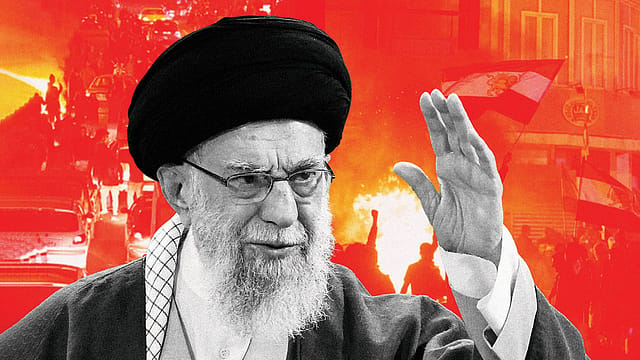
Those hoping for the long-awaited collapse of the clerical regime in Tehran may be disappointed by the signs of the Ayatollahs weathering another storm. The Ayatollahs themselves will be surprised by how near the end they are. Against the backdrop of US President Donald Trump’s threat of intervention and the inevitable dispersion of the protesters as the corridors of the Kahrizak Forensic Medical Centre filled with body bags, 86-year-old Supreme Leader Ayatollah Ali Khamenei is unlikely to change course this late in the day. He didn’t in 2009. He didn’t after Mahsa Amini. He won’t till he’s gone.
The Islamic Republic’s survival to date was the result of a bargain where the people accepted a bad deal. From time to time their buyers’ remorse exploded in anger. The compact between the regime Ayatollah Ruhollah Khomeini established in 1979 and Iranians was that the Islamic state would protect them from external aggression. In return they had to forget personal liberties and submit to the mercy of clerics and their sharpshooters. Their country would come to be very isolated in the world, but that was part of the deal too. The promise to protect was tested for eight years by Saddam Hussein’s Iraq, a war that almost broke the Islamic Republic but ended in a renewal of the Ayatollahs’ vow. The people, for their part, renewed theirs—more hardship, more restrictions on the good things in life.

India's Action Hero
27 Mar 2026 - Vol 04 | Issue 64
Riding the Dhurandhar Wave
The 12-day war last June when Israel decimated Iran’s top military leadership and the US set back its nuclear programme changed things. These protests were the slightly delayed reaction. Israel and the US had busted the myth that Iran under the Ayatollahs and the Islamic Revolutionary Guards Corps (IRGC) was invincible. Tehran had chosen to wage war on Israel since 1979; nobody had asked it to. Its proxies across the Middle East were meant to be buffers against attacks on the sponsor state. Those proxies triggered a chain of events on October 7, 2023 that rained bombs and missiles on Iran. Ordinary Iranians, those not tied to the regime, decided they had nothing more to lose. This time, it wouldn’t be enough if the regime changed policy. They weren’t demanding a mellower republic. They wanted the end of the Islamic Republic.
Khamenei and the IRGC understood that and responded by killing 2,500 so far. The big blow to the Iranian economy was the reimposition of the sanctions lifted under the 2015 nuclear deal. Food inflation was already at 70 per cent before the rial nearly collapsed in December. The serial devaluations of the currency against falling oil revenues practically killed off what had remained of business.
These protests, after all, were begun by traders on December 28 in Tehran’s Grand Bazaar. Nevertheless, it soon became the people’s verdict on the regime’s failed policy at home and abroad.
The Ayatollah is safe as long as he has the IRGC and its murderous Basij paramilitary. But as happened in Tunisia and Egypt, when the uniforms choose to preserve themselves, the strongman has to flee. It must not, however, be assumed that what replaces the regime will necessarily be better. The worst outcome would be a Syria-like civil war in Iran.