The Great Iran Fallacy: Belief in the superiority of one’s faith leads to intellectual stagnation
I HAVE WRITTEN EARLIER about our “China envy”. Simply put, it is the desire and demand for a single party, single leader, centralised leadership, obedient cadre, single language, single ideology, and so on, all governed from the top by a command and control authority.
Luckily, given our immense regional, linguistic, religious, cultural, and social diversity, not to mention the federal and parliamentary political system, such a monopoly of power is difficult to achieve.
But, as we have seen, that does not prevent our leaders, who are elected representatives, not divinely ordained monarchs or power-grabbing dictators, from trying to achieve and enforce it through vast networks of narrative control.
Now let us try to understand what the “Iran Fallacy” is.
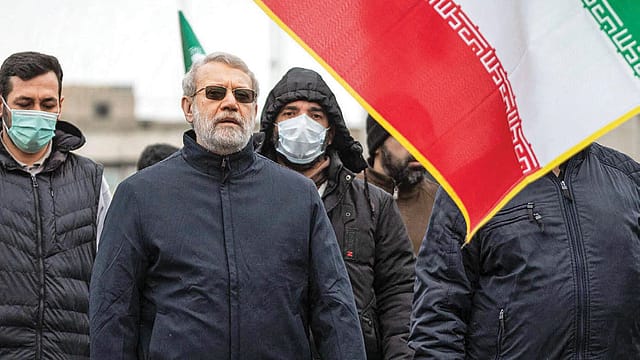
How many know that the recently assassinated Iranian politician, Ali Ardashir Larijani (June 3, 1958–March 17, 2026), was not only the secretary of the Supreme National Security Council, a key leader of the Islamic Republic, but also an important thinker and philosopher? His PhD was on Immanuel Kant. Its basic purpose was to ‘prove’ that Islam was superior to Western modernity.
And how did it achieve its goal? By stating, quite unequivocally, that Islam was superior because it was, in the ultimate analysis, sanctioned by Allah. This justification by faith is not new. In a sense, it goes back to Al-Ghazali (c. 1058–1111), one of Islam’s most influential theologians. His Hujjat al-Islam (Proof of Islam) is perhaps the single most important book in Islamic intellectual history.
What is the Larijani variation of this thesis? It is this: he adds to Ghazali’s supersession of reason by faith a modern variation—call it his own version of Cartesian dualism.
The world of science and technology is governed by empirical reason and experimentation. No problem. Muslims need to excel in it.
But this world, and its accomplishments, must be subordinated to and subsumed into, the theological frame of reference. In this framework, Allah’s sovereignty is unquestionable. It does not need external, let alone individual, proof because it is sanctioned by the Holy Writ and the Last Prophet.
Ergo: use and deploy all the instruments of modern science and technology but only to make Islam prevail. Defeat all the enemies of Islam with their own tools and devices.
Armed with this ideology and almost limitless power, Larijani used the Revolutionary Guards time and again brutally to stamp out dissent. For a lover of wisdom, he was quite a ruthless killer.
But it was all supposedly for a good cause— to safeguard the Islamic Revolutionary regime at all costs. Also, to wipe out the Big Satan, the US, and the Little Satan, Israel. Then, the universal rule of Islam could prevail over the denizens of our planet.
Of course, things didn’t quite work out for Larijani. The very technology that he despised but wished to appropriate got the better of him. He had no place to hide and was taken out in a targeted precision strike.
Now let’s come to India.
It is natural for all civilisations, particularly ancient ones, to believe that they are the best in the world. Nothing wrong in some healthy self-confidence, even pride, in one’s own culture. As long as it does not become delusional and destructive.
Unfortunately, many hyper-Hindu nationalists in India also harbour such ideas and fantasies about India’s greatness and the inevitable fall of the West. Only they substitute Islam with their version of Hinduism.
These folks champion the superiority of what they consider Hinduism over all other faiths and systems. They do not uphold the ancient Vedic dictum “Ekam Sat Vipra Bahuda Vadanti”. They are not pluralists, whether shallow or deep. No, they are supremacists. They hate the West and its idea of a universal and open civilisation. They wish to appropriate all the achievements of the West; they continue to seek validation from the West; but they would like to, given a chance, destroy the West. And impose their idea of Hinduism on others.
Sadly, they are not democrats. They are self-righteously authoritarian. They are power-worshippers and power-mongers, rather than knowledge-seekers and servants of humanity.
These hyper-Hindus, I would even go so far as to say, are not Daivik, but Asuric. How do we know? Simple—just separate those who uphold virtue (Dharma) from those who worship power (Prabhutva).
To think that our faith is superior to others and that the world must be conquered by it is an extreme version of this fallacy. The nationalistic version is that at least in India, we have a right to impose our beliefs and ideas on everyone else. We can adjudicate who a good Hindu is and who must be castigated as an apostate.
Not just other religions, but Western modernity is to be vanquished by Hindu thought and belief. We must prove to the world that we have the answers, always did. The world must turn to us to teach it the truth of how to save itself.
We are Visvagurus, whether others like it or not.
When you ask for evidence of our greatness, they point to some older achievement, much before invasions and colonisation. Present greatness buttressed by past glory is a weak argument, you may say.
They will condemn you for being anti-national or unpatriotic.
If you point to any present deficiency, they will blame someone else, usually Western imperialism or Islamic conquests. Hindu civilisation is the greatest, they will reiterate. Without taking responsibility for our present drawbacks, weaknesses, or faultlines.
This is the dangerous Iran Fallacy that we must avoid in India. A proud Sanatani must not be a delusional Sanatani.
Just as Larijani’s framework instrumentalises Western knowledge to affirm Islamic supremacy, a growing strain of hyper-nationalist and hyper-Hindu thought in India seeks to instrumentalise modernity while rejecting its ethical core of equality, liberty, and open enquiry. The Iran Fallacy teaches that such a path may yield short-term power but leads to intellectual stagnation, internal repression, and external isolation.
As India navigates its rise, we should reaffirm our commitment to genuine pluralism, democratic accountability, and knowledge pursued for humanity’s sake. And Sanatana Dharma, with a galaxy of modern rishis, shows the way.Neither rejection nor submission, but what Sri Aurobindo called atmasatkarana–assimilation for new creation.
Larijani’s assassination, amid escalating conflict, underscores the perils of ideological absolutism fused with state or extra-state power. Superiority claimed through faith or civilisational myths, backed by borrowed tools, ultimately weakens rather than strengthens a nation.