The Globetrotter: The Insurgent States of America
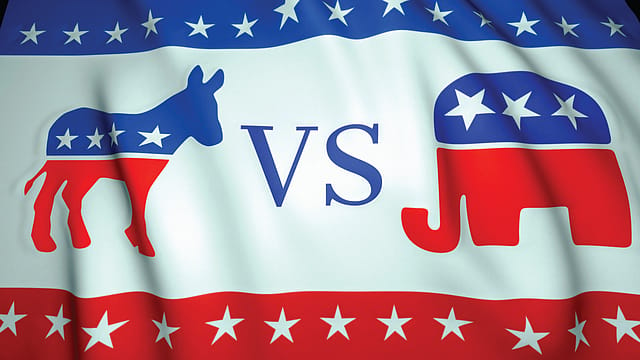
Less than a week out, the US midterm arithmetic favours the Democrats. Reuters-Ipsos puts them nine points clear nationally, 47 per cent to 36 per cent, while President Donald Trump’s approval languishes at 32 per cent. Betting markets make the House all but theirs, but the Senate is harder. Republicans hold 53 seats; Democrats need a net four, while defending Michigan, Georgia and New Hampshire. Their route runs through North Carolina, Maine, Ohio and Texas, with Iowa and Alaska in reserve. The last few days have brought more cheer, short of predicting a blue tsunami: Lisa Murkowski spurned Trump’s Alaska governor pick, Kansas looks competitive, and Trump is rallying in Texas like a man defending his own seat. The Democratic agenda is plain on paper: cheaper groceries and fuel, affordable healthcare, housing, rolling back tariffs and ending the Iran war—and investigating Trump’s administration. Yet the deeper story is polarisation. The Republican Party has been remade, arguably hollowed out, in Trump’s image. Democrats, meanwhile, are being pulled by an insurgent left since Zohran Mamdani’s allies toppled incumbents in New York. And each extreme justifies the other. The centre, once America’s gravitational field, is being vacated. Both parties now campaign from the edges as the moderates merely watch.
Chekov’s Enterprise

Walter Koenig, who played Pavel Chekov, the Enterprise’s eager young Russian navigator, died on October 25 aged 90. Born in Chicago to Russian-Jewish immigrants, he joined Star Trek in 1967, mop-topped and endlessly boastful about Russian inventions. He did seven films later and proved his range as Babylon 5’s chilling psi-cop Bester.
Koenig was also a writer, publishing the memoir Warped Factors, the novel Buck Alice and the Actor-Robot, and Chekov’s Enterprise, the last a Star Trek journal. Incidentally, he denied that his role was a response to criticism in Pravda about the show’s lack of Russian characters.
Orbán at the United Nations?
Is Viktor Orbán headed for the UN? It’s not black comedy but, reportedly, policy. Washington is pushing a joint US-Russian-Chinese candidate for UN secretary general and the Hungarian strongman voted out in April is their man. The Security Council arithmetic favours it, with nine votes needed. The Trump administration reportedly counts eight sure votes and 10 within reach. And if Washington, Moscow and Beijing agree, London and Paris are unlikely to exercise their veto, despite their distaste for Orbán, as the Wall Street Journal argued. Thus, a self-styled champion of “illiberal democracy”, the European far-right’s poster-boy of extra-legal subduing of courts and the press, a firm friend of Moscow and a Chinese ally who, nevertheless, also fancies himself as the defender of Western civilisation, might just become the global peacemaker. If that’s ironic, his admirers see a sovereigntist who defied orthodoxy, and not a Putin apologist who hollowed out Hungarian institutions. Timed for the US midterms, if the manoeuvre is successful, Orbán, facing inquiries at home, would gain diplomatic immunity. The UN is meant to be a referee. Hand the whistle to a man who treats rules as obstacles, and its remaining authority on Ukraine and human rights will probably shrink further.