The Globetrotter: No One Talks to the Arab Parties
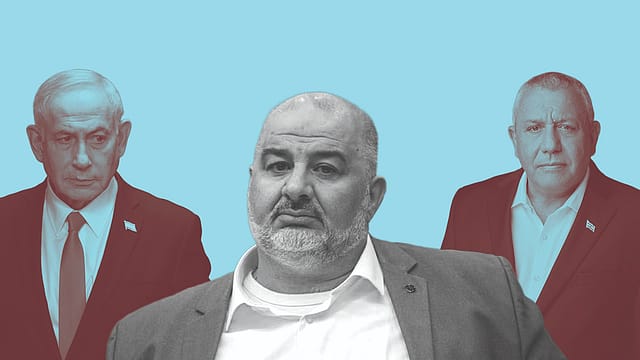
At the heart of the campaign for Israel’s election on October 27 is a silence: no one is talking to the Arab parties. Benjamin Netanyahu and the right have made it costly for challenger Gadi Eisenkot to approach the Arab parties by branding them untrustworthy. The general won’t win if he crosses that line before the election. Arab citizens constitute 20 per cent of Israel’s population and 17 per cent of the electorate. And the Arab parties may end up holding the key to government formation. Polls predict neither main bloc clearing the 61-seat Knesset majority while the Arab lists have polled at record levels. If the Arab parties clear the 3.25 per cent threshold and turnout holds, they could push some of Bibi’s fringe rightwing friends below the line. The Bennett-Lapid experiment of 2021 had made history by bringing Mansour Abbas’ Ra’am into government but 2021 seems a long time ago after October 7, 2023. On the other hand, young Israelis have increasingly turned rightward, with roughly three in four first-time voters calling themselves rightwing. Far-right ministers Itamar Ben-Gvir and Bezalel Smotrich fare handsomely among them. A cohort that has known little but Netanyahu wants security first. Courting Arab parties could cost Bibi and Eisenkot alike. But ignoring the Arabs could ultimately cost them more.
Carney’s Alberta Dividend

Alberta was supposed to be where Mark Carney’s mandate frayed and Donald Trump had the last laugh. Instead, roughly three in four voters chose Canada, in the self-same province where Liberal leaders usually courted derision. The prime minister, who grew up there, cast the vote as Washington’s wedge, not Edmonton’s grievance, and Albertans agreed. That matters beyond the prairies. Trump’s tariffs and annexation taunts assume a brittle neighbour—and a shattered petrostate would have confirmed it. Now Carney can negotiate with new energy and a still-intact map. Perhaps some ‘No’ voters merely wanted to make Ottawa nervous. In the end, Alberta handed Carney unambiguous leverage.
Has Indonesia Lost the Plot?
Half-a-century hence they might say “Indonesia” to illustrate the early 21st century’s biggest failed promise. The Asian giant—young, populous, resource-rich, growing at 5 per cent—that everyone expected to rise next looks like a country that has mislaid its compass. As always, the money men saw it first. Moody’s and Fitch moved their outlooks to negative. Jakarta is staring at a ratings downgrade and while it can legitimately blame oil and Iran, the fault lies first with erratic policymaking, concentrated power, and a fantasy of 8 per cent growth. A $120 billion stock rout, a rupiah flirting with 17,000 to the dollar, and a trimmed OECD forecast make a mockery of the ledger. President Prabowo Subianto seems to have poisoned politics by pushing the military deeper into civilian life and responding to protests with detentions and talk of treason. The regime sees all its critics as foreign puppets; journalists get beaten by uniformed men. Thus the wildfires assumed a metaphoric dimension. As smoke shut schools from Malaysia to Timor-Leste, choked Singapore, and sent thousands to clinics, the image was of a contagion spreading out from the archipelago. A giant that cannot douse its fires is not rising but shrinking.