The End of Radical Islam: The Iranian regime is not triumphant but exhausted and humbled
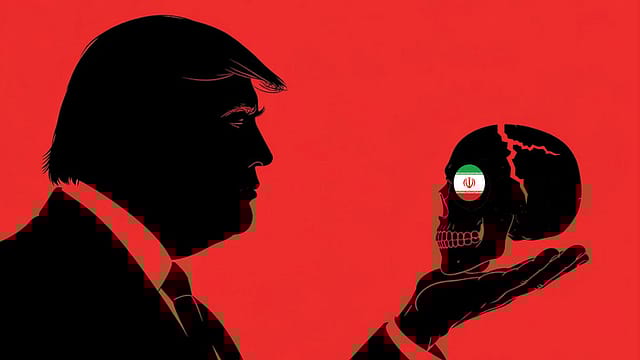
THE WORLD PRESENTS a strange spectacle. An isolated, radical, terror-exporting, Jew-hating Islamist regime, subjected to relentless military bombardment and driven to the edge of economic ruin, is now being portrayed in certain circles as the victor in an impossible war. This narrative defies reason.
Part of the explanation lies in narrative incentives if not outright falsehoods. For critics of the US, portraying Iran as resilient, even victorious, serves a broader argument about the limits of American power. For others, amplifying Iran’s defiance fits into a romanticised vision of anti-Western, anti-imperialistic resistance. In both cases, the lived experience of ordinary Iranians is relegated to the background.
Why does no one pause to examine the true cost borne by the Iranian people? What does one American dollar fetch in Iranian rials today? What are the current prices of bread, eggs, meat, rice, vegetables, or fruits in the markets of Tehran? What is the real rate of inflation? And how many more days can ordinary citizens endure this grinding hardship?
The figures speak for themselves. Iran’s inflation rate has hovered around 50 per cent or higher in recent months, with food prices surging dramatically. Bread and cereals have risen by over 140 per cent, red meat and poultry by 135 per cent, and dairy products along with eggs by 117 per cent in a year. Even as this column goes to press, the Iranian central bank has issued a hyper-inflation warning if the blockade continues.
The rial has plummeted to roughly 1.6 million to the dollar on the open market. Incredible, but true! You might wonder how much 1 million Iranian real buys today? Just one litre of milk costs around 800,000 real. So, go figure. A million rials might cover a very modest meal for a single person: a few loaves of lavash or taftoon, a bowl of rice, and perhaps one or two eggs. Certainly, not enough to feed a family.
A nation once quite prosperous, capable of feeding itself and exporting oil, now struggles with basic survival. This is not the result of external aggression alone. It is the direct outcome of decades of misrule under a theocratic system that has prioritised ideology over the welfare of its citizens.
The Islamic Revolutionary Guard Corps (IRGC), currently in charge of Iran, and the clerical establishment did not inherit a broken state. They dismantled a country with promising prospects and a flourishing economy. Before 1979, Iran was advancing rapidly with strong economic growth, improving literacy, and an emerging middle class. The revolution transformed that promise into a mechanism of control and extraction.
IRGC dominates key sectors of the economy, including oil, construction, and illicit trade, while the people face shortages and repression. Protests over currency collapse and rising costs in early 2026 met with overwhelming force, arrests, and blackouts. This pattern reveals not governance but systemic predation. There are no exact figures of the number of Iranian citizens killed or incarcerated by the regime, but they number in lakhs.
Let’s face it: President Donald J Trump did not destroy Iranian civilisation. The revolutionary regime accomplished that task through its own policies of oppression, corruption, and mis-adventurism. Trump’s warmongering merely exposed the regime’s fragility. For years, the mullahs relied on Western vacillation, European commercial interests, and American restraint to sustain their network of proxies such as Hezbollah, the Houthis, and Hamas. They funded terrorism and pursued nuclear ambitions while their population suffered. That calculation has now unravelled.
Above the din of posturing and selective outrage lies a larger truth that few in the media or our own political elite wish to acknowledge. What we are witnessing is the gradual end of radical Islam as a coherent global force. Sunni Wahhabist terrorism, embodied by groups like al-Qaeda and ISIS, has already suffered decisive defeats on the battlefield and lost much of its ideological allure. The so-called caliphate lies in ruins, and its appeal has waned among many Muslims seeking stability and progress.
Now the Shia variant, anchored in Tehran’s axis of resistance, faces a similar reckoning. With Hezbollah weakened, the Houthis exposed, and Iranian proxies depleted, the model of state-sponsored militancy loses its foundation. A regime unable to secure its own skies or provide for its people cannot sustain an empire of proxies.
The world stands to become safer as a result. Radical ideologies will not vanish overnight because fanaticism endures in pockets. Irrigated and fed by deep state and sinister conspiracies. Yet, the principal sources of organised Islamist violence have been deprived of resources, prestige, and momentum. Most Muslims, like most Iranians, desire electricity, employment, education for their children, and a measure of dignity rather than endless sacrifice in the name of apocalyptic visions.
I, for one, don’t believe that martyrdom can be weaponised or monetised beyond a point. Let’s not make an international hobgoblin out of it to scare rational agents or states. Indeed, Iran’s fall would not have materialised under the old habits of diplomatic accommodation, strategic patience, or myths of invincible martyrdom. It needed decisive intervention.
Israel’s existential threat, Iran’s nuclearisation, and an American president prepared to break with the past has ushered in a new geopolitical order in the Middle East. Trump, already pilloried and mocked, endlessly labelled reckless or dangerous, is the history-maker of the first part of the 21st century. America’s unconventional president has achieved what cautious multilateralism and appeasement could not. He has triggered the decline of the world’s most persistent sponsor of radical Islam.
No, the regime in Tehran is not triumphant. It is in the throes of death, decay, and asphyxiation. Economically exhausted, militarily humbled, and ideologically discredited, it will collapse like a pack of cards any day now. The old guard is already dead, the former Supreme Leader himself awaiting burial.
The fall of this regime marks the closing chapter of a 47-year ordeal that began when the mullahs seized an ancient and proud civilisation and reduced it to a vast prison for its own people. For this deliverance, we owe a measure of gratitude to the one leader who refused to avert his gaze. Donald J Trump, as 47th POTUS has done this. Credit should be given where it is due. Even if Trump-envy prevents some from acknowledging it.