The Decapitation Doctrine
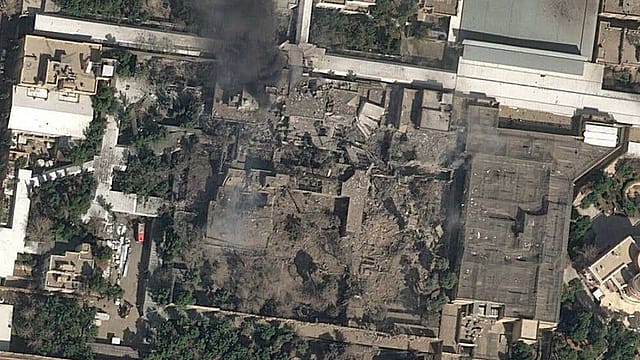
The US has adopted networked systems disruption and kinetic decapitation as a security doctrine. Kinetic decapitation involves both physical force to remove, not necessarily kill, the top leadership of a hostile state which is preceded these days by non-kinetic systems disruption by cyberattacks, power grid collapse, network degradation, etc. This was used to perfection in Venezuela when Nicolás Maduro was captured. It has been applied to more lethal effect in Iran in the assassination of Ayatollah Ali Khamenei on February 28. And it has been applied earlier, periodically, against Iran in recent years.
Qasem Soleimani

The commander of the IRGC’s Quds Force, Iran’s most powerful military officer and the architect of its security strategy involving proxies across the Middle East, was killed in a drone strike at the Baghdad airport on January 3, 2020 on the orders of US President Donald Trump in his first term.
Mohsen Fakhrizadeh
The father of Iran’s nuclear weapons programme was killed in an ambush outside Tehran on November 27, 2020, with the weapon later turning out to be a remote-controlled, AI-assisted machine gun mounted on a pickup truck. Iran blamed Mossad for the assassination but Israel neither confirmed nor denied involvement.

I.N.D.I.A. Falling
12 Jun 2026 - Vol 04 | Issue 75
The Unravelling of an Alliance
Mohammad Reza Zahedi
The brigadier general was the highestranking IRGC commander to be killed after Soleimani, in an Israeli air strike on the Iranian consulate annex in Damascus on April 1, 2024, along with at least five other IRGC officials. Zahedi was the liaison chief for Hezbollah in Lebanon. On April 13-14, Iran retaliated with a barrage of missiles and drones against Israel in Tehran’s first direct attack on the country.
June 2025: The Israeli decapitation strike that took Iran by surprise, beginning on June 13, 2025, eliminated several senior military commanders and nuclear scientists. Among the top military and intelligence officials killed were Major General Hossein Salami, commander-in-chief of the IRGC, Major General Mohammad Bagheri, commander of the armed forces, Brigadier General Amir Ali Hajizadeh, commander of the IRGC Air Force, and Mohammad Kazemi, the IRGC’s intelligence boss. Among the six nuclear scientists confirmed dead were Fereydoun Abbasi-Davani, Mohammad Mehdi Tehranchi, Ahmad Reza Zolfaghari, and Amirhossein Feqhi. Abbasi-Davani was Iran’s former atomic energy chief.
February 28, 2026: Ali Shamkhani, head of National Defence Council, Mohammad Pakpour, commander-inchief of IRGC, Aziz Nasirzadeh, defence minister, Abdolrahim Mousavi, chief of armed forces, Saleh Asadi, intelligence chief—these men, along with other senior officials, were all killed in the initial US-Israeli strikes that also killed Khamenei.
Ethics and Origins: When the SOE’s Operation Foxley to assassinate Hitler was aborted in 1944, it was reasoned Hitler’s mistakes as a military strategist were actually helping the Allies. Later, the question arose if the Holocaust could have been prevented had the Nazi leadership been systematically decapitated. The current buoyancy of network disruption and leadership decapitation arose after targeted states—Russia, Belarus, Iran—learnt from the US-sponsored ‘organic’ revolutions in Georgia, Ukraine and Kyrgyzstan between 2003 and 2005 and quickly cracked down on NGOs and their own citizens. While systems disruption is cheap and easily replicated, kinetic decapitation without post-sovereign norms in place is still a strategy of unproved efficacy.