The Criminal Empire of Cilia Flores
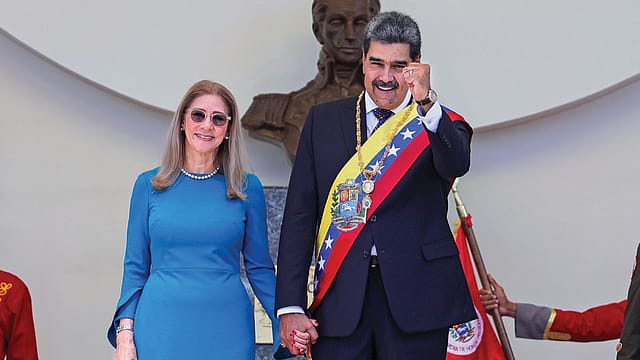
Cilia Flores, wife of former Venezuelan President Nicolás Maduro, evidently ran one of Latin America’s biggest crime families. The DEA had been on her case since at least 2015, before Donald Trump’s first presidency. Having defended Hugo Chávez after his failed 1992 coup, Flores rose rapidly after his 1998 landslide, helping him ship cocaine to the US. She took over parliament, appointed family members to important posts, gave government contracts to more family, decided state-run oil giant PdVSA’s contracts.
She built ‘El Jardín de Flores’ (Garden of Flowers)—her family criminal enterprise. With Maduro becoming president after Chávez’s death in 2013, Flores became brazen enough to allow use of the presidential hanger at the Caracas airport to smuggle drugs. When two of her nephews were caught in a DEA sting operation in Haiti in 2015, she allegedly had a Salvadoran cartel boss, who was a DEA informer, murdered. While a Wall Street Journal investigation couldn’t elicit answers from the Venezuelan government or Flores’ family, even as Flores maintains she is innocent in a New York court, the US Federal authorities’ file on her is very thick indeed. But like all alleged or actual master criminals, she kept herself far from the crimes. The Trump factor? Well, another US president might not have snatched Maduro and Flores.
Franco’s Twilight in Barcelona

Montserrat Roig’s classic novel The Time of Cherries captured a moment of hope before change came. Set in the spring of 1974, it was published in 1976, a year after Francisco Franco died. In 1974, nobody knew the dictator, who had tried his best to eradicate Catalan culture and language but the fear of whom had long been overcome by Catalan youth, would be gone soon. Telling the story of a woman, Natàlia, who returns from abroad to her family in Barcelona, Roig’s novel became essential reading in Catalonia after Franco, partly because it created an aesthetic for a time whose reality hadn’t been transferred to fiction yet; partly because it never aged. Now translated into English for the first time by Julia Sanchez, Anglophone readers will discover the fault lines within a family as well as one of the world’s most liveable cities on the threshold of transformation where the air is still thick and stifling under a calcified regime that had won a bloody civil war long ago. Roig’s novel is like the end of a parenthesis opened by Joan Sales’ 1956 Uncertain Glory which was uncensored and expanded in 1971, marking an approximate beginning of Franco’s last days.
Birthright Pangs
US Supreme Court is taking a sceptical view of President Donald Trump’s quest to end birthright citizenship. Aligning with their liberal colleagues, the conservative majority picked away at arguments presented by Solicitor General D John Sauer, with Trump himself in attendance on April 1. The case hinges on whether the framers of the 14th Amendment meant to exclude children born to immigrants on US soil from citizenship. Citing “birth tourism,” Sauer said: “We’re in a new world now. Eight billion people are one plane ride away from having a child who’s a US citizen.” Chief Justice John Roberts, a conservative, shot back: “Well, it’s a new world,” but “it’s the same Constitution.”