The Baloch Pivot: How it can shift the regional balance of power
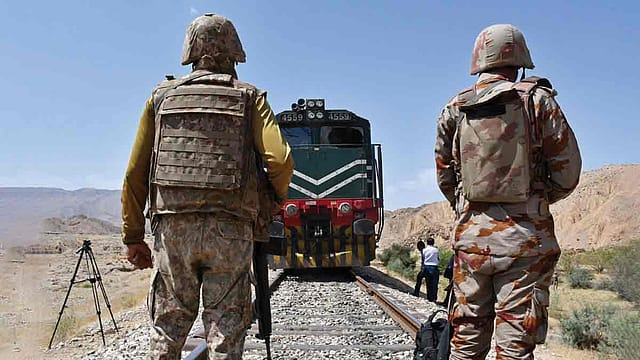
IN A FURTHER escalation that highlights the increasing internal fault lines in the Pakistani state, the Baloch Liberation Army (BLA) has claimed that it has taken some army personnel into custody and given Islamabad a seven-day ultimatum for a prisoner swap. This dramatic development underlines the fragility of state control in Balochistan as well as the increasing level of sophistication of insurgent groups operating in Balochistan—Pakistan’s most resource-rich but neglected province.
Balochistan, an extremely turbulent frontier, has long been a focal point of a boiling political unrest. In this province, the struggle between Pakistan’s military establishment and the demands of a marginalised and alienated population has been waged relentlessly over the last many decades. The most recent military operation, Operation Radd-ul-Fitna-1, initiated as a response to a spate of high-profile attacks by BLA, is the latest chapter in this never-ending struggle.
Termed as an attempt to crack down on militants and to restore normalcy using precision strikes, it is being claimed by Pakistani military that the operation has been a resounding success in reclaiming the province. However, the reality on the ground indicates a far more complicated story. Last month, BLA carried out one of the most-organised assaults in recent history when it attacked major infrastructure in Balochistan targeting schools, banks, markets and military bases. The sheer size and scale of these attacks revealed not only the vulnerability of the Pakistani military in the most fortified places but also pointed to the growing ability of the insurgents, who appear to be well-financed, highly organised and fully capable to conduct high-intensity operations on a sustained basis.
Although Islamabad boasts of killing more than 200 insurgents in the recent military operation, the outcome drives home a disturbing realisation: this insurgency is not yet finished and Balochistan is still a hotspot for the Pakistani state. The violence has increased dramatically with 2025 being the worst year for the province in terms of number of deaths and material damage. The rebels who previously restricted their operations to guerrilla warfare now appear determined to conduct bigger and well-organised attacks. As can be seen in the hijacking of the Jaffar Express in March last year, where over 300 passengers were eventually rescued following a long operation, the insurgents have become more tactical in their planning and execution. Therefore despite claims of restoring order, the never-ending increase in attacks (over 250 incidents in 2025, which is a 25 per cent increase over the preceding year) speaks volumes about a militarised state that is losing grip in its own backyard.
The most disturbing factor for Pakistan’s hybrid regime is the increasing estrangement of the Baloch population. Underdevelopment, brutal political suppression and economic marginalisation have been affecting Balochistan for decades. The various regimes in Pakistan have never considered the issues of the Baloch people seriously, and a generation of educated youth has been radicalised due to this systematic neglect. The growing involvement of women into insurgent ranks, mostly of middle-class origin, is a sign of greater sympathy for the insurgent cause. Instead of dealing with this insurgency in a sensitive manner, the heavy-handed repression by the Pakistan military against peaceful demonstrations and political dissent has only increased the number of people getting attracted towards extremism.
Simultaneously, Balochistan’s role in the geopolitical scenario has significantly increased as it borders both Iran and Afghanistan, placing it at the current volatile intersection of South Asia, Central Asia and the Middle East. Moreover, it serves as the indispensable land corridor linking China to the Arabian Sea through a vast network of energy pipelines, highways and port infrastructure.
It is precisely because of this reason that the Gwadar port and the China-Pakistan Economic Corridor (CPEC) have transformed the area into a geopolitical hotspot. The growing attacks of BLA on Chinese nationals working on CPEC projects are pointers to growing unease between Islamabad and Beijing.
The threat of intensifying attacks on Chinese interests in the region highlights the instability that engulfs the region. Therefore the violence in Balochistan is not only a crisis of internal security but also a crisis of governance in Pakistan which has become increasingly dictatorial and militarised under Field Marshal Asim Munir.
The utter failure of the successive regimes to redress the legitimate grievances of the Baloch people has only served to intensify the insurgency.
In simple words, the Baloch insurgency is a manifestation of the corrosive effects of Pakistan’s militarised mismanagement.
Pakistan’s haphazard methods have only succeeded in isolating the state with its citizens. At the same time, the growing aggressiveness of the Pakistan military toward Afghanistan in the form of wanton cross-border airstrikes on the alleged TTP militants and diplomatic confrontation with the Taliban regime has added fuel to fire. The inability to work out a coherent policy of engagement with Afghanistan poses a threat to further fuel the circle of violence, making the region more unstable.
Pakistan’s de facto ruler Asim Munir is prowling Balochistan like a strategist hunting for leverage. With his eyes fixed on rare earths and strategic minerals, he wants to rewrite Pakistan’s calculus of power in the changing geopolitical scenario. Munir knows that these resources are instruments of geopolitical rent-seeking and would help the Pakistan military gain strategic and economic concessions from the US. Mindful of the promise he dangled before Donald Trump in the White House last year, Munir knows that the patience of the American president is finite— he must deliver or risk incurring Washington’s displeasure. Therefore, he is mobilising every arm of the state to claim what the people of Balochistan will not freely surrender.
Pakistani allegations of Indian involvement in the Baloch attacks is a house of mirrors constructed to cover up a broken window. It is a fragile and fabricated narrative which is built on the shifting sands of anti-India paranoia.
New Delhi has no need to set fire to a powder keg that has been building up for decades. Rather than being the product of any external interference, grievances in Balochistan are the predictable consequence of years of political neglect, economic marginalisation and brutal military repression. Islamabad cynically expects the whole world to ignore the root causes and deeply ingrained issues while pursuing invisible ghosts. But the world has no time for the manufactured narrative of Indian interference which is designed to absolve Pakistan of its own responsibility.
While Islamabad has been mainly concentrating on brute force, India has always prioritised political reconciliation and developmental approach to resolve problems of governance and insurgency. New Delhi’s singular focus on the role of good governance in counter-extremism strategy puts it in a far more superior position as opposed to Pakistan’s policies of senseless coercion and alienation.
With Pakistan becoming socially and politically more restive and volatile under the military-dominated hybrid regime, the evolving conflict in Balochistan provides India with a rare chance to strengthen its regional presence, showcasing its good governance model. India’s policy, based on regional cooperation and collaboration, strategic interaction and the desire to ensure political and economic stability in its neighbourhood, is in stark contrast to the reactive, militarised policies of Rawalpindi.
As the spectre of Chinese expansionism is increasing, and the political situation on the Afghanistan-Pakistan borderland is getting more unpredictable, India has to remain alert and flexible in its approach, and also strategically aligned with Kabul. With Pakistan teetering on the edge of systemic failure, Balochistan may well be the fulcrum on which the balance of regional power shifts. Therefore, the Balochistan dynamics will not only determine Pakistan’s future, but will also have far-reaching implications on the regional power equilibrium. In a world increasingly defined by state failure and authoritarianism, the Indian vision of regional peace, stability and sustainable development offers the best strategic model.