The Afterlife of Ali Khamenei
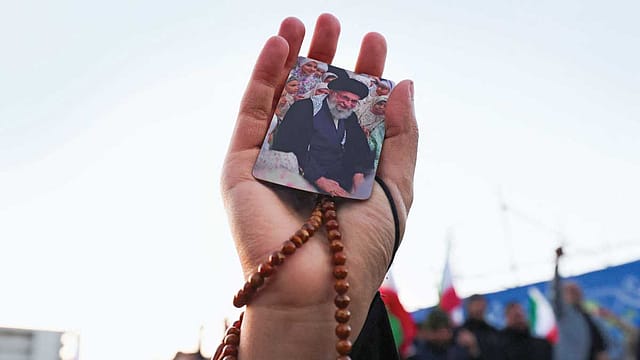
EPIC WARS ARE CONTINUAL rather than continuous. They traverse generations, and end when there is either complete exhaustion of resources or breakdown of human spirit. The war between America and Iran is only 55 years old. Sayyid Ali Hosseini Khamenei was in the forefront of battle when it started, just after the Islamic Revolution of 1979 overthrew America’s principal ally in the Muslim world, the former grandiloquent Shah of Iran Mohammad Reza Pahlavi.
The current conflict has unique features. Iran and America are both ruled by Supreme Leaders, although only one is so designated. The Ayatollahs claim this distinction in the name of doctrine; President Donald Trump exercises such rights as a man of destiny. He uses ‘I’ rather than ‘we’ in ownership of any decision, just in case you doubted his supremacy. Institutional checks inbuilt into decision-making exist in both systems but cannot prevail against the wish of the Supreme Leader. Seasoned generals understand that there must be logic in operational command, or orders become counterproductive. But the basic impulses of all-powerful leaders, impelled by dread of defeat or glorious visions of victory, are not necessarily rational. It can get personal.
No one knew when Trump’s Operation Epic Fury would begin. No one knows how long Iran’s Operation True Promise will sustain. It is easy to predict havoc in no-cost commentary; but to find out whether change will rise from the debris you may have to check with God. Hamas has not been eliminated from Gaza after two years of unremitting death and rubble. But nothing is a precedent in the volatility and mayhem that has consumed West Asia after the pre-emptive strike by America and Israel at 9AM Tehran time on Saturday, February 28.
Some facts are indisputable. America possesses the most devastating arsenal assembled in human history. Resources tend to prevail, although history is replete with exceptions. Israel has the finest contemporary air force and high-quality defence infrastructure. They make powerful allies.
Iran has mastered the sling technology of David against the heavy armour of Goliath. This sling is an inexpensive kamikaze Shahed drone, costing between $20,000 and $50,000, dubbed the AK-47 of the skies. Every American interceptor against the drone has a price tag of $1 million, largely because the Western private defence sector is as committed to its share price as the national interest. Iran’s expertise has been acknowledged, not least by the Pentagon which admitted that it borrowed Shahed technology for its own drones. Tehran has said that it is ready for a long war, confident that its fighting units have the necessary reserves of sacrifice and spirit to do so.
Within the first 48 hours Iran established that it was not Venezuela, the preferred Trump model for regime change. Venezuela was run by fake socialists; Iran is not run by fake Shias. The Shia are inspired by long memory. Each year during the first ten days of Muharram, they mourn the outcome of the Battle of Karbala in 680CE between their Imam, the venerated grandson of the Prophet, Husayn ibn Ali, and Yazid, heir of the Sunni Umayyad empire which ruled from Damascus.
Within those 48 hours, Washington recalibrated its declared war objectives more than once. There was an air of triumph in the White House on Saturday morning after a swarm of over 100 aircraft, backed by Tomahawk missiles from the sea, targeted Beit-e-Rahbari (House of Leadership), the residence and office of Iran’s Supreme Leader Ayatollah Sayyid Ali Hosseini Khamenei, killing him, his wife, and close advisers.
Confident that he could wrap up Tehran as easily as Caracas, Trump told Iranian forces to lay down arms in return for some unspecified sort of amnesty. The punishment for non-compliance was unprecedented devastation. Israel’s Prime Minister Benjamin Netanyahu added a codicil, an echo of Trump’s exhortation: the moment had come for the Iranian people to rise and replace the Islamic regime. Job done.

If the death of Khamenei was sufficient, the war would have been over in a few hours. But the Iranian street did not stir. Instead, the assassination of the Ayatollah galvanised the regime’s support base. Ironically, in the immediate term, it may have strengthened a regime that was under pressure from age, economic malfunction, and excessive social zeal.
It was soon clear that America and Israel had underestimated Iran’s military capability and the commitment of the Islamic Revolutionary Guards Corps (IRGC), the strike arm of its forces. By Saturday afternoon Iran had set off the firestorm it had long promised as reprisal. The conflagration blazed across American bases and missions in the Gulf, lit up Arab assets like refineries, and hit Israeli cities. The comparative accuracy of the drone strikes was a surprise to America and Israel.
When the ground shifts from beneath your feet you have to change position in order to remain steady. As seismic tremors rumbled across the region, there was a zigzag in Washington. The war objective changed from regime change to “regime adjustment”. Trump put the best gloss on options by suggesting that the successor should be from his unnamed shortlist of three. He was even willing to consider the nominee of the IRGC. By Sunday Trump was “open to talks”, dressing the suggestion with the usual veil of fire and brimstone while he prepared the American people for a tougher conflict. It could continue for 30 days, he said, because Iran was a large country, a fact that must have been known to the Pentagon before Epic Fury.
Iran aborted any thoughts of negotiation with a statement from a high cleric that America had crossed a red line and signed its own “death warrant”, claiming that Iran would remain undeterred even if America brandished its nuclear spectre. Talk, however, has limited impact. By Monday Iran proved that it could act.
A brief digest of highlights shows three American jets lost over Kuwait; the video of one going down went viral. Monday’s headlines in the Times, London, a newspaper not known for its sympathy for the Islamic regime, mirrored banners across the world: “Iran latest: US warplanes downed in Kuwait as Iran conflict escalates”; “Multiple F-15s believed to have crashed, as RAF base in Cyprus hit by ‘kamikaze’ drone”. Shahed drones and missiles hit Tel Aviv, Haifa, and East Jerusalem. Tehran activated its “ring of fire”, or proxy militias in the region between Yemen, Iraq, and Lebanon. Parts of Saudi Arabia’s Aramco refinery went up in flames. Refineries were shut down. American embassies in Riyadh and Kuwait, and its consulate in Dubai suffered precision strikes.
On Wednesday morning Iran hit the critically vital billion-dollar American radar installation at Al Udeid in Qatar, while another wave of missiles set off sirens across Israel. Hezbollah ballistic missiles hit northern Israel and the headquarters of Israel Aerospace Industries. A tanker was immobilised off the Emirates coast. Israel admitted that its enemy retained significant capacity. We are used to news of Israeli military domination. This war had two sides.
Rumour is inevitable in conflict, but if a few, such as the report of a hit on Netanyahu’s office, had legs it was because of collateral evidence. It is always useful to remember that truth is the first casualty in war, and that claims should go through the Bismarck test: Germany’s famous leader noted that one should never believe anything in politics until it has been officially denied. But the mobile camera has become a good separator of fact from rumour; and much of the damage was captured on mobile cameras.
Shipping came to a visible standstill in the Strait of Hormuz. On Wednesday morning the IRGC claimed complete control over the waterway after Trump promised trapped tankers that the US Navy would escort them through the waterway. In 2025, around 3,000 ships carried 20 million barrels of the world’s oil and gas from Iran, Kuwait, Qatar, Saudi Arabia, and the UAE, worth $600 billion, through the busiest shipping lane in the world, only 33 kilometres wide at its narrowest point, to India, China, Japan, and other destinations. China may have been more persuasive than America. It asked Tehran to keep the oil flowing since it would be the worst affected by disruption.
The punitive fury of the American- Israeli response was evidence of the loss suffered in the Iranian counteroffensive. Israel hit missile sites in Isfahan and elsewhere; the Iranian nuclear facility at Natanz was damaged again. The focus of hostilities had changed.
Exactly 57 hours after Epic Fury, America’s Secretary of War Pete Hegseth told a press conference that the war objective was destruction of Iran’s nuclear potential and missile prowess, not regime change. He had to address a supplementary worry. The American people had not displayed the kind of support that a wartime administration expected. The first opinion poll after Epic Fury, commissioned by Reuters, was a disappointment for Washington warriors. Only 27 per cent of Americans approved; 43 per cent disapproved; 56 per cent believed that Trump was too eager to use military force. Even loyal Republicans wavered: 42 per cent said they would be less likely to support Trump if American troops were killed or injured. Three days later, as another poll showed, the numbers had not changed too much: 60 per cent disapproved of the war. Vice President JD Vance, who is looking at 2028, maintained an echoing silence for two days because he knew that the Republican base had voted for less conflict and lower prices, not confrontation in every continent.
Hegseth and his cabinet colleague Marco Rubio reassured America that this would not become “an endless war” or a “multi-year conflict” like Iraq and Afghanistan. There would be no boots on the Iranian ground. Americans do not want their children to die in a war with uncertain objectives. Israel marched its boots into Lebanon; Iran was too distant. This released the IRGC from defensive preparations.
Democrats accused the Trump administration of retroactive justification, particularly after the Pentagon briefed legislators on March 2 that Iran had never posed a direct threat to the US. Its threat was limited to Israel. Senator Mark Warner told CNN: “I saw no intelligence that Iran was on the verge of launching any kind of pre-emptive strike against the United States of America. None. None.”
Trump’s frustration was more than evident in his post on Truth Social on Democrats who opposed his war: “These people are SICK, CRAZY, and DEMENTED, but America, despite them all, is now BIGGER, BETTER, AND STRONGER THAN EVER BEFORE. MAKE AMERICA GREAT AGAIN! President DONALD J. TRUMP”. The capital letters are Trump diction.
In an interesting aside, Hegseth told American generals on March 2 to “stay focused” and “don’t listen to the noise”. What noise? Was it disturbing noise from the war he had started?
WAR AIMS MUST BE tethered to clarity and capability. This applies equally to Iran. Can the Ayatollahs, convulsed by pain and rage, measure the difference between reach and overreach? They might have considered it tactically necessary to send a violent message to the Gulf, since they are convinced that the Saudis played a crucial role in persuading Trump to attack Khamenei when talks were on the point of success, as Omani mediators have indicated. But an unremitting offensive against the Arab Gulf can only mean a consolidation of resources against an isolated Iran.
For Israel, this war has been a special bonus. It has unleashed American might on Iran, turned the Gulf into an active belligerent, and provided another opportunity to attack Hezbollah in Lebanon. But Israel, too, must calculate the distance between reach and overreach. Miscalculation can be dangerous in an inflammatory environment.
Trump rules through press conferences. On occasions this week he has seemed apprehensive. He admitted, for there is little that he does not reveal, that he had never expected Iran to hit Arab states. But he certainly does not want to emerge second-best from the debris, which includes economic consequences as energy prices rise and panic hits financial assets worldwide.
The Washington planning room did not keep sufficient space for the boomerang propelled by unintended consequences. The litany began at home with public doubt and played out among American allies. The Pakistani street rose from a long slumber, leading to violence, deaths and curfew. Dozens of Pakistanis have been killed by police and guards during demonstrations at American missions. Trump’s “favourite general” Asim Munir, Pakistan’s de facto ruler, has become guilty by association. Events have exposed the colossal strategic confusion among decision-makers. Within a few hours Islamabad expressed solidarity with Iran against America, and with Saudi Arabia against Iran. There was no sign, incidentally, of Pakistan rushing military assistance to Saudi Arabia after Iran’s drones hit the Aramco refineries and targets in Riyadh. Was the military alliance between Saudi Arabia and Pakistan for peacetime purposes? On Wednesday Pakistan’s Defence Minister Khawaja Asif, admittedly not a renowned intellectual, discovered a secret alliance between Iran, Afghanistan, and India to destroy Pakistan.
The Gulf, confident that American bases were synonymous with safety, has discovered that Israel precedes them by some distance in the security queue. The Gulf’s reputation as a secure haven for everything from tourism to taxation is in tatters. If the economy of the region implodes, it will impact stability.
America’s alliance with Europe is under further strain. Trump has declared that the special relationship with Britain is over, after British Prime Minister Keir Starmer pointed out the obvious, that no regime can be changed from the air. France has described the killing of Khamenei as “illegitimate”. President Emmanuel Macron announced an increase in France’s nuclear arsenal, implying that America’s nuclear umbrella could no longer be trusted. Europe has reason for grief. It expected Trump to fund and arm Ukraine against Russia; instead America has chosen what is already proving to be a difficult war against Iran.
In the ultimate unintended consequence, the biggest gainer of this war is going to be Vladimir Putin and Russia. Suddenly, there are no weapons for Ukraine in the pipeline as all supplies go to West Asia. All sanctions on Russia suddenly become meaningless as nations seek energy from wherever they can find it. Oil prices are rising, which will bulk up Moscow’s financial resources.
Who would have known that the death of one man could change the world so much, and so rapidly?
As a young man he was known for his love of Persian poetry, and played the traditional stringed instrument known as the tar; as a cleric and political leader Khamenei understood war. He was president of Iran for the decade of the war with Iraq in the 1980s, in which his country lost over half-a-million dead, was driven to extreme privation but never surrendered to Saddam Hussein, then backed by America. He was nearly killed in 1981 when a rival political group planted a bomb in a tape recorder at the Abuzar mosque in Tehran. It damaged his arm, lungs and vocal chords, but convinced him that God had saved him for a greater mission. Iran’s leaders accept death in war with more equanimity than most others because they believe shahadat, or martyrdom, leads to heaven. Shaheed is the highest accolade in Shia iconography. The last time I visited Tehran, more than a year after their hero-general Qasem Soleimani of the IRGC was killed in an air strike ordered by Trump on January 3, 2020, the city was adorned with hoardings showing him in paradise. Khamenei’s death on the 10th of Ramadan was described as “dignified”; he was lauded as “an inspiring legend in the history of Iran and Islam”. The official statement added, ominously: “He will remain a living nightmare for his killers forever.”
War breeds chaos, but chaos does not have borders. West Asia is a region of regimes living in status-quo comfort zones. When war destroys the status quo, change can go viral.